North Vancouver Garage Door Guide
Garage Door Bottom Seal Types Explained
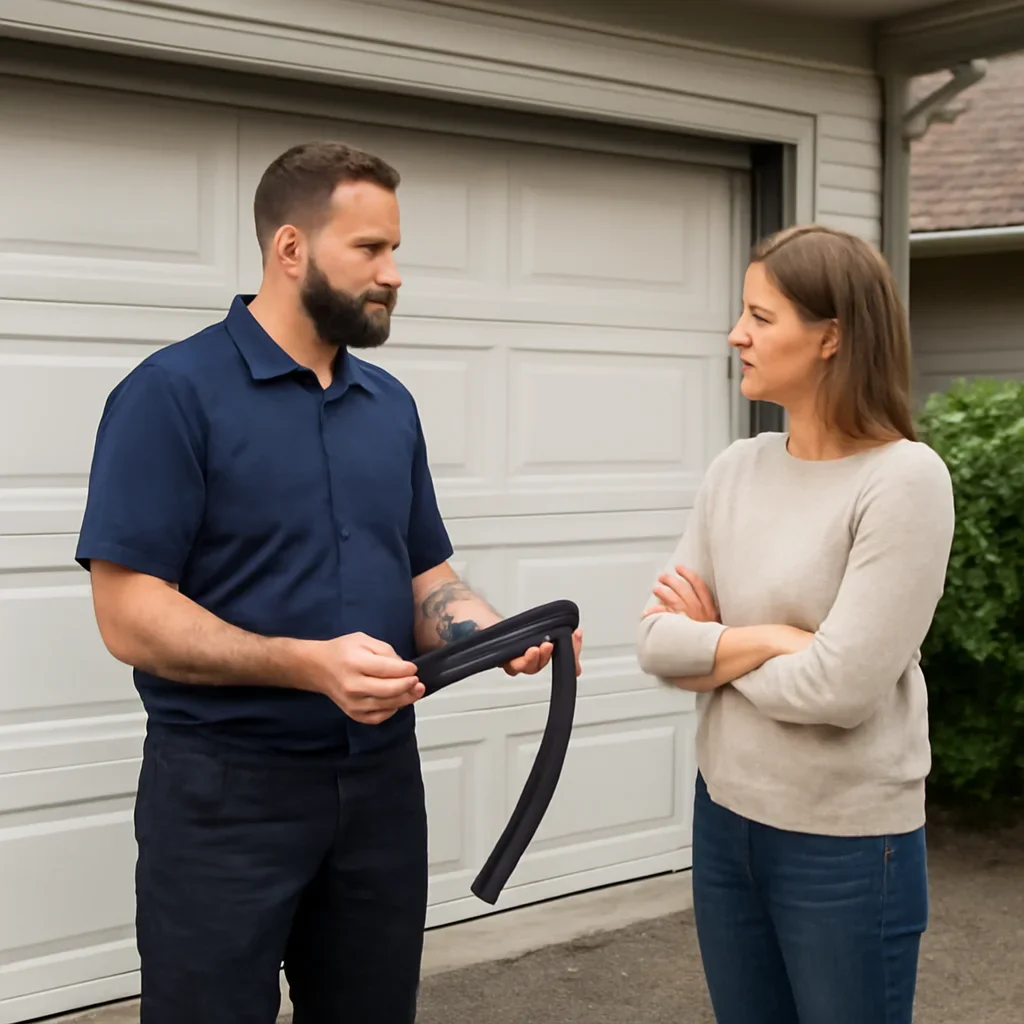
Choosing by width alone often leads to a poor fit. The channel shape and bead dimensions determine whether the seal can slide into the retainer and stay secure.
Identify the correct seal profile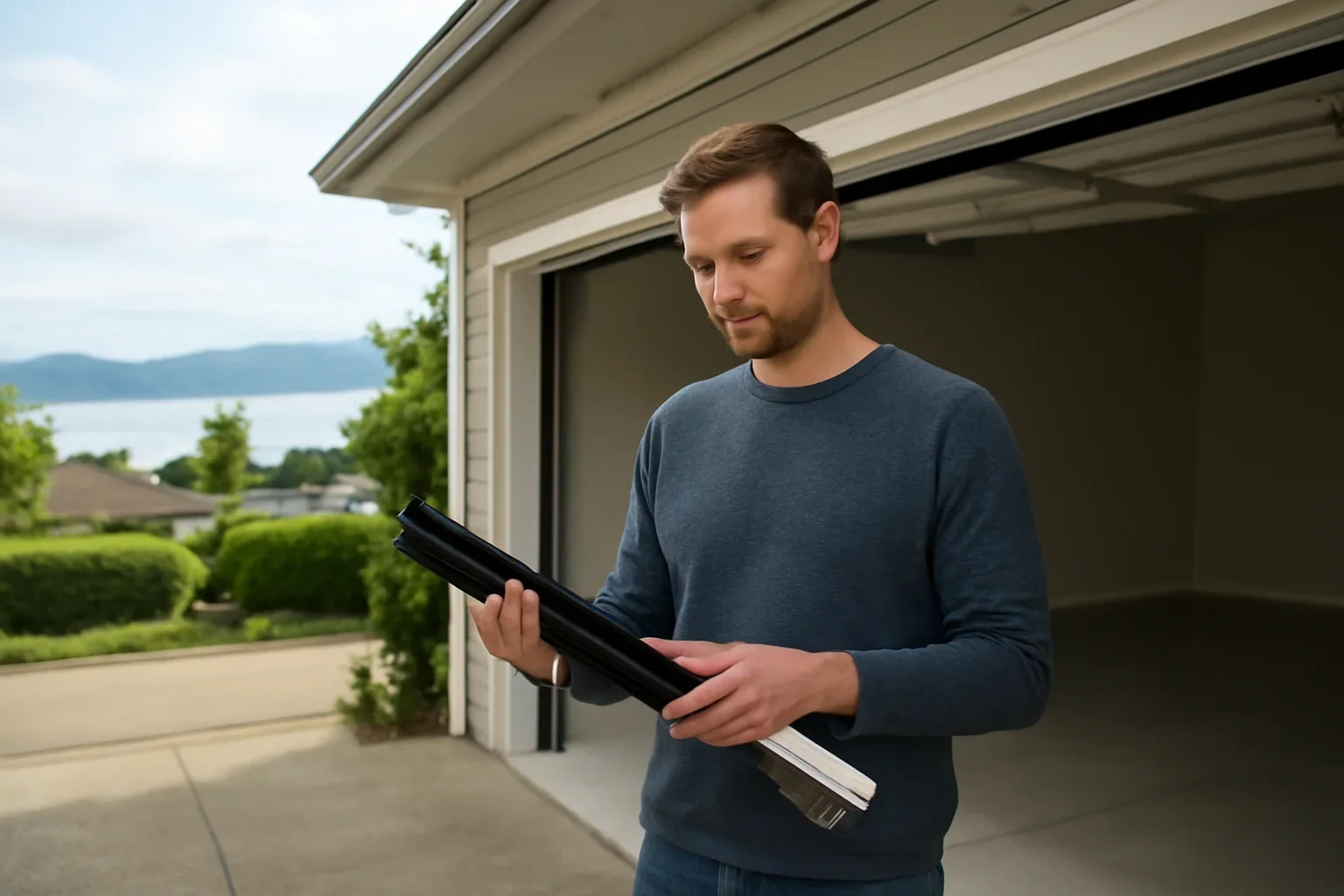
Quick answer
Garage door bottom seals differ by retainer shape, bead or T-end profile, width, flexibility, and material. The correct replacement must match the existing retainer and provide even floor contact without folding, dragging, or over-compressing.
What to understand first
T-end and bead profiles are not interchangeable
Retainer channels accept specific shapes and sizes.
Bulb, astragal, and U-shaped seals contact floors differently
The right profile depends on the door construction and floor condition.
Wider is not always better
An oversized seal can fold, increase closing resistance, or trigger reopening.
Retainers can be damaged
Corrosion, dents, screws, and old seal material can prevent smooth installation.
Safe checks and next steps
- Photograph the seal end profile. A clean cross-section is more useful than a front view.
- Measure the retainer and old seal. Record door width, channel spacing, and profile dimensions.
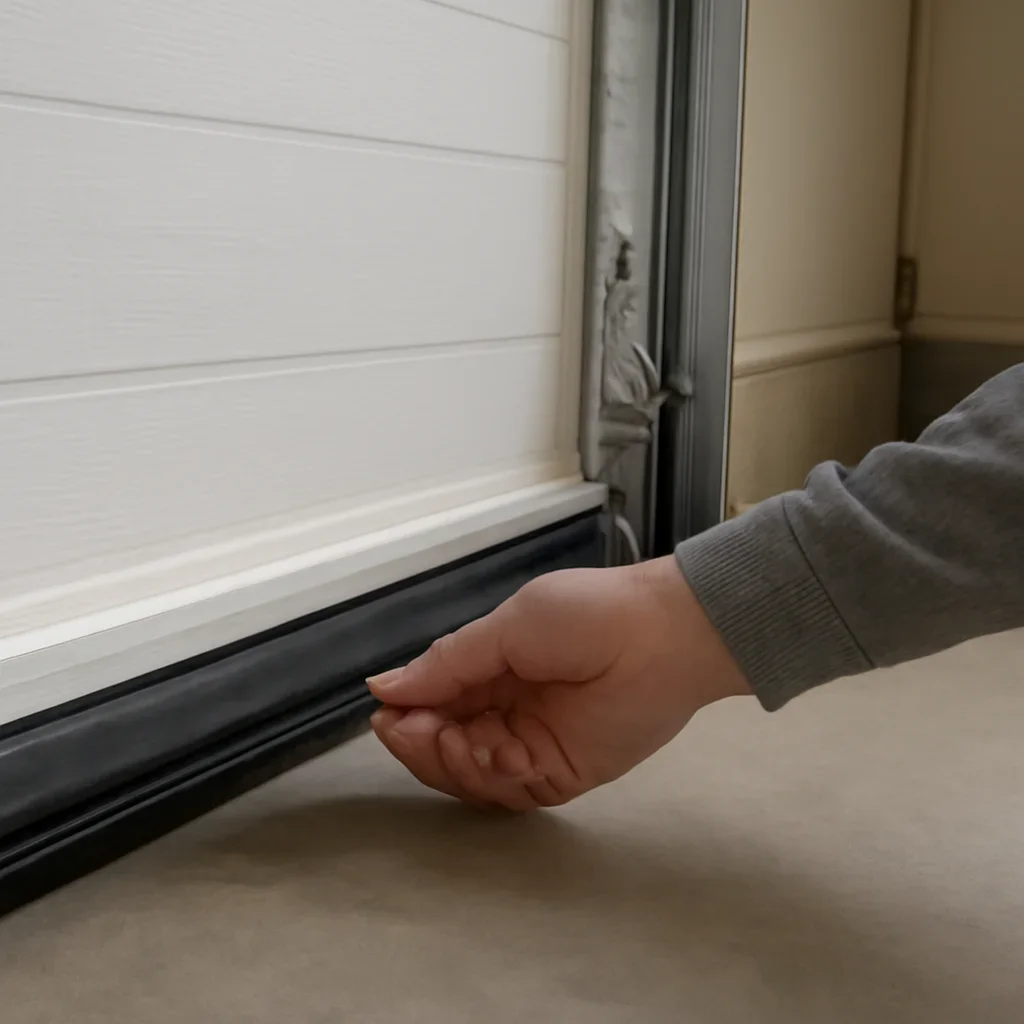
- Inspect the floor contact. Note gaps, low spots, and compressed areas.
- Check closure and balance. A seal should not be used to correct a crooked or poorly adjusted door.
- Use compatible material. Consider temperature flexibility, moisture, and manufacturer specifications.
Do not loosen, wind, cut, or reposition garage door springs, cables, drums, bottom brackets, or loaded track hardware. Stop if the door is heavy, crooked, partly off track, or moving unpredictably.
North Vancouver conditions to consider
Cold and wet conditions favour seals that remain flexible and drain cleanly. Debris trapped in an oversized seal can retain moisture against the bottom section.
For adjacent guidance, review threshold versus bottom seal and reopening after floor contact.
When professional service makes sense
Professional replacement is appropriate when the retainer is corroded or bent, the door closes unevenly, or the bottom brackets and cables are near the work area.
The most relevant service resource is bottom seal replacement service.
Frequently asked questions
Can I install any universal garage door seal?
Universal labels do not guarantee compatibility with every retainer.
Why did the new seal make the door reopen?
It may be too large, folded, or contacting an uneven floor before the opener’s expected limit.
Should the seal be compressed tightly?
It should contact evenly without being crushed excessively.
Get a clear next step for your garage door
Share what the door is doing, where it stops, which control you used, and any visible damage. The team can use those details to point you toward the appropriate inspection, repair, programming, or replacement service.
Identify the correct seal profile