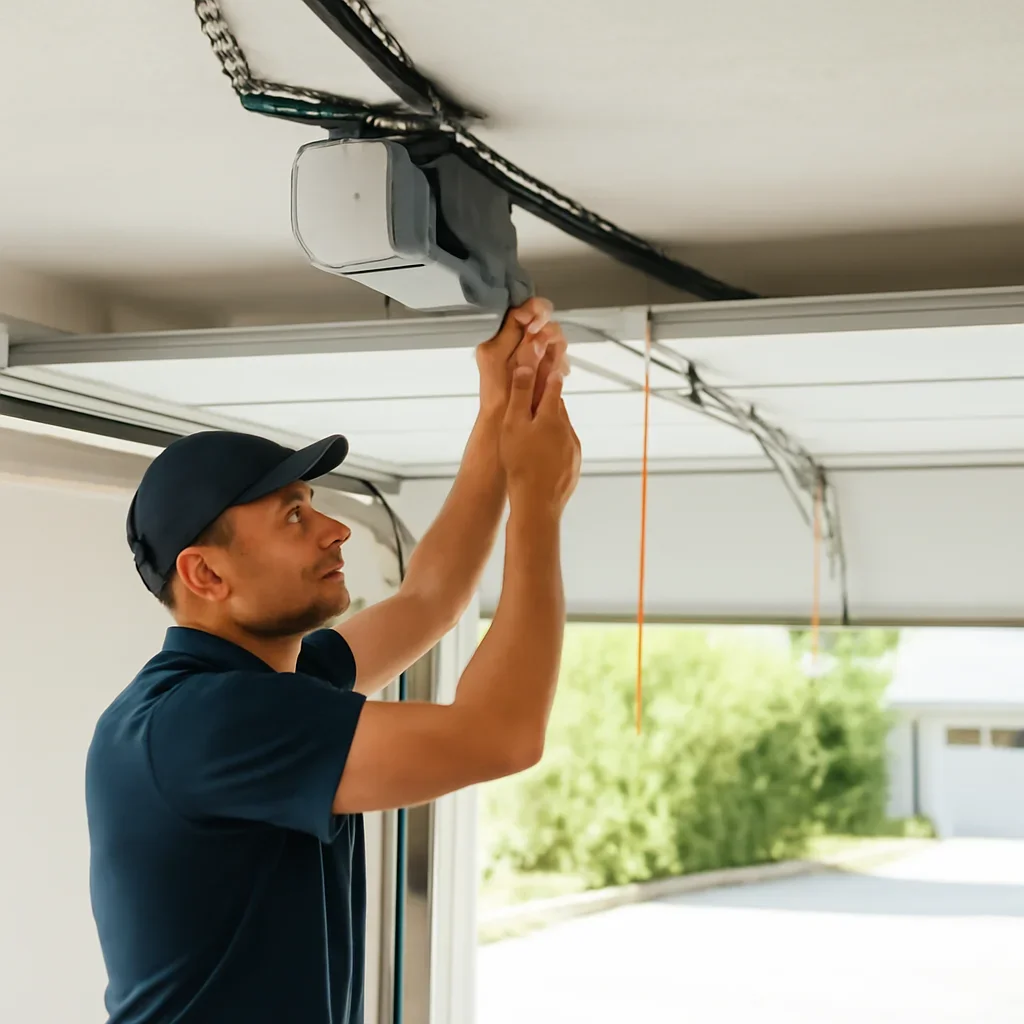
Power and wall control
Review the outlet, plug, circuit, wall station, lock mode and low-voltage control connections.

Get practical help when the opener only clicks, the remote or keypad stops working, the door reverses before closing, the motor runs without moving the door or the system becomes loud and unreliable. The opener and garage door should be assessed together so a heavy, jammed or unbalanced door is not mistaken for a motor problem.
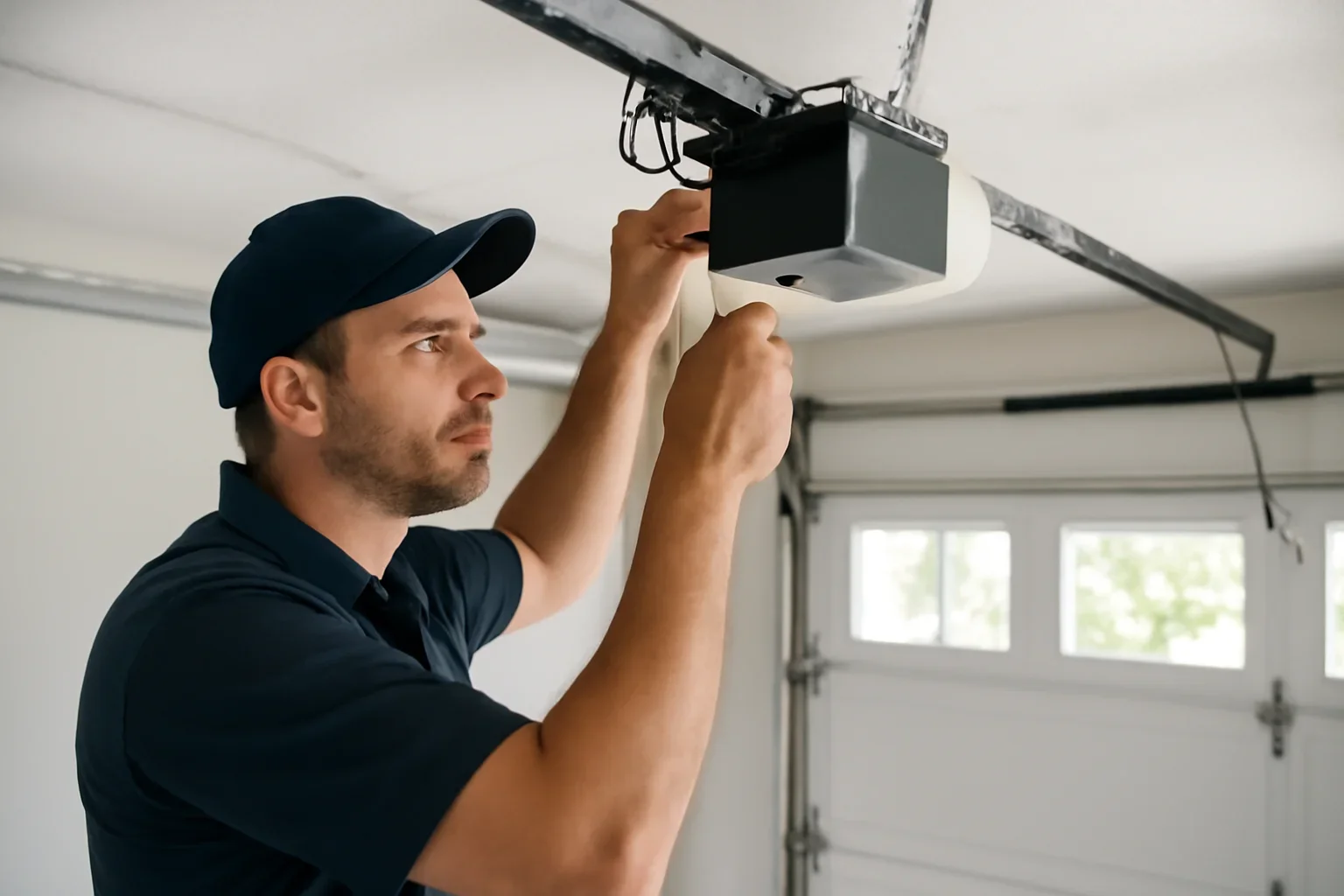
A garage door opener can appear weak or faulty when the door itself is heavy, jammed, off-track or poorly balanced. The opener, lifting system, tracks, rollers and controls should be considered together before a part is replaced.
You do not need to identify the failed component. Share whether the wall control works, whether the motor clicks or hums, whether the lights turn on, whether the door moves a few inches and whether it closes only while the wall button is held.
Those details help narrow down whether the problem involves the remote, keypad, sensors, power, settings, motor, drive system or the garage door itself. Review the broader garage door opener and remote repair service for additional information.
The pattern of lights, sounds and movement often provides more useful information than guessing which part has failed.
The remote and wall control produce no sound, light or movement, or the opener appears to have lost power.
Request troubleshooting 02The opener hums or travels, but the trolley, door and drive system are no longer moving together.
Describe the movement 03The door returns to the open position or behaves differently depending on the wall control, remote or sensor area.
Report the closing issue 04Batteries, programming, signal range, worn buttons or compatibility may be affecting convenient access.
Review control repair 05Grinding, rattling, shaking or delayed starts may involve the drive system, rail, mounting or resistance in the door.
Browse repair options 06Poor balance, damaged springs, rollers, tracks or other mechanical resistance may be overloading the opener.
Review balance service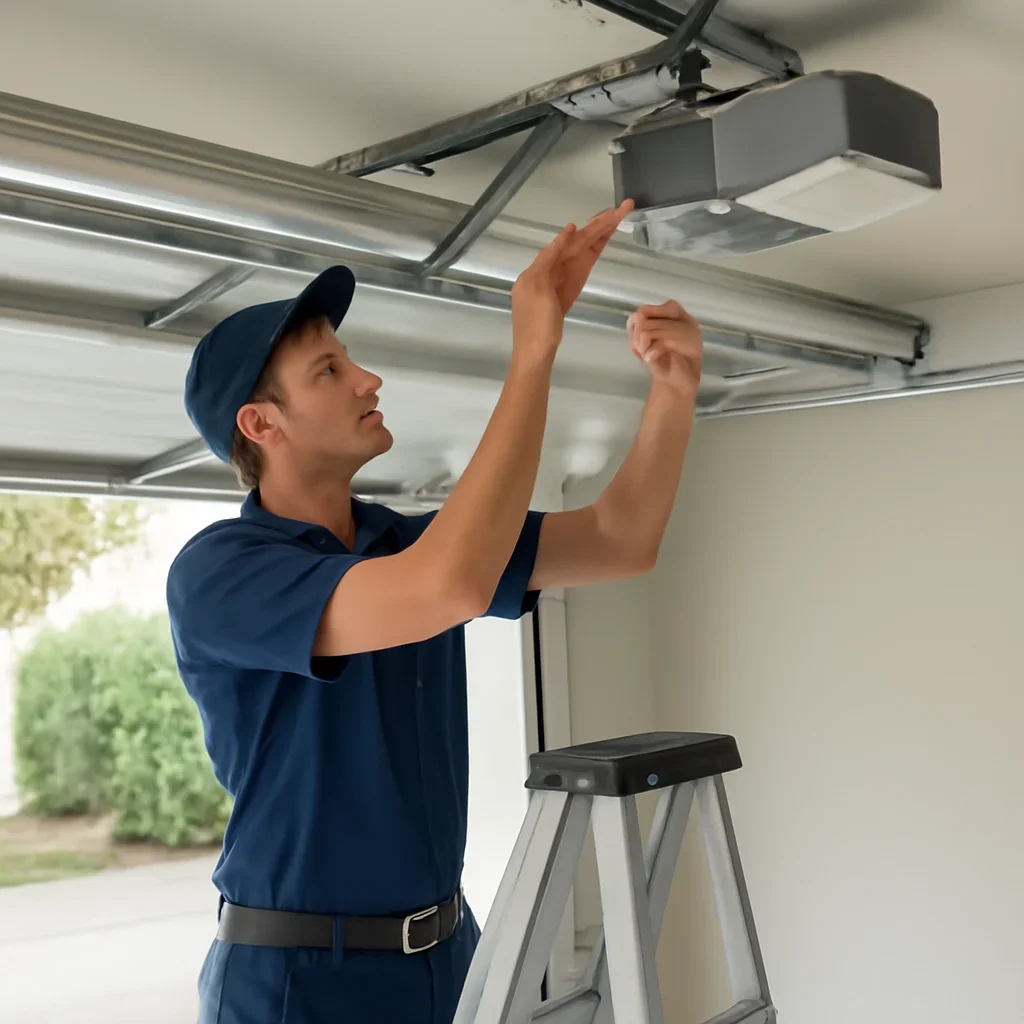
Lynn Valley includes established detached homes, newer townhomes and multi-unit properties around the Town Centre. Garages may sit below bedrooms, beside living areas or at the end of sloped driveways where reliable remote and keypad access matters.
Wet weather, needles, leaves and dirt can collect near the lower opening and safety sensors. Moisture may also affect wiring connections and exposed hardware. A sensor problem should therefore be checked for alignment, obstruction, wiring condition and the way the door moves through the opening.
Noise is especially noticeable when the garage is attached to the home or located beneath occupied space. A loud opener does not always require replacement; vibration may also come from loose mounting, worn rollers, poor balance or rail movement.
Opener repair is not limited to the motor. Power, controls, drive components, settings, sensors and door condition all affect performance.
Review the outlet, plug, circuit, wall station, lock mode and low-voltage control connections.
Check batteries, programming, signal range, worn buttons and control compatibility.
Clicking, humming, grinding or running without movement may involve internal wear or drive engagement.
Chain, belt or other drive components, rail alignment and trolley connection can affect movement and noise.
Incorrect limits or force settings may cause incomplete opening, premature stopping or reversal.
Sensor alignment, wiring, obstruction and reversal behaviour should be checked together.
Repeated operation can strain the motor, rail and trolley when the door is jammed, crooked, off-track or too heavy. The mechanical door problem should be corrected before the opener is expected to move the system normally.
Keep people, pets, vehicles and stored items away from an unstable opening. Do not force the door or continue pressing the controls when movement is uncontrolled.
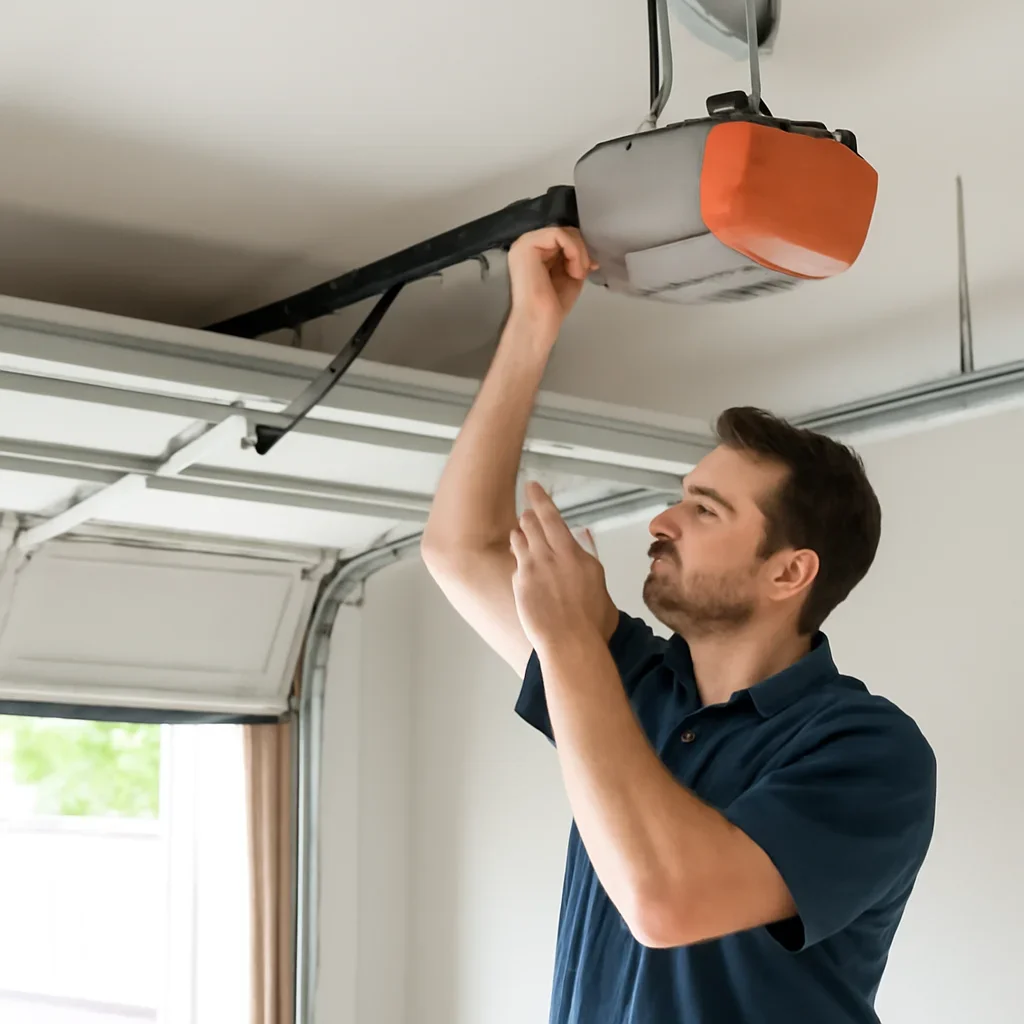
A useful diagnosis starts by reproducing the symptom and then checking whether the opener or the door is creating the problem. This helps avoid replacing controls or motors when the actual issue is poor balance, binding or damaged hardware.
A failed remote or sensor does not automatically mean the complete opener needs replacement. The decision should consider the failed part, condition, compatibility and the features you need.
Before replacing the opener, the garage door should move correctly and remain properly balanced. A new motor will still be strained by a heavy or binding door. Review the pricing guidance before requesting an estimate.
Clear symptom and access information helps narrow down the likely issue before the system is assessed.
Explain what happens with the remote, keypad and wall control, including lights, sounds and door movement.
Include the nearest cross street, driveway slope and any strata, gate or visitor-parking instructions.
The opener, controls, sensors, door balance, tracks and lifting hardware are reviewed together.
Complete the suitable repair, programming, travel, closing and safety-reversal checks.
Use the local hub for neighbourhood-wide service information, review broader opener guidance or send the current symptoms and property-access details.
These answers cover motors, controls, sensors, noise, reversal, replacement and the difference between opener and door problems.
The opener may be disconnected from the door, the trolley or drive system may not be transferring movement, or the door may be jammed, heavy or affected by damaged lifting hardware. The opener and door should be checked together.
Reversal may involve sensor alignment, wiring, an obstruction, travel settings, closing force or resistance in the door. Reliable safety reversal should be verified after the cause is corrected.
Often, yes. Batteries, programming, worn buttons, signal range or control compatibility may be involved. The right option depends on the opener and available controls.
Yes. Water, dirt, needles and leaves can affect the sensor area or block the sightline. Wiring and connections may also need to be checked where moisture is present.
Noise may come from the motor or drive system, but it may also be transferred from loose mounting, rail movement, worn rollers, poor door balance or other hardware.
Replacement may be worth considering when the opener has repeated failures, major internal wear, unavailable parts or no longer meets noise and access needs. A serviceable remote, sensor or setting issue may only require repair.
Share whether the motor makes a sound, whether the door moves, stops or reverses, the condition of the sensor lights and any unusual noise. Include driveway, gate, strata or visitor-parking instructions.