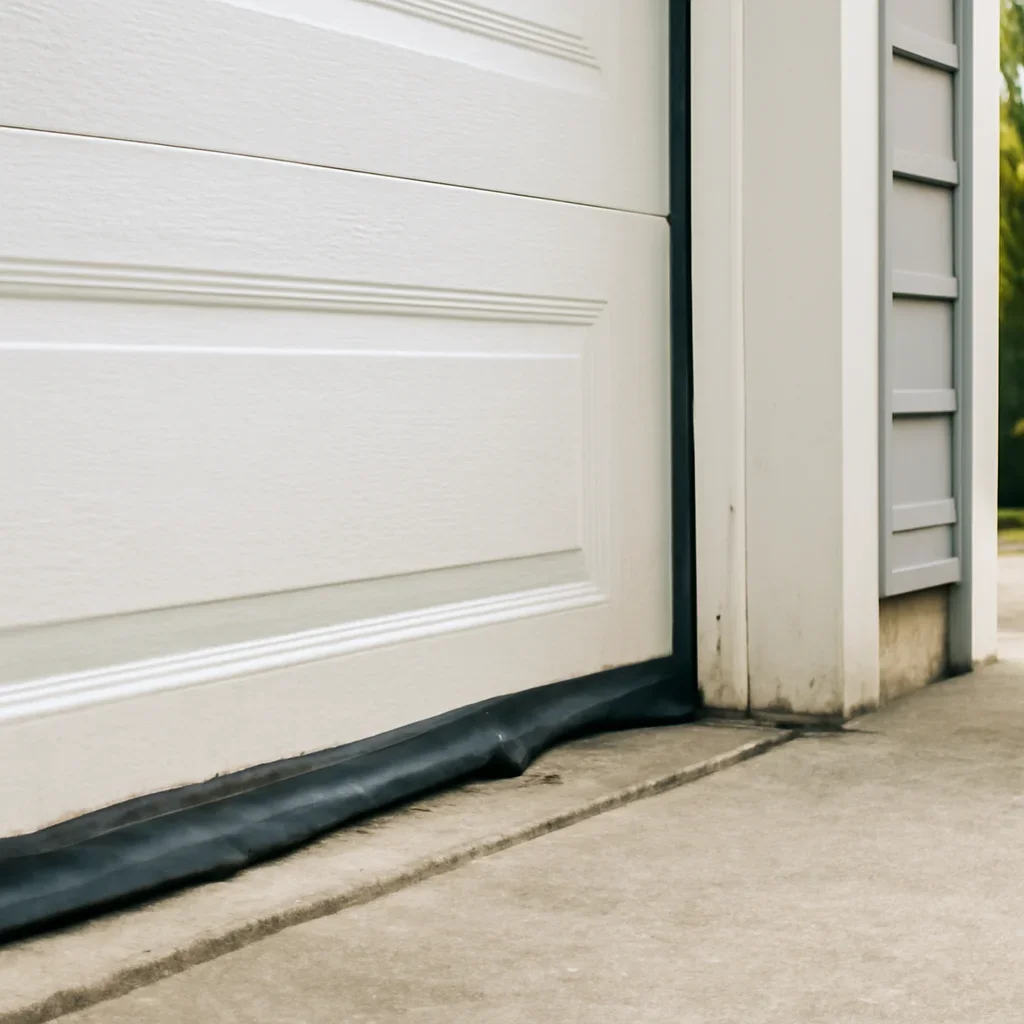
Daylight under the closed door
A flattened, torn or missing bottom seal may no longer follow the threshold or close small surface variations.

Worn bottom, side or top seals can let rain, wind, leaves, dust and pests into the garage. Seal problems may also appear as daylight around the opening, a wet floor after storms, cold drafts or a bottom edge that no longer sits evenly on the threshold.
Inspect the bottom seal for cracks, flattening or missing sections, then look for daylight along the sides and top while the door is fully closed. A new seal may solve ordinary wear, but recurring water entry can also involve driveway slope, drainage, an uneven threshold or a door that needs alignment.
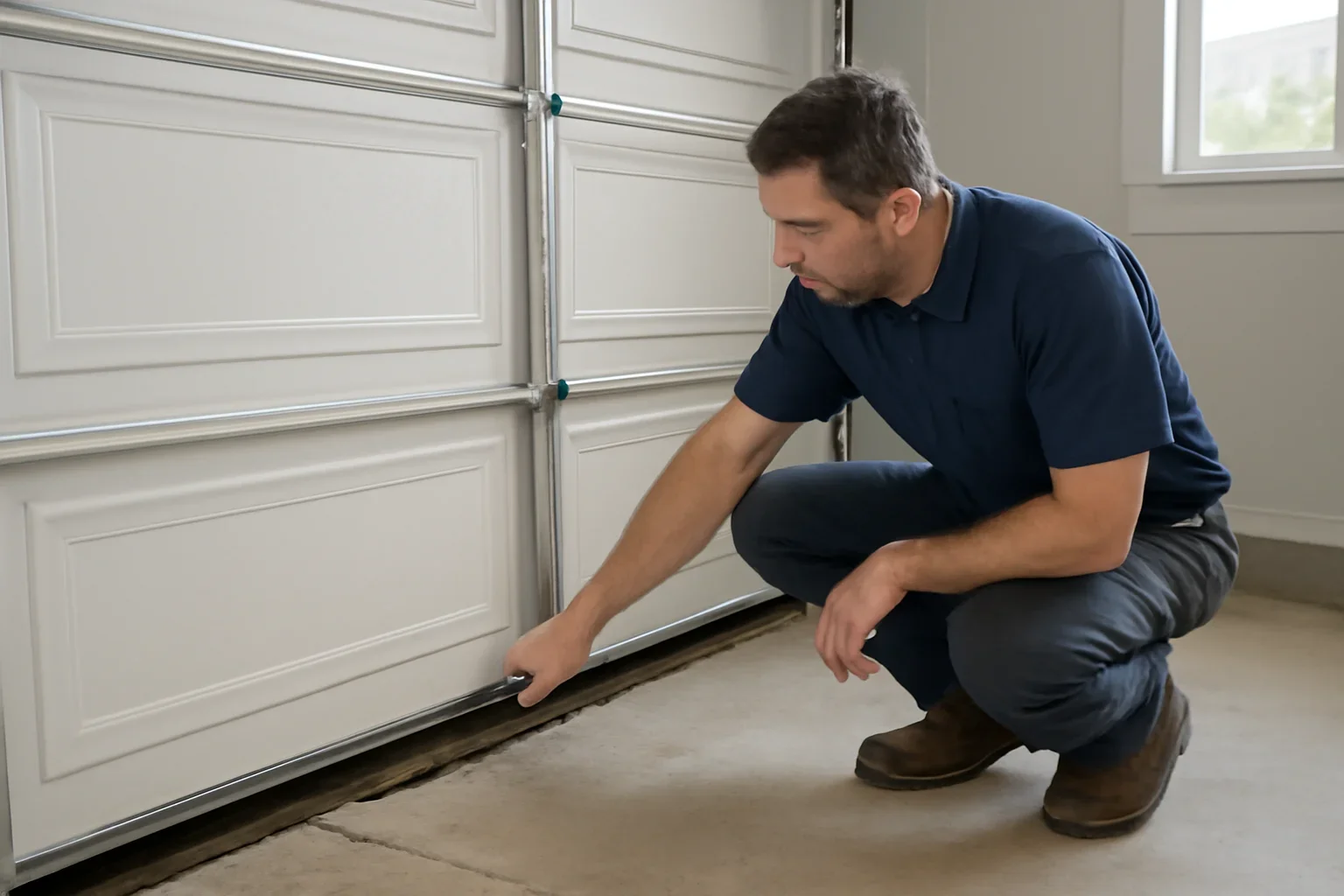
The location of the gap helps identify whether the issue is the seal, the threshold, the door position or water moving toward the garage.
A flattened, torn or missing bottom seal may no longer follow the threshold or close small surface variations.
Rain may pass beneath a worn seal, around a low corner or across a threshold receiving runoff from the driveway.
Perimeter weatherstripping may be cracked, pulled away or unable to contact a door that is not sitting square in the opening.
Open corners and missing seal contact create easy paths for windblown debris and small pests.
Broken perimeter contact can make the garage feel drafty and allow humid outdoor air and moisture to enter.
Water trapped beneath the seal may freeze during overnight cold, especially where drainage is slow or the threshold stays shaded.
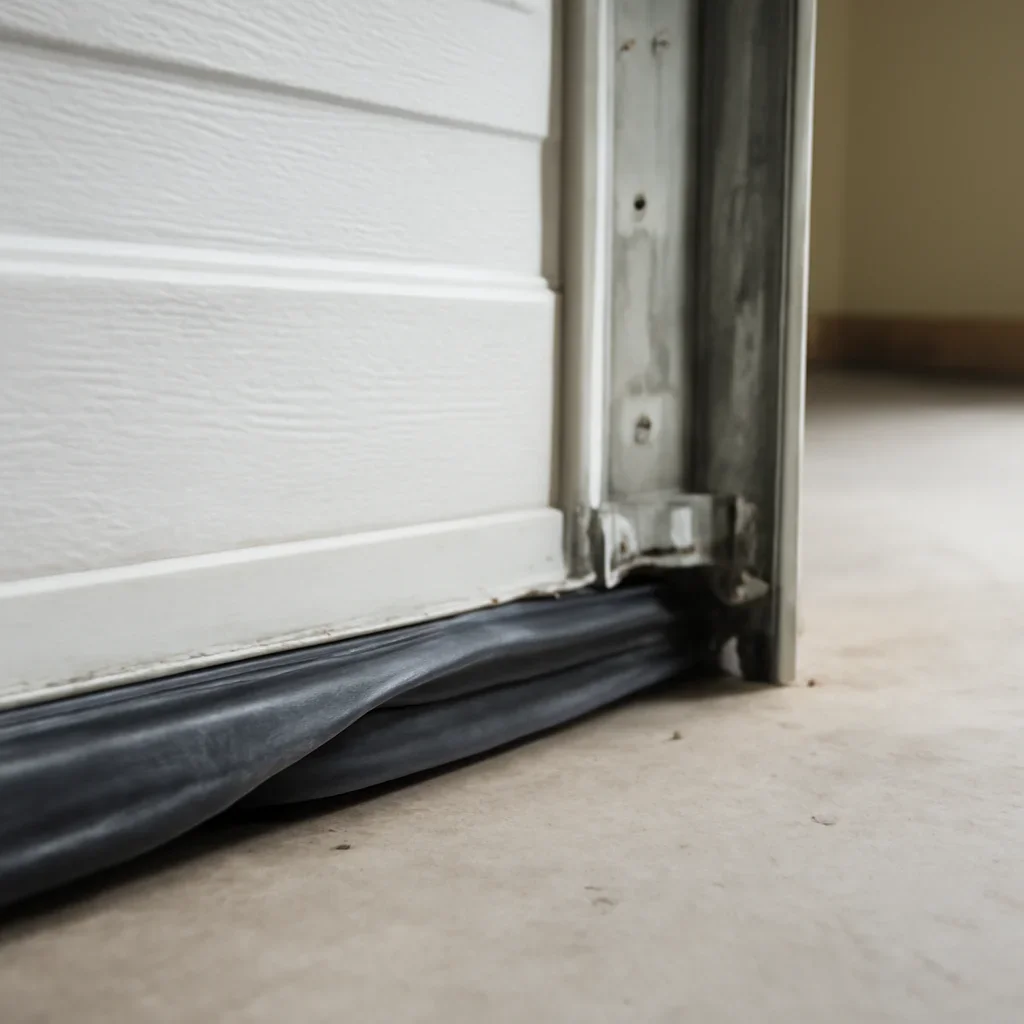
The bottom seal sits between the lowest door section and the threshold. Side and top weatherstripping attach around the opening and contact the exterior face of the closed door.
If one corner remains high, the door rubs, or the side gap changes from top to bottom, the tracks, floor or door alignment may need correction before new weatherstripping can seal consistently.
A seal works best when the door closes squarely and water is directed away from the opening. Replacing rubber without checking those conditions can leave the same leak or daylight gap in place.
Uneven contact may require garage door balance and alignment . A heavy, noisy or binding door may need complete garage door repair before the seals are replaced.
Rain is a routine part of life on the North Shore. During heavier storms, water may collect around low driveway areas, while wind can push rain and leaves toward exposed garage openings.
Homes in Lynn Valley, Seymour, Deep Cove, Edgemont, Canyon Heights and Capilano can have sloped or tree-lined approaches where runoff and debris affect the threshold. Lower and Central Lonsdale garages may be part of strata or mixed-use buildings where shared access, parking-level drainage and management approval also matter.
A useful assessment looks at the garage door and the surrounding opening. It should identify whether moisture is passing through a worn seal, collecting at a low spot, entering from the sides or being directed toward the door by the driveway.
Photos taken from inside the closed garage can clearly show daylight gaps. A wider exterior photo can also show driveway slope and the area where runoff reaches the opening.
The final recommendation depends on the failed seal, door alignment, threshold condition and how water or debris reaches the opening.
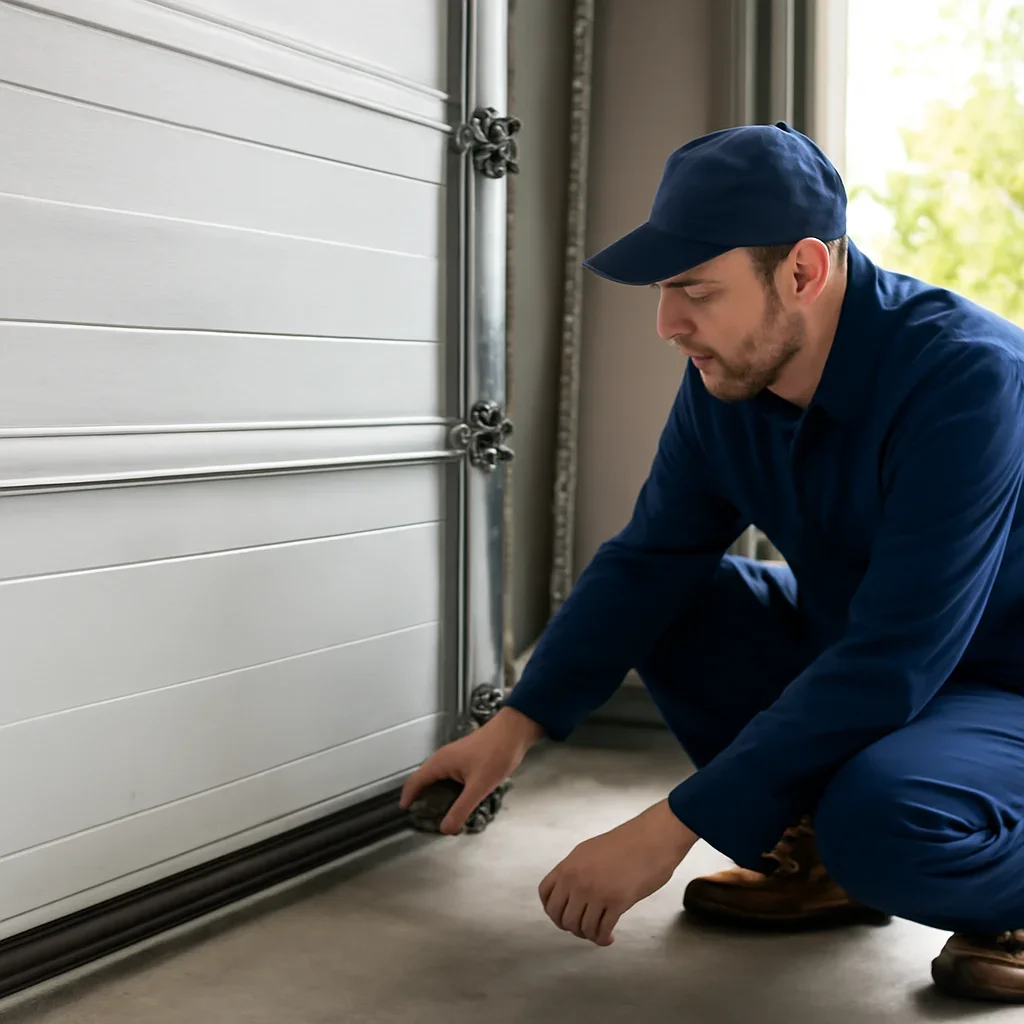
The goal is not to compress new rubber as tightly as possible. The door should move freely, close consistently and make suitable contact without creating excess resistance for the opener.
Check daylight, damaged seal sections, threshold contact and the point where moisture first appears.
Review level, tracks, rollers, balance and opener limits when the gap appears uneven.
Match the bottom seal or perimeter weatherstrip and correct related alignment where appropriate.
Confirm that the door operates smoothly and that the new seals contact the opening consistently.
A draft or small daylight gap can usually be scheduled normally. Urgent service is more appropriate when the door cannot secure the property, is stuck open, has become crooked or has water entry linked to impact or mechanical damage.
Use emergency garage door repair when safety, security or essential access is immediately affected.
Seal wear can overlap with alignment, frozen thresholds, damaged panels and general door maintenance.
These answers cover the most common bottom-seal, perimeter-gap and water-entry concerns.
Replacement is commonly needed when the rubber is cracked, torn, flattened, hardened, missing in sections or no longer contacts the threshold. Daylight, debris and water beneath a level closed door are also common signs.
It can help when water passes through a worn seal and the threshold is reasonably even. It may not stop water being directed toward the door by driveway slope, a low spot, blocked drainage or heavy wind-driven rain.
The floor may be uneven, the door may not be level or the seal may not suit the threshold variation. Tracks, rollers, balance and the bottom section should be checked before simply adding thicker rubber.
Yes. Perimeter weatherstripping can be replaced when it is cracked, curled, detached or no longer contacting the door. The door should sit squarely in the opening so the new seals make even contact.
Yes. Water can collect beneath a flattened or damaged bottom seal and freeze during a temperature drop. Repeated freezing may also point to standing water, drainage problems or uneven closing contact.
Properly fitted seals reduce open paths for leaves, dust and small pests. They do not replace broader pest-control or building-envelope work when entry occurs through walls, vents or other openings.
Yes. Excessive pressure can increase friction, distort the seal and add resistance to opening or closing. The goal is consistent contact while allowing the door to move freely.
Explain where daylight, drafts or water enter, whether the door sits level and whether the issue occurs during light or heavy rain. Include photos from inside the closed garage, your North Vancouver neighbourhood and the property type.
Share photos from inside the garage with the door fully closed, plus an exterior view of the threshold and driveway. Tell us whether the gap is at the bottom, sides or top and whether the door closes evenly. Those details help separate seal wear from alignment and drainage problems.