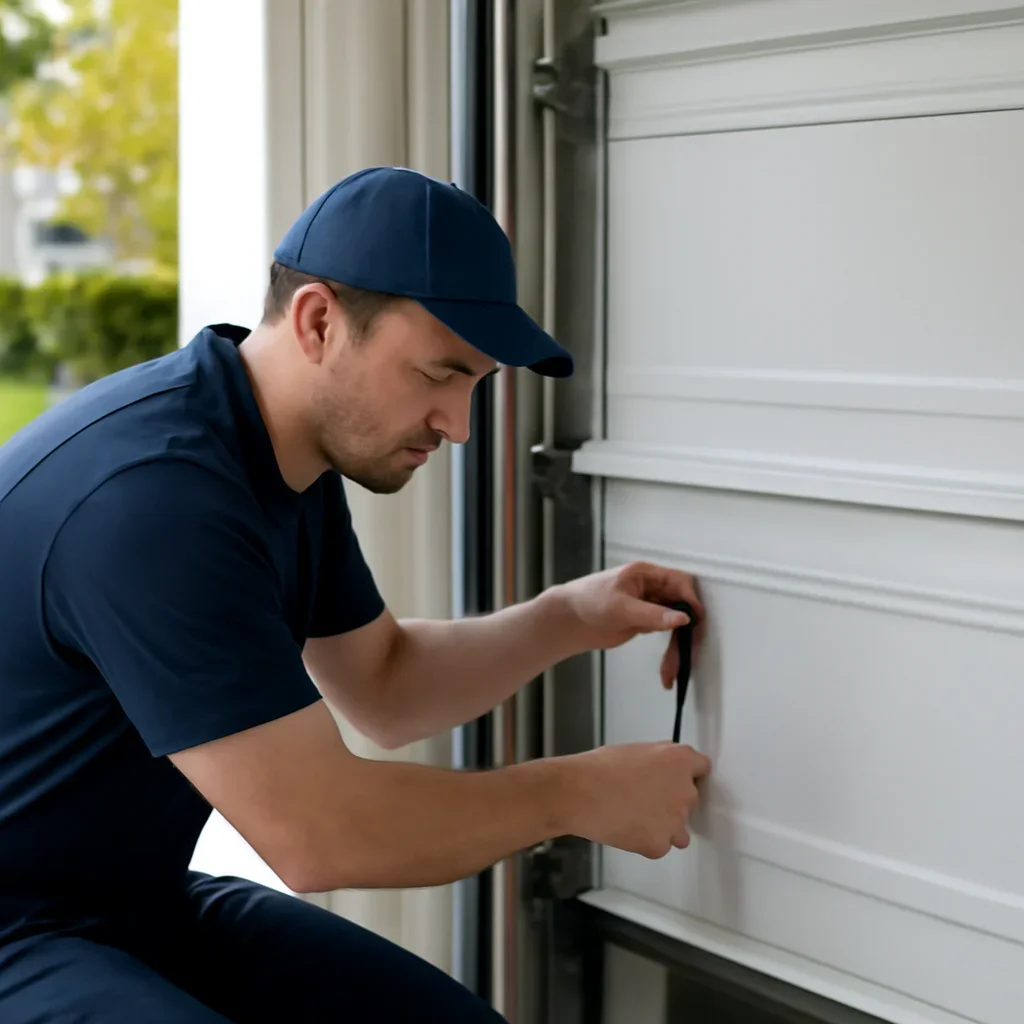
Describe the risk
Explain the door position, access problem, visible damage, trapped vehicle, security concern, and site conditions.

A garage door that is stuck, off track, hanging unevenly, or unable to secure the opening can affect safety, vehicle access, and property security. The first step is to stop unnecessary operation and identify the safest service path.
Treat the problem as urgent when the door cannot be used safely, a vehicle is trapped, the opening cannot be secured, or continued operation could cause the door or hardware to fail further.
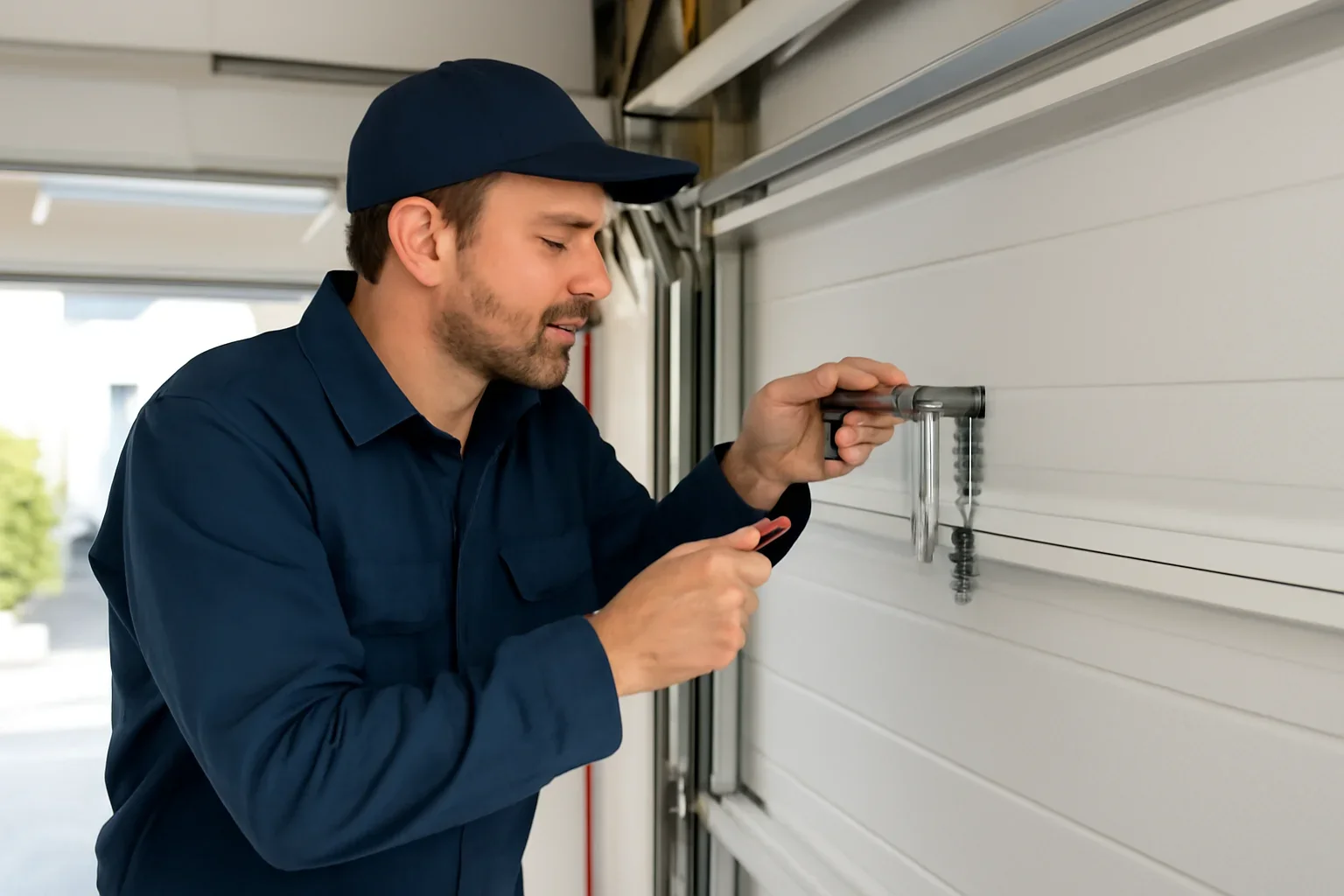
Repeated opener use can increase damage when a spring, cable, track, roller, or door section has failed. Keep children, pets, vehicles, and stored items away from the door's travel path.
These focused pages explain the warning signs and likely repair category without requiring you to diagnose the exact failed part.
For power, opener, locking, spring, cable, balance, or track problems that prevent access.
Review opening problems →For sensor faults, track resistance, obstructions, settings, or damage that prevents the property from being secured.
Review closing problems →For a visible spring gap, loud snap, unusually heavy door, or opener that can no longer lift the system.
See broken spring repair →For hanging cable, uneven lifting, a crooked door, or movement that has become unstable on one side.
Review cable repair →For rollers outside the track, bent track sections, impact damage, or a door that is leaning or jammed.
See off-track repair →For power, motor, controls, settings, sensors, or door-balance problems that stop automatic operation.
Review opener problems →Steep driveways, shared garages, narrow lanes, underground parking, wet weather, and limited workspace can change how an urgent visit should be planned. Mention these details in the first request so access and safety can be considered.
State whether a vehicle is trapped inside, blocked outside, or positioned beneath a partly open door.
Explain whether the opening is exposed, cannot be locked, or provides direct access to an attached home or commercial space.
Include gate codes, parkade clearance, visitor parking rules, shared entrances, steep slopes, or narrow service access.
For non-urgent faults, the main garage door repair page provides a broader overview of inspection and repair options.
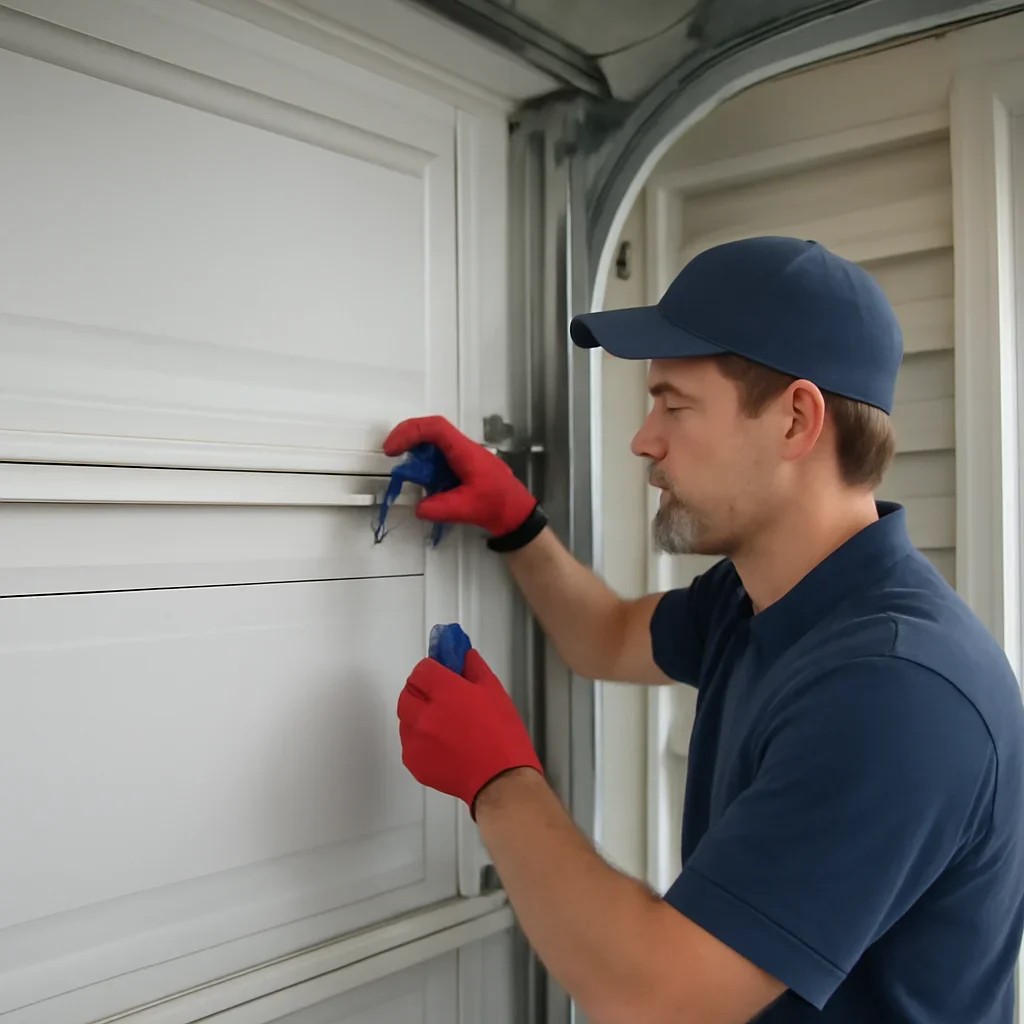
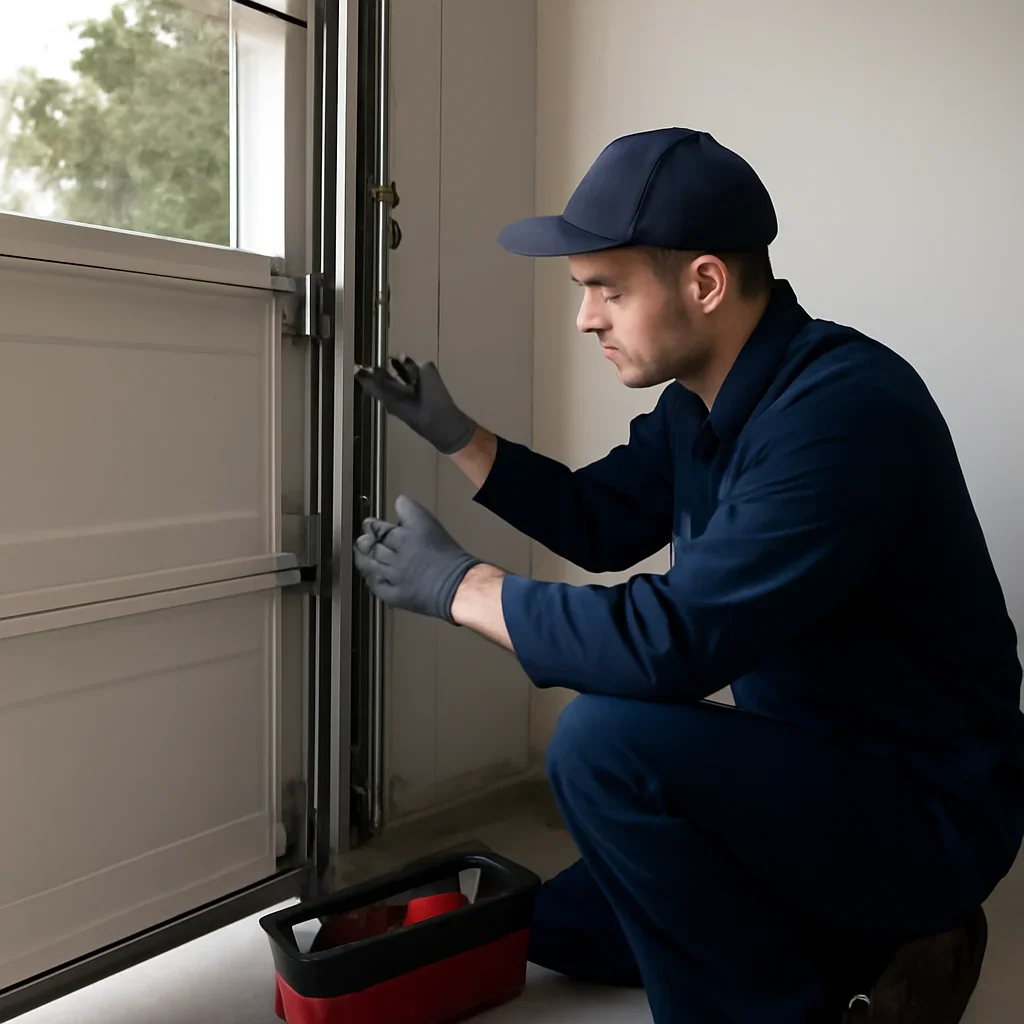
The immediate goal is to understand what failed, whether the door is stable, and what must be repaired before normal operation can resume.
Check whether the door is level, supported, off track, partly open, binding, or placing unusual load on one side.
Visible failures and related damage should be identified before the opener or manual movement is tested.
Controls, sensors, travel settings, mounting, strain, and safety reversal should be checked after mechanical issues are addressed.
A dedicated garage door inspection can help identify hidden damage after an impact, jam, or sudden system failure.
Urgency should not replace a proper assessment. The door still needs to be stabilized, diagnosed, repaired, and tested as a complete system.
Explain the door position, access problem, visible damage, trapped vehicle, security concern, and site conditions.
The immediate priority is preventing unsafe movement, additional damage, or exposure of the property.
Springs, cables, tracks, rollers, hardware, opener components, or damaged sections are addressed based on inspection.
Balance, travel, controls, sensors, safety reversal, closing position, and overall movement are checked.
These links cover pricing factors, service coverage, common questions, and support information for urgent and follow-up work.
These answers cover the main safety, access, and service questions that arise when a door suddenly becomes unusable.
A garage door problem may be urgent when the door is stuck open, trapping a vehicle, hanging unevenly, off track, affected by a broken spring or cable, or creating a safety or security risk. A new noise alone may not be an emergency, but stop using the door when movement becomes unstable.
No. A broken spring or damaged cable can remove lifting support and make the door unstable. Stop using the opener, keep people clear, and do not attempt to reconnect or tension these parts.
Provide the property area, current door position, whether a vehicle is trapped, visible damage, unusual sounds, opener behaviour, and any steep, narrow, gated, shared, or underground access conditions.
Yes. Steep driveways, wet weather, shared garages, underground parking, narrow lanes, and limited staging space can affect access and the safest way to approach the repair.
State whether the door is open, closed, partly open, or crooked; whether a vehicle is trapped; and whether you can see a broken spring, hanging cable, bent track, damaged panel, or flashing opener light.