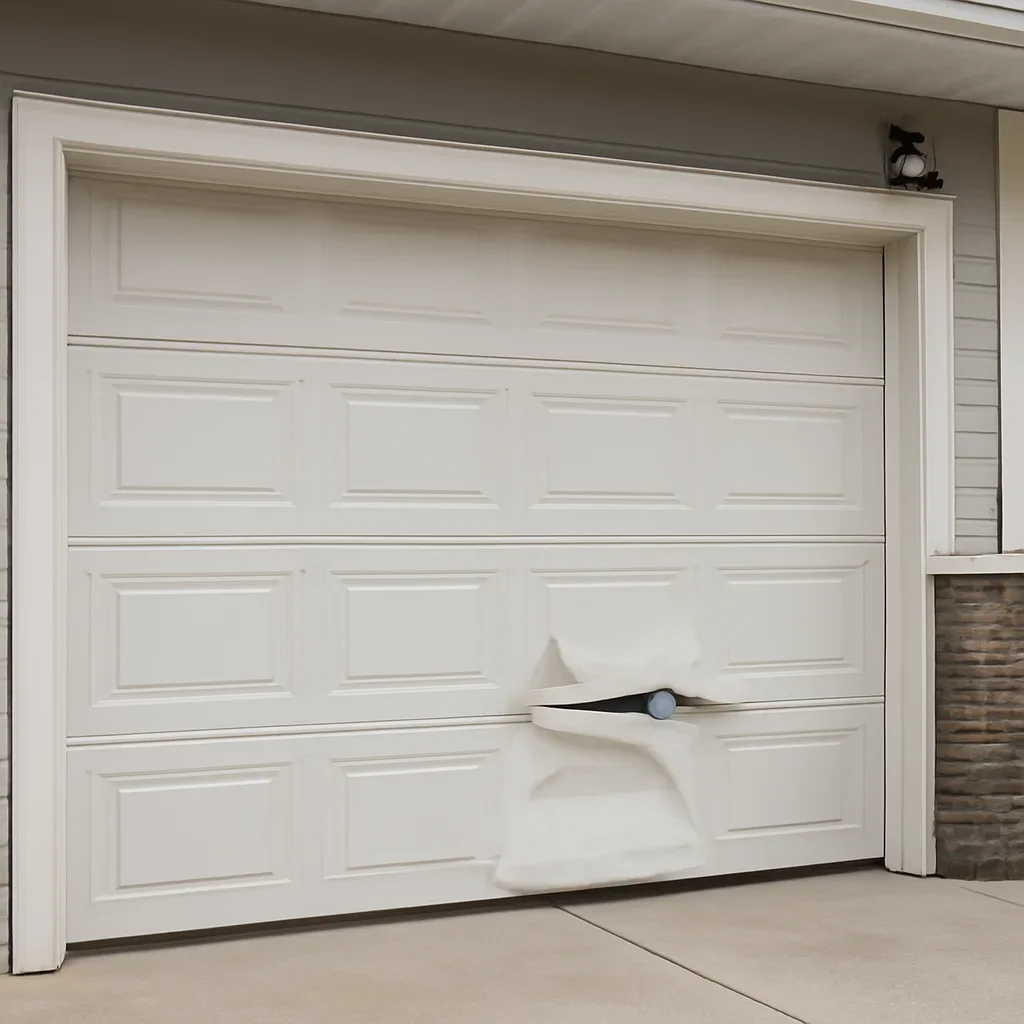
Cosmetic denting
A shallow dent that does not distort the panel edge, hinge area or door movement may primarily affect appearance.

A dented, cracked, bent or impact-damaged garage door panel can affect appearance, insulation, weather sealing and the way the door moves through the tracks. The right solution depends on whether the damage is cosmetic, limited to one section or affecting the complete door structure.
Stop using the door if the damaged section is folded, rubbing the track, separating at a hinge or making the door move unevenly. A shallow dent may remain cosmetic, while a bent or cracked section may require single-panel replacement. Full-door replacement is considered when several sections are damaged, the model is no longer available or the remaining door is already heavily worn.
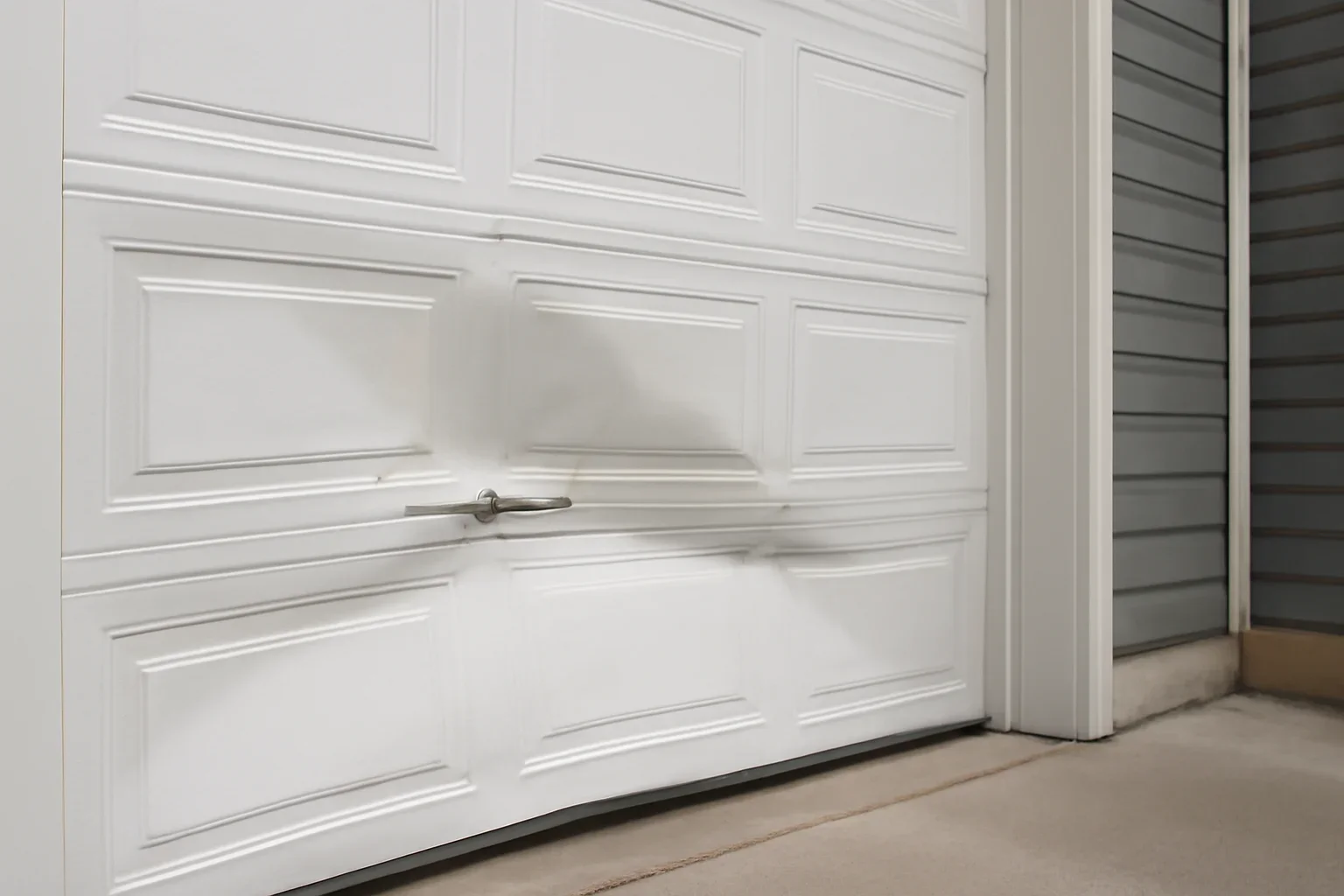
The visible panel is connected to hinges, rollers, tracks, seals and the lifting system. Damage in one section can change how the entire door bends and moves.
A shallow dent that does not distort the panel edge, hinge area or door movement may primarily affect appearance.
A bent edge can catch during travel, alter roller alignment or stop the section from sealing evenly at the sides.
Cracking can reduce panel strength and may worsen as the door flexes between the vertical and horizontal tracks.
Vehicle or equipment impact may affect tracks, hinges, rollers, cables and framing in addition to the visible panel.
Damage to an insulated section can create gaps, loose material, reduced thermal performance or moisture entry.
Damage near the floor can affect the bottom seal, cable attachment area, closing contact and resistance to water and debris.
You do not need to identify every damaged component. A few visible signs can show when the problem is more than cosmetic and should be assessed before the door is used again.
Do not repeatedly run an impacted door or push a folded panel back into shape while it is connected to the operating system. Hidden track, hinge, roller or lifting-system damage may be present.
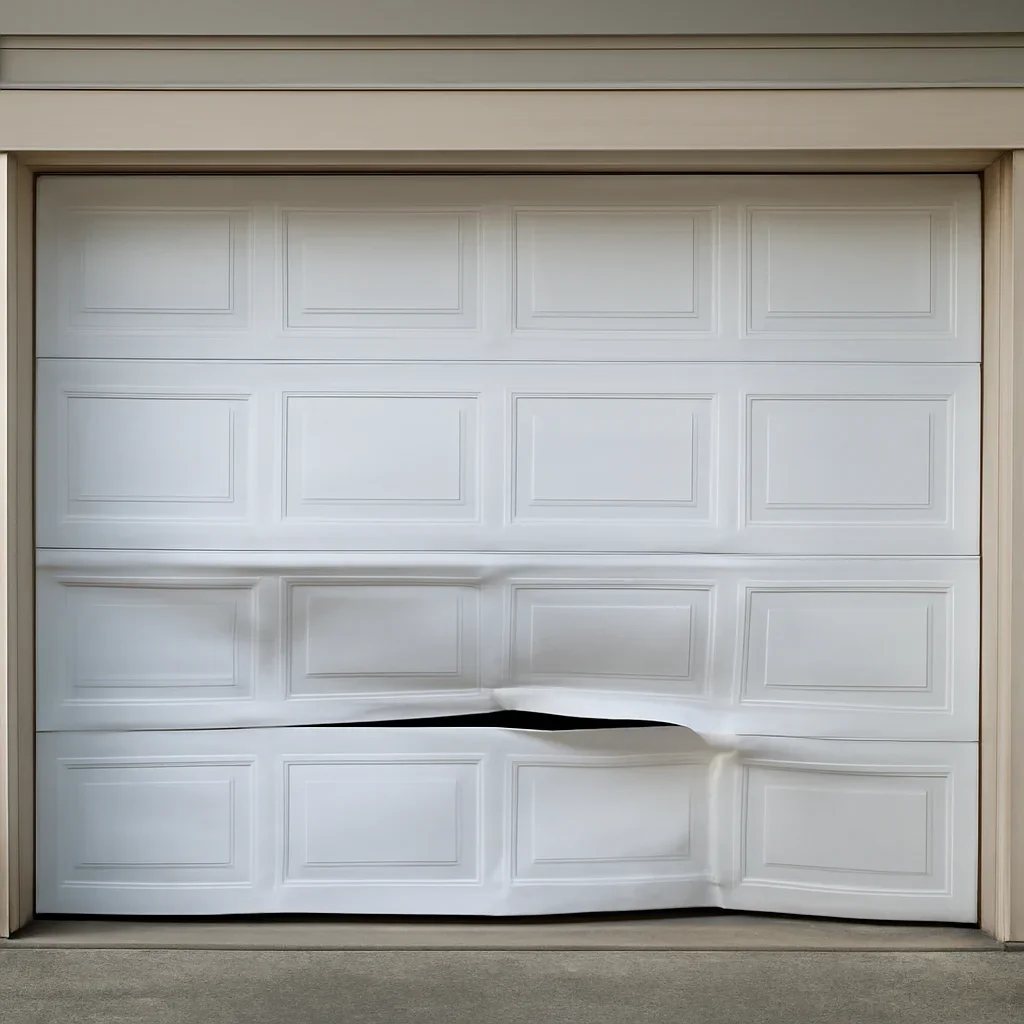
A replacement section must suit the opening and operating system, not only look similar from the driveway.
Lower and Central Lonsdale contain a high concentration of apartment and mixed-use properties, while the wider District includes the Capilano, Lynn Valley and Seymour service areas. That mix means panel damage may involve a private residential door, a managed strata exterior or a commercial access point.
Compact parking areas can increase the chance of low-speed vehicle impact. Sloped driveways and limited turnaround space may also make an uneven or binding door more disruptive because a vehicle cannot be moved until safe operation is restored.
For strata properties, confirm whether exterior colour, panel style or contractor approval must be coordinated before replacement. For businesses, include operating hours and whether the damaged door affects deliveries, customer access or security.
Photos of the complete door and close views of the damage can help show whether the issue appears cosmetic or requires an on-site structural assessment.
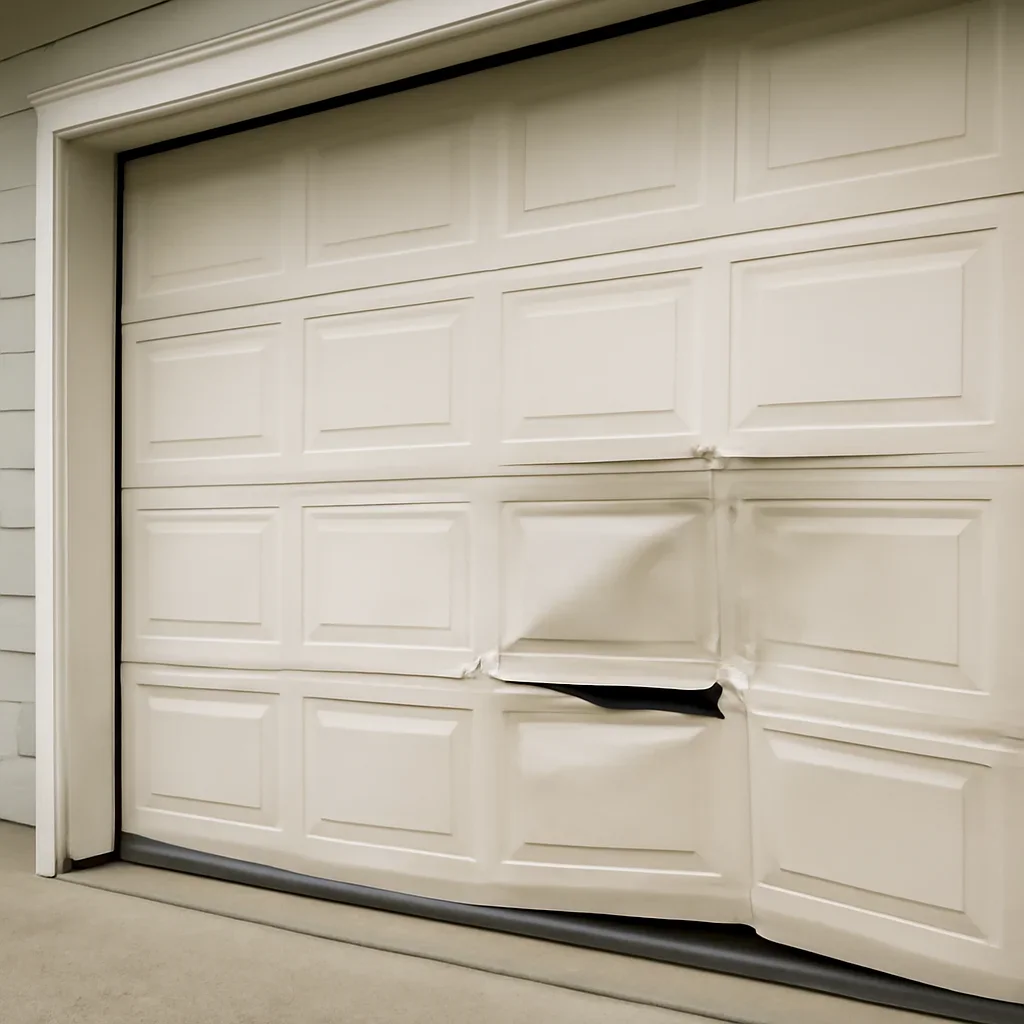
The visible panel is only one part of the door. The inspection should confirm whether the impact or deformation changed roller travel, hinge attachment, track alignment, balance or opener load.
Identify where the section is bent, cracked, separated or compressed and whether a vehicle or object struck the door.
Check hinges, rollers, tracks, cables, seals and attachment points around the damaged area.
Review alignment, balance, opener strain, closing contact and safety reversal.
Explain the value, availability and limitations of repair, panel replacement or full-door replacement.
Cosmetic denting can usually wait for a standard assessment. The situation becomes urgent when the door cannot secure the property, traps a vehicle, hangs unevenly or has damage that may affect controlled movement.
Use emergency garage door repair when safety, security or essential access is immediately affected.
These supporting services cover panel replacement, complete door upgrades, weather sealing and operating-system issues found during the assessment.
These answers cover the decisions property owners commonly face after denting, impact or section damage.
Often, yes, when the damage is limited to one section and a compatible panel is available. The replacement must match the door’s dimensions, construction, profile and hardware layout. The remaining door and operating system must also be in suitable condition.
A shallow dent may be cosmetic if the panel edges, hinges and door movement remain normal. A deeper dent or fold can change section strength, roller travel, sealing and opener load, so the complete door should be checked.
Stop using it when the panel rubs the track, pulls at hinges, makes new noises or causes uneven movement. Repeated operation can worsen the section and damage connected tracks, rollers or opener parts.
The factory colour may be available, but an older door may have faded from weather and age. Profile, texture and construction must also match. In some cases, refinishing or full replacement produces a more consistent result.
Full replacement may offer better value when several panels are damaged, the model is obsolete, the door already has significant wear or additional insulation, seal and hardware work is needed.
The assessment should include the panels, hinges, rollers, tracks, cables, springs, frame, opener load and door balance. Impact can move components that appear separate from the visible dent.
Yes. A bent edge, separated skin or damaged bottom section can create air and moisture gaps. The inspection should check section insulation, side contact and the bottom weather seal.
Explain how the damage occurred, which section is affected and whether the door still moves and closes normally. Include photos when possible, your North Vancouver neighbourhood, the property type and any visible door brand or model.
Share a full-door photo, a close view of the damaged section and any signs of track, hinge or seal damage. Tell us whether the door still opens, closes and sits level so the request can be directed toward repair, panel replacement or full-door replacement.