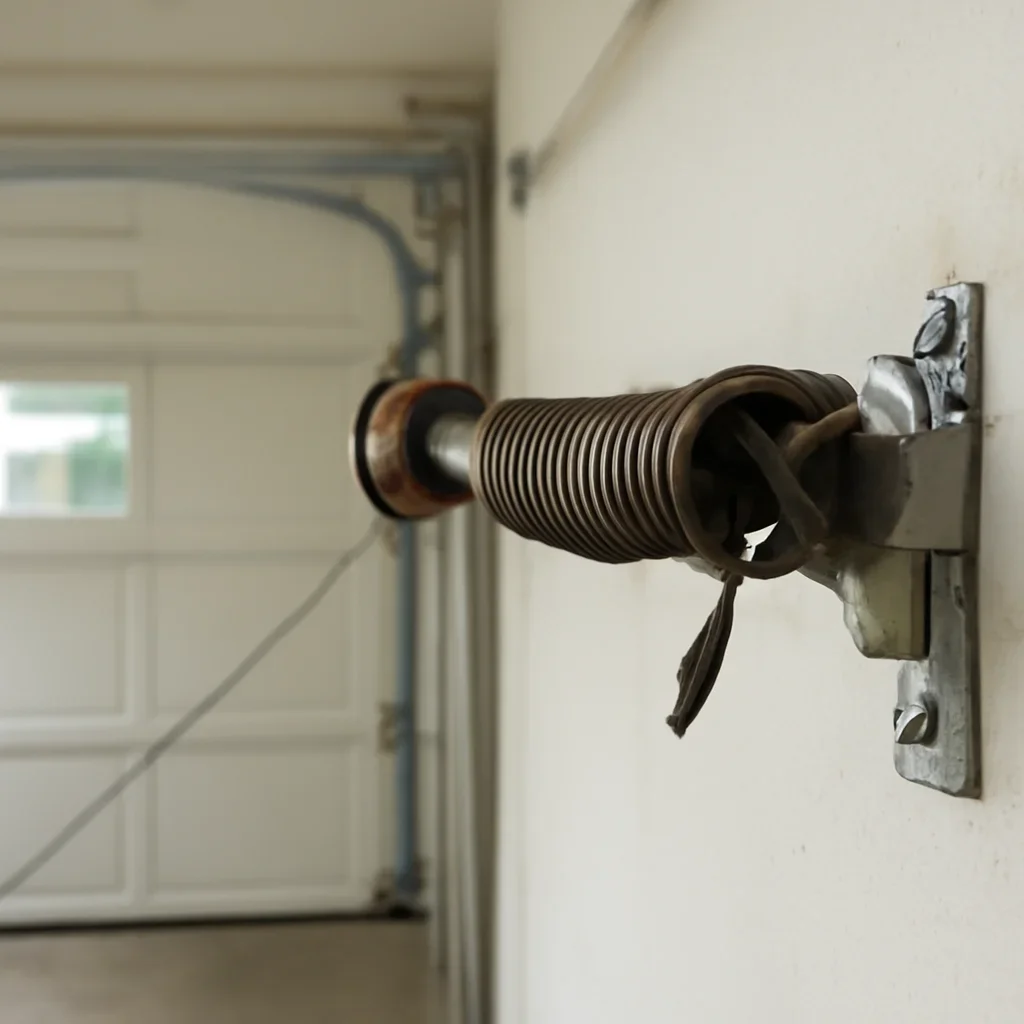
The door feels unusually heavy
Springs counterbalance much of the door’s weight. Once a spring fails, manual lifting may become difficult and the opener may only raise the door a few inches.

A broken spring can leave your garage door too heavy to lift, stuck partway, uneven or suddenly unable to open. Stop operating the door when you hear a sharp bang, see a visible gap in the spring or notice the opener struggling against the door’s weight.
Do not try to stretch, reconnect or replace a garage door spring yourself. Springs store significant tension and must be matched to the door’s weight and lifting system. Request professional assessment, especially when the door is trapping a vehicle or cannot be secured.
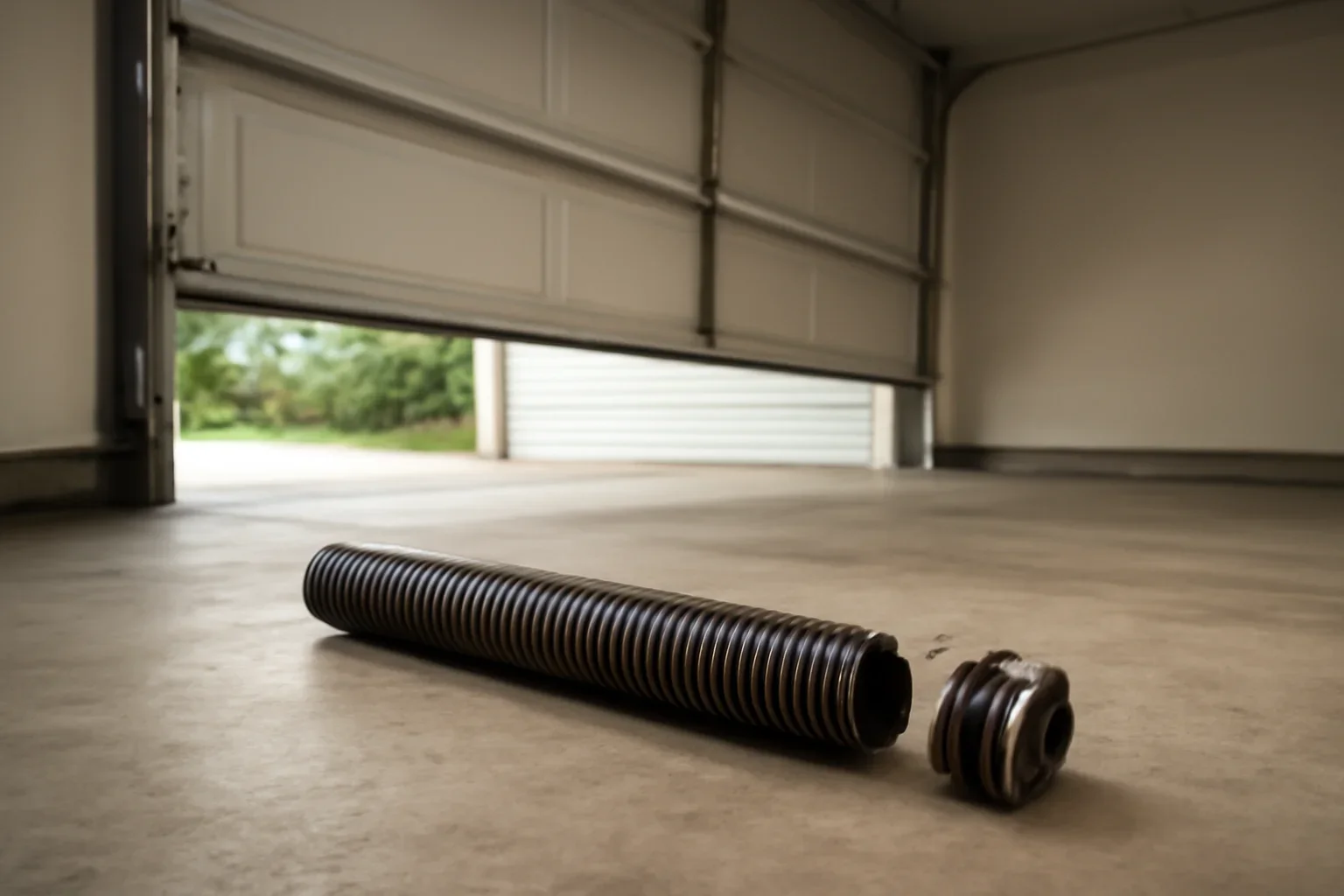
The failure is not always obvious from the floor. The door’s behaviour, the position of the spring and the sound made at the time of failure can all help narrow down the problem.
Springs counterbalance much of the door’s weight. Once a spring fails, manual lifting may become difficult and the opener may only raise the door a few inches.
A torsion spring can make a sharp sound when it breaks. The noise may be mistaken for something falling inside the garage.
A separated coil above the door is a strong sign of spring failure. Do not touch the spring, shaft, drums or nearby cable system.
A failed spring or related cable problem can make one side lag behind, increasing the chance of the rollers binding or leaving the tracks.
The motor may still operate even though the lifting system can no longer manage the door safely. Continuing to run it can damage the opener.
Cable tension may change when a spring fails. Loose cable should be treated as part of the lifting-system problem, not a separate cosmetic issue.
A broken spring is not a routine adjustment. The safest response is to stop using the door and arrange a professional inspection. This is especially important when the opening is unsecured, a vehicle is trapped or the door is hanging unevenly.
Pulling the emergency release does not make a spring-damaged door safe. It may remove the opener’s hold and allow a heavy door to move unexpectedly.
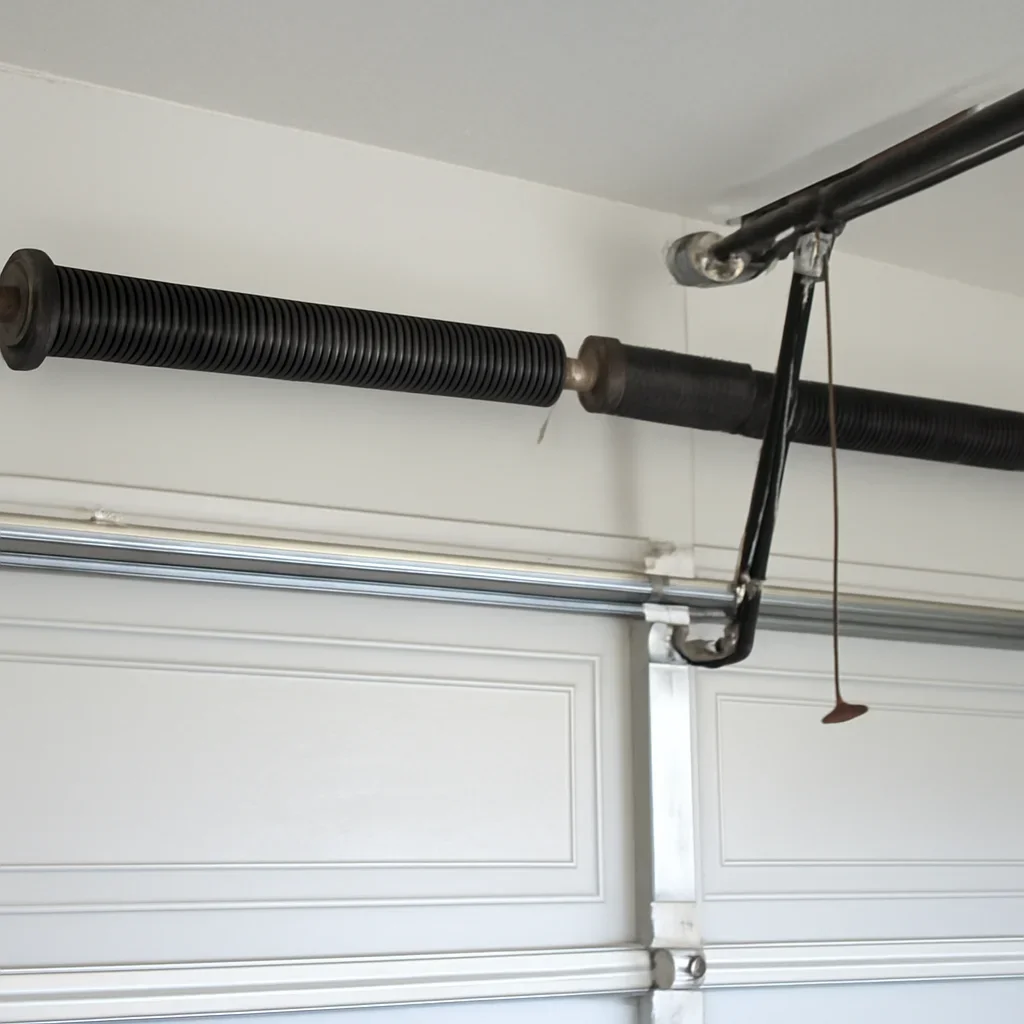
The spring, shaft, drums, cables, bearings, tracks and opener all work together. A proper assessment checks whether the spring failure affected other components or exposed wear that contributed to the breakdown.
Replacement selection should match the door’s size, construction, weight and lifting setup rather than relying on appearance alone.
Loose, frayed or displaced cable may indicate related damage. Review our garage door cable repair guidance.
The repaired door should move evenly and remain controlled through its travel. Uneven movement may require balance and alignment service.
An opener that repeatedly tried to lift a spring-damaged door should be checked for abnormal strain, travel issues and safe reversal operation.
Spring failure is urgent when it affects property security, essential access or immediate safety. Use the emergency garage door repair option when the door is unstable, blocking necessary access or leaving the opening exposed.
A loud bang alone does not confirm every detail of the failure. Tell us whether the door moved after the sound, whether a cable appears loose and whether the opening can currently be secured.
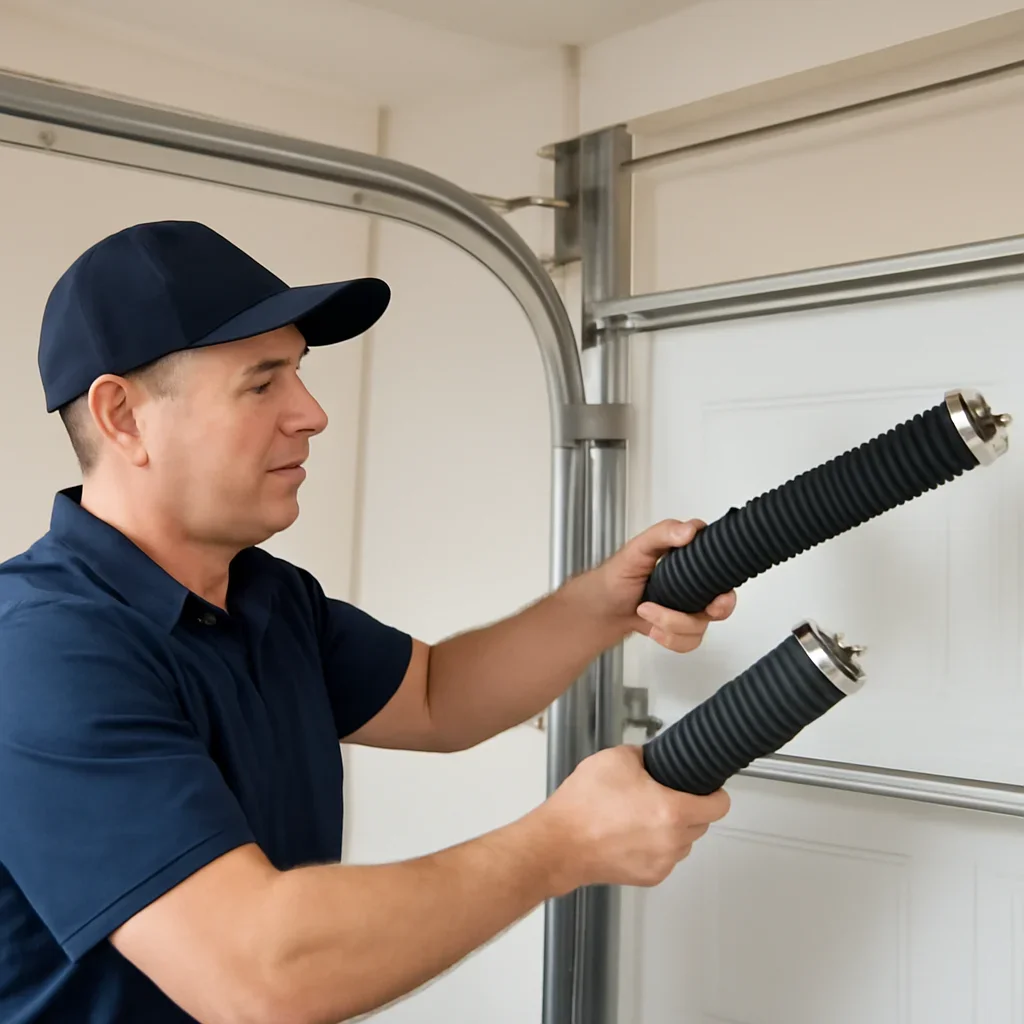
The goal is not only to restore movement. The complete door should be checked so that spring selection, cable position, balance and opener operation work together safely.
A broader garage door inspection may be useful when the system is older, has a history of repeated breakdowns or shows corrosion, track wear or panel damage.
Start with the symptoms you can safely see or hear. You do not need to identify the spring type or diagnose the full system before contacting us.
Tell us whether you heard a bang, saw a spring gap, noticed loose cable or found the door too heavy to lift.
Explain whether the door is open, closed, trapping a vehicle or leaving the property unsecured.
The spring setup, cables, drums, tracks, rollers, balance and opener are reviewed together.
Door travel, balance, cable position and opener operation are checked before the repair is considered complete.
Garage doors across North Vancouver operate in damp coastal conditions, seasonal temperature changes and properties with very different access needs. A single-family garage in Lynn Valley or Deep Cove may have a sloped driveway or exposed opening, while a strata garage near Lower Lonsdale may serve many vehicles every day.
Moisture, frequent cycling and older hardware can contribute to corrosion, bearing wear and uneven movement. The spring replacement decision should reflect the actual door, its daily use and the condition of the supporting parts rather than treating every failure the same way.
A spring failure can affect other moving parts. Use the service path that best matches what the door is doing now.
Request diagnosis when the door is heavy, stuck, noisy, uneven or no longer moving correctly.
Explore repair serviceReview the lifting-system service path when spring failure is paired with loose, displaced or damaged cable.
Review spring and cable serviceUse urgent service when the door is unstable, blocking essential access or leaving the property unsecured.
Check emergency serviceArrange checks for balance, hardware, rollers, tracks, cables and opener performance before wear becomes another breakdown.
View maintenance optionsCompare repair, opener, maintenance, installation and replacement options for residential and commercial properties.
Browse service optionsDescribe the spring symptoms, current door position and any access or security concern affecting the property.
Send service detailsThese answers cover the immediate questions North Vancouver property owners often have after a spring failure.
The safer choice is to leave the door still and request service. A door without proper spring support can be extremely heavy, move unevenly or fall unexpectedly. Do not attempt to lift it simply to test the problem.
A broken torsion spring commonly shows a visible gap in the coil above the door. You may also notice loose cable, a heavy door or an opener that runs without lifting the door properly.
A spring can release a sharp sound when it breaks. Check from a safe distance for a visible gap above the door, but do not touch the spring, shaft, drums or cables.
That depends on the door setup, spring age, cycle history and condition of the remaining components. A professional assessment should explain whether replacing one or more springs offers the safer and more practical long-term result.
Yes. The opener is not designed to replace the spring system. Repeatedly running it against a heavy door may strain the motor, rail, trolley and other opener components.
Spring failure can change cable tension and allow cable to loosen or move out of position. Do not pull or rewind the cable. The springs, drums and cables should be inspected as one lifting system.
It becomes urgent when the door is unstable, a vehicle is trapped, the opening cannot be secured or the failure is stopping essential business or strata access. Otherwise, leave the door still and arrange repair as soon as practical.
Include the property location, current door position, whether you heard a bang, whether a spring gap or loose cable is visible, and whether access, security or a trapped vehicle makes the request urgent.
Describe whether you heard a bang, saw a spring gap, noticed loose cable or found the door too heavy to lift. Include your North Vancouver location and whether the door is open, closed, trapping a vehicle or unsafe to use.