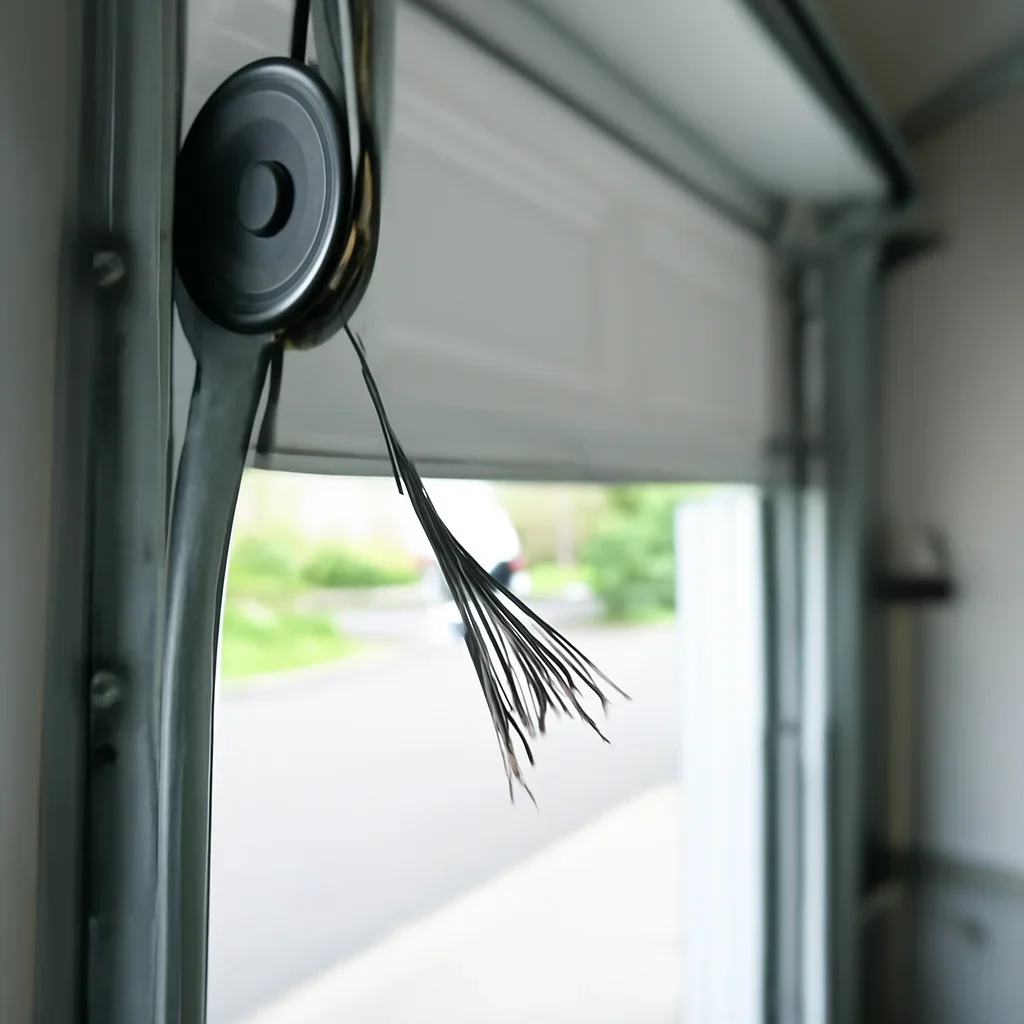
The Door Is Crooked
One side may sit lower than the other, rise first or appear pulled out of square within the opening.

A snapped, loose or unwound lifting cable can leave a garage door crooked, jammed or carrying its weight unevenly. Stop operating the door and request an assessment of the cables, springs, drums, tracks and related lifting components before the damage spreads.
A broken cable can allow one side of the door to drop or pull out of alignment. Do not touch the loose cable, force the door by hand or keep pressing the opener. Keep people and vehicles clear of the opening.
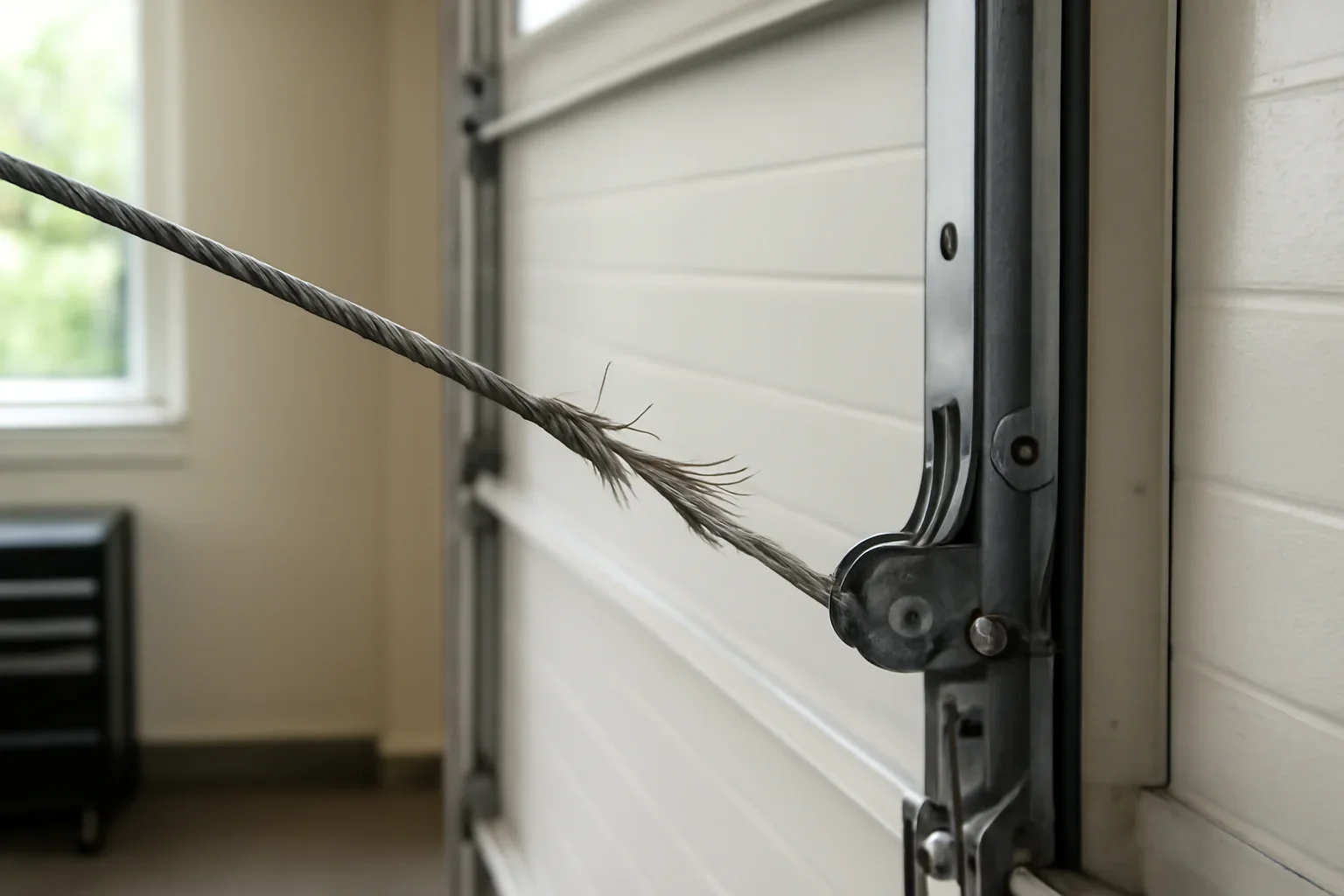
The cable itself may not always be easy to see. The way the door sits and moves often provides the clearest warning that the lifting system is no longer working evenly.
One side may sit lower than the other, rise first or appear pulled out of square within the opening.
You may notice a slack, frayed or hanging cable near the lower corner of the door, track or cable drum.
The opener may run while the door barely moves, stops partway or strains against uneven weight.
Uneven cable tension can pull rollers out of alignment and create a second problem that also needs to be corrected.
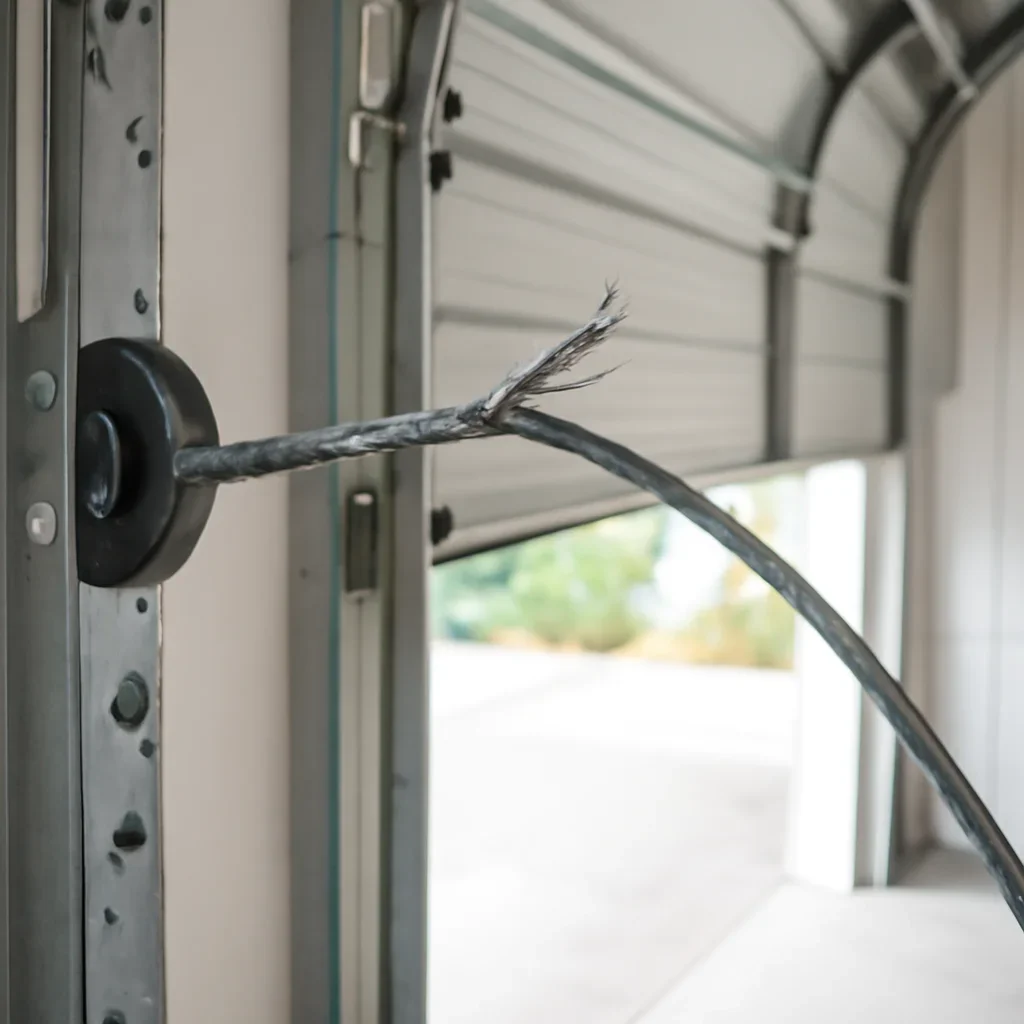
Garage door cables operate under load as part of the spring-assisted lifting system. A loose or broken cable is not a safe do-it-yourself adjustment. The immediate goal is to stop movement and keep the area clear.
When the opening cannot be secured, a vehicle is trapped or the door may fall, use the emergency garage door repair pathway rather than waiting for routine service.
A cable failure may be the visible result of wear elsewhere in the system. Replacing only what can be seen without checking the related components may leave the original cause unresolved.
Repeated bending around the drums, moisture exposure and age can weaken individual strands until the cable can no longer carry the load safely.
A failed spring, worn drum or uneven cable tension can overload one side and allow the cable to slip, unwind or break.
A door that binds, becomes obstructed or is struck may move unevenly and pull the cable out of its normal path.
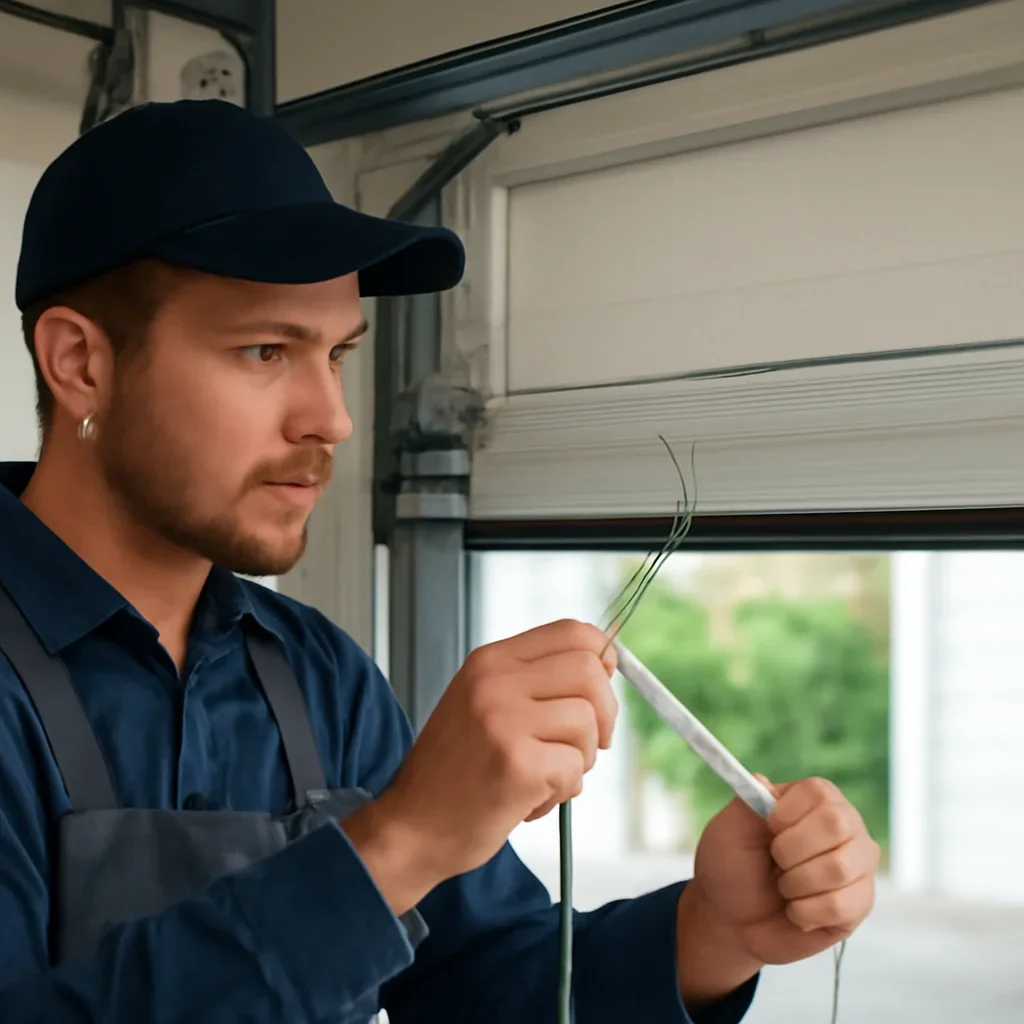
Garage door cables do not operate alone. The assessment should identify why the cable failed, whether both sides remain serviceable and whether the door has been pulled out of alignment.
Several garage door faults can create similar symptoms. The visible cable may be damaged, but the assessment should determine which part started the failure.
A cable may be visibly frayed, hanging, unwound from the drum or no longer supporting one side of the door.
Request an assessmentA failed spring can make the door extremely heavy and may cause a cable to lose tension or jump off the drum.
Review broken spring repairA crooked door, displaced roller or bent track may be the result of uneven cable tension or may have caused the cable to slip.
Review off-track repairThe opener may be working correctly but unable to move a door that has lost spring assistance or even cable tension.
Compare service optionsThe repair approach should account for the property type, access to the opening, frequency of use and exposure around the garage. These conditions can differ between denser City properties and homes across the District.
Townhomes, strata garages, shared parkades and mixed-use properties may require coordinated access, clear communication and attention to doors that affect several residents or commercial users.
Detached garages, sloped driveways, exposed openings and frequent wet conditions can make corrosion, alignment and safe access important parts of the repair assessment.
A failed cable may affect vehicle movement, resident access and building security. Include the door location and access restrictions when making the service request.
Higher-cycle doors and operational downtime require an assessment that considers door weight, use frequency, safe isolation and the condition of the complete lifting system.
Every broken cable should be treated seriously, but the urgency depends on whether the door threatens safety, security or essential access.
The service request begins with what you can safely observe. The door and lifting system can then be checked before the appropriate repair is explained.
Explain whether it is open, closed, crooked or stuck and whether a cable is visibly loose or broken.
Cables, drums, springs, tracks, rollers, brackets and opener strain are reviewed to identify the complete fault.
The required work and any related wear are explained before the repair direction is selected.
Door level, cable tracking, balance, opener travel and relevant safety functions are checked after the work.
These answers cover the most common questions North Vancouver property owners ask when a cable breaks, loosens or comes off the drum.
No. Stop operating the door. A snapped cable can leave the door uneven, unstable or too heavy for the opener. Continued use may damage the tracks, rollers, panels, drums or opener and may create a falling-door risk.
Uneven height often means one side is no longer carrying the same tension. A cable may have snapped, slipped off the drum or become loose because of a spring, drum, track or roller problem.
This is not a safe do-it-yourself adjustment. Cables, drums and springs operate under load. Repositioning a cable without controlling the door and spring tension can cause sudden movement or further damage.
Not always, but the spring must be checked. A failed or weakened spring can remove tension from the cable or overload the remaining lifting components. The drums, brackets and opposite cable should also be inspected.
The decision depends on the condition, age and compatibility of both cables. Because the pair has usually experienced similar use, the opposite cable should be inspected for fraying, corrosion and wear before deciding.
Yes. Uneven lifting force can tilt the door and pull rollers out of their normal path. When the door is crooked or a roller has left the track, stop using it and request an assessment of both problems.
It is urgent when the door may fall, is stuck partly open, leaves the property unsecured or traps a vehicle. A stable door that is fully closed may be able to remain unused while standard service is arranged.
State whether the door is open, closed or crooked, whether a cable is hanging or frayed, whether the opener was running when the problem started and whether access or property security is affected.
These pages can help when the cable failure is connected to another part of the door or when you need broader repair and pricing information.
Include your North Vancouver location, whether a cable is visibly loose or snapped, and whether the garage is secure. Those details help direct the request to standard or urgent garage door service.