North Vancouver Garage Door Guide
Why a Garage Door Closes, Touches the Floor, Then Reopens
This pattern differs from a door that will not close because the photo-eye beam is blocked. The timing—reversal only after floor contact—is the key clue.
Garage door closing solutions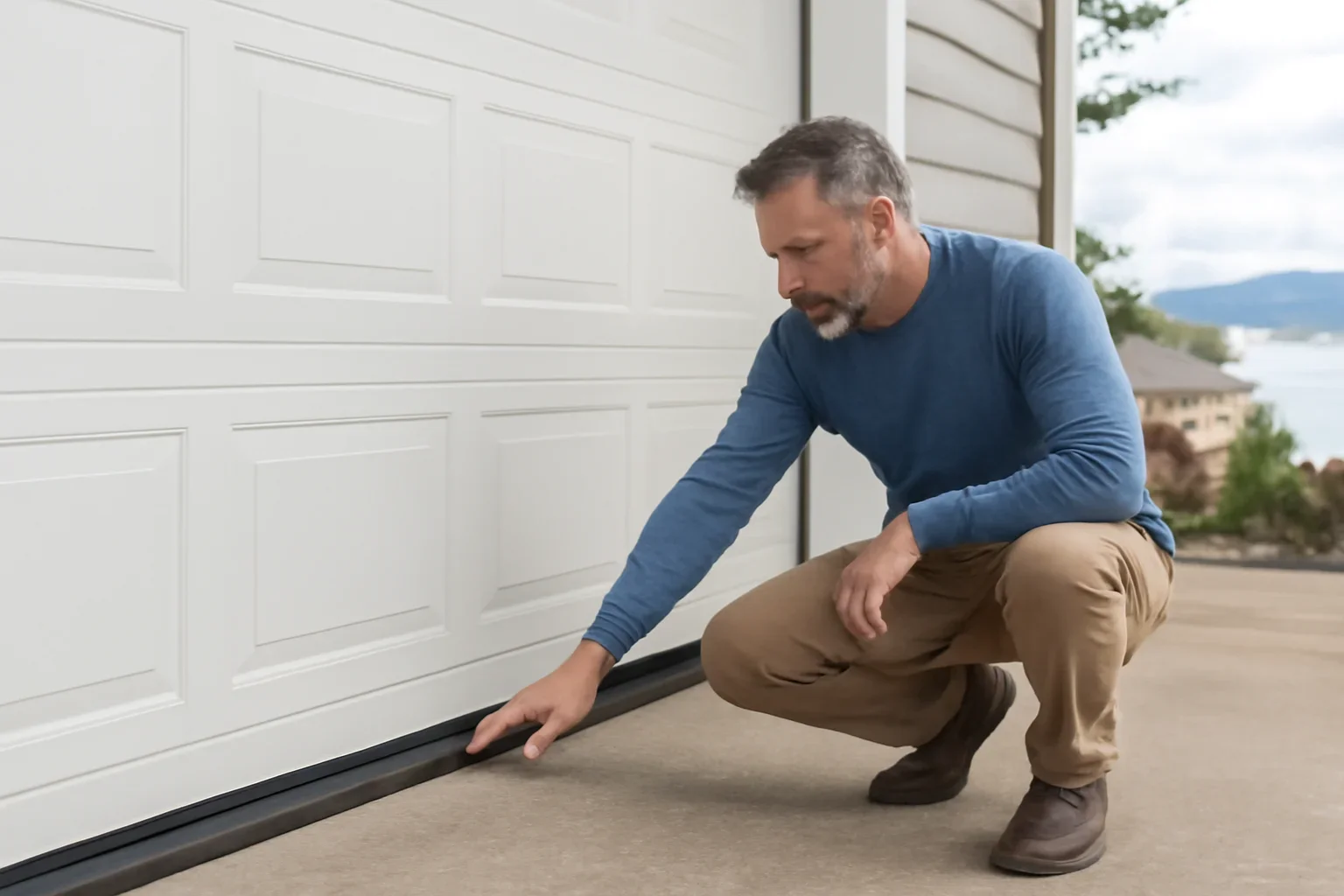
Quick answer
When a garage door reaches the floor and immediately reopens, the opener may think it hit an obstruction. Common causes include incorrect down-travel settings, an uneven floor, a compressed or damaged bottom seal, binding hardware, or a door that is not balanced.
What to understand first
Down travel may be set too far
The opener continues pushing after the door reaches the floor and interprets the resistance as an obstruction.
The floor may be uneven
One corner can contact early while the other remains above the slab.
The bottom seal can fold or bind
A hardened, swollen, or displaced seal may create unexpected resistance.
Door balance or track friction can vary near the floor
Rollers, hinges, track alignment, or spring condition can increase resistance at the final inches.
Safe checks and next steps
- Clear the threshold. Remove loose stones, leaves, ice, and stored objects.
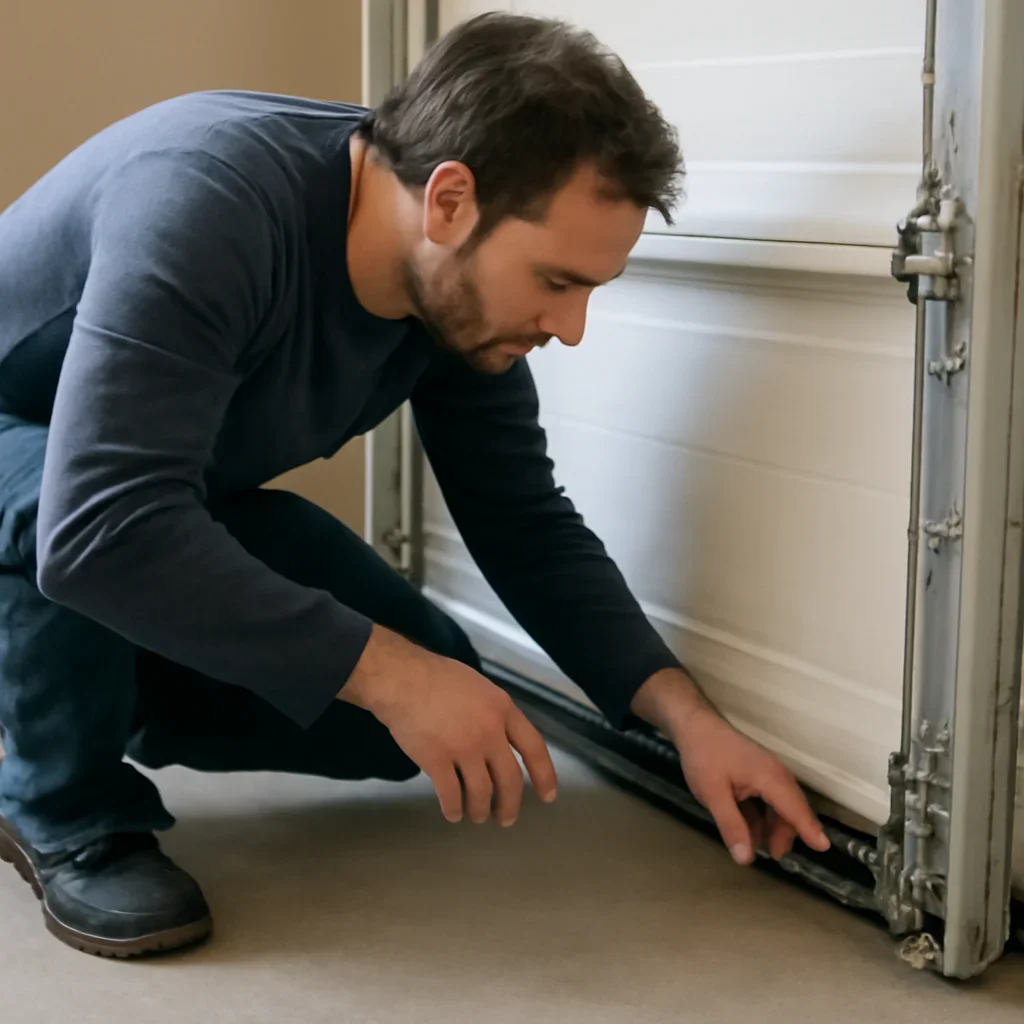
- Watch which section contacts first. Stand inside and keep clear of the path; note whether the door reaches the floor evenly.
- Inspect the bottom seal visually. Look for folding, detachment, or a section caught under the door.
- Check sensor indicators. Stable sensors help confirm the issue occurs at floor contact rather than earlier.
- Avoid random force adjustments. Excess force can defeat safe reversal and damage the door. Travel and force settings should be handled carefully.
Do not loosen, wind, cut, or reposition garage door springs, cables, drums, bottom brackets, or loaded track hardware. Stop if the door is heavy, crooked, partly off track, or moving unpredictably.
North Vancouver conditions to consider
Sloped or older concrete garage floors can create uneven contact. Heavy rain can also move grit and debris to the threshold where it changes the final closing resistance.
For adjacent guidance, review confirming sensor alignment and garage door perimeter gaps.
When professional service makes sense
Professional adjustment is appropriate when the floor contact is uneven, the door is heavy, cables or springs look abnormal, or limit changes would be required.
The most relevant service resource is door balance and alignment service.
Frequently asked questions
Why does the door close with the wall button held down?
That behaviour often points to sensor or control issues, but it does not make bypassing the safety system acceptable.
Can a new bottom seal cause reopening?
Yes, if it is oversized, folded, or contacting an uneven floor before the door reaches its intended limit.
Should I increase the closing force?
Not as a first response. Too much force can reduce safety and hide mechanical resistance.
Get a clear next step for your garage door
Share what the door is doing, where it stops, which control you used, and any visible damage. The team can use those details to point you toward the appropriate inspection, repair, programming, or replacement service.
Garage door closing solutions