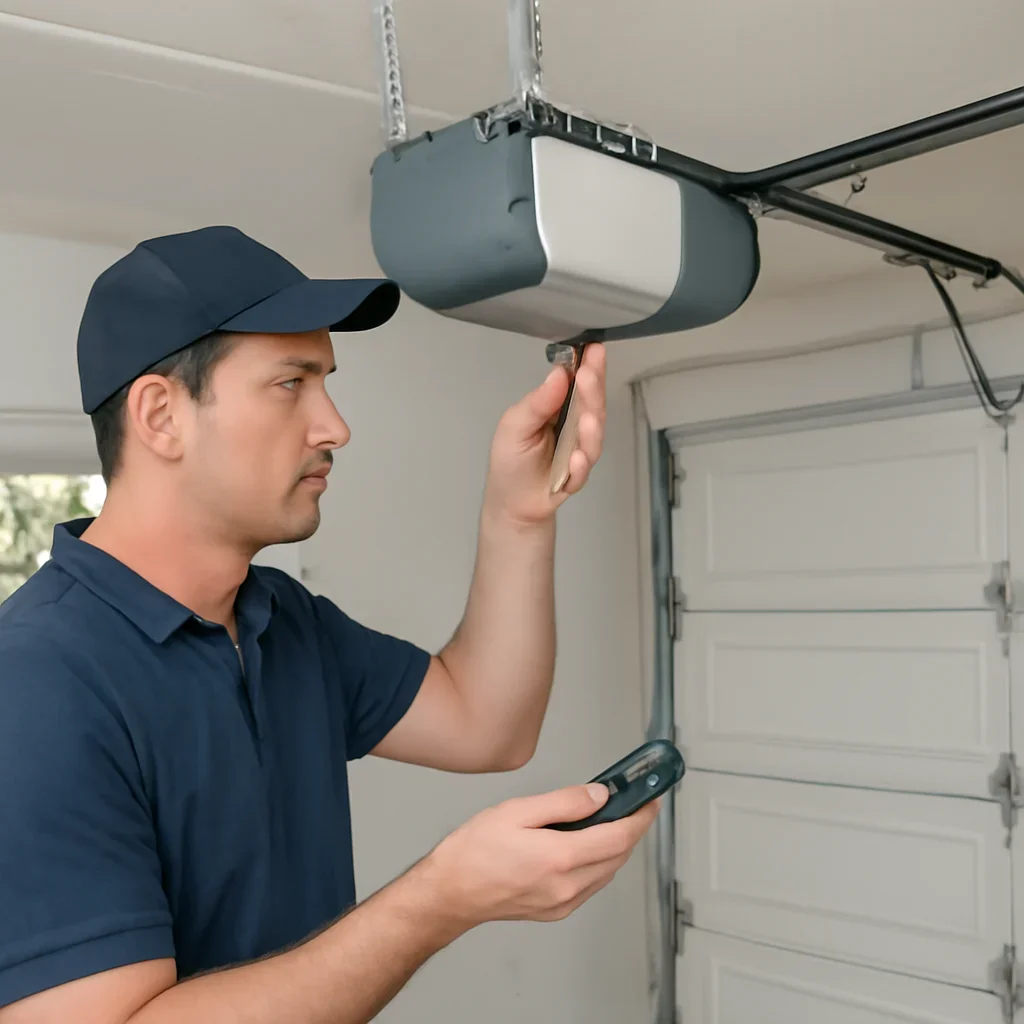
Describe the exact behaviour
Explain which controls work, what lights flash, where movement stops, whether the motor runs, and whether the problem is intermittent.

When the opener stops responding, reverses unexpectedly, strains, or works only from one control, the cause may be electrical, mechanical, or related to the door itself. A useful diagnosis checks the opener, controls, sensors, balance, tracks, and moving hardware together.
Not every opener problem begins in the motor unit. A heavy, unbalanced, binding, or off-track door can make a working opener seem weak or unreliable. The door should move correctly before the operator is blamed or replaced.
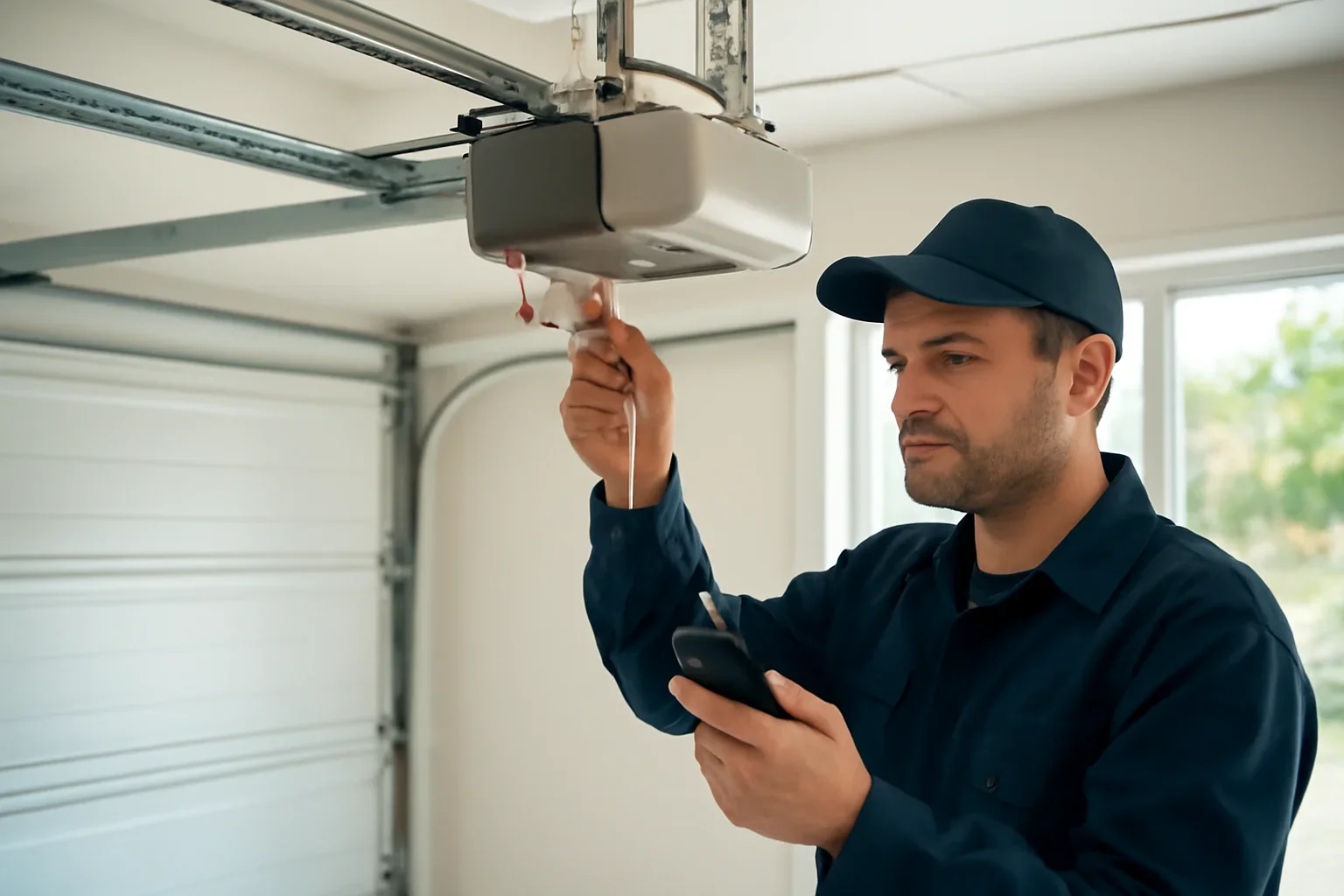
The same symptom can have more than one cause. These focused pages help separate control, sensor, opener, and mechanical door problems.
For power loss, motor faults, wall-control problems, trolley issues, settings, or a door that is too heavy for normal operation.
Review opener faults →For battery, programming, range, interference, antenna, receiver, lock-mode, or remote-compatibility problems.
Review remote problems →For blocked, dirty, damaged, misaligned, or poorly wired sensors and closing behaviour that needs further testing.
Review sensor problems →For new controls, erased codes, replacement remotes, keypad setup, user-code changes, or compatibility questions.
See programming service →For damaged brackets, wiring faults, failed sensor units, alignment that will not hold, or repeated flashing-light errors.
Review sensor repair →For balance, spring, track, cable, or alignment problems that place extra load on the motor and rail system.
Review balance and alignment →North Vancouver garages range from older detached structures to attached garages, townhomes, strata parkades, and homes with steep or narrow access. Moisture, temperature changes, high use, and aging hardware can all affect how an opener behaves.
A heavy or binding door can strain the motor, rail, trolley, and internal drive parts even when the opener still runs.
Wet debris, dirty lenses, vibration, and damaged brackets can create intermittent closing or reversal problems.
Shared parking, frequent cycling, multiple users, keypads, remotes, and attached-home access can raise the importance of reliable controls.
When the opener issue may be part of a wider door problem, the North Vancouver garage door repair page explains the broader inspection process.
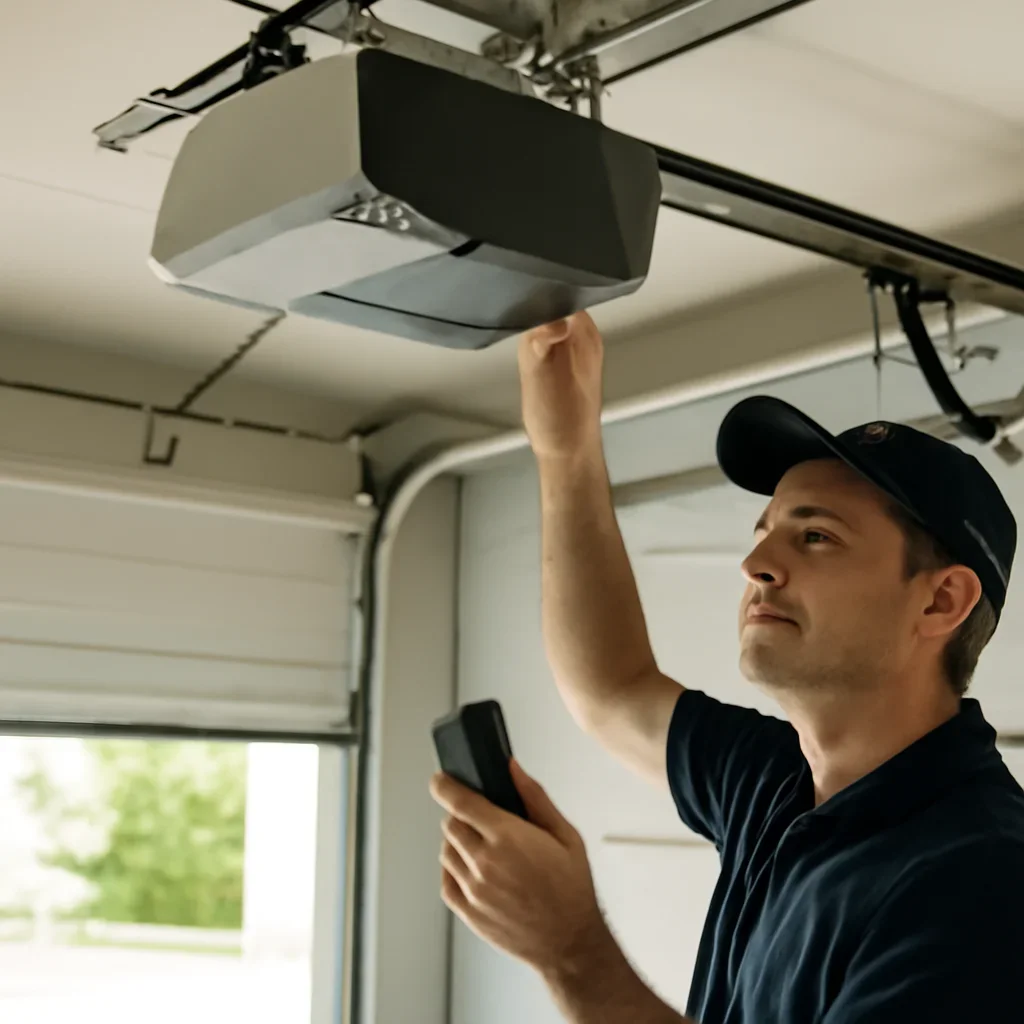
A repairable control problem should not automatically lead to opener replacement. The age, safety features, compatibility, parts, reliability, and condition of the complete door system should guide the decision.
For aging, unreliable, incompatible, or damaged units where a new opener better suits the door, controls, safety features, and daily use.
Review opener installation →For unclear symptoms, intermittent faults, opener strain, impact damage, or cases where the door condition may be affecting the operator.
Review inspection details →For hardware, balance, tracks, rollers, sensors, controls, force, travel, and safety checks that help the system work more smoothly.
Plan a maintenance visit →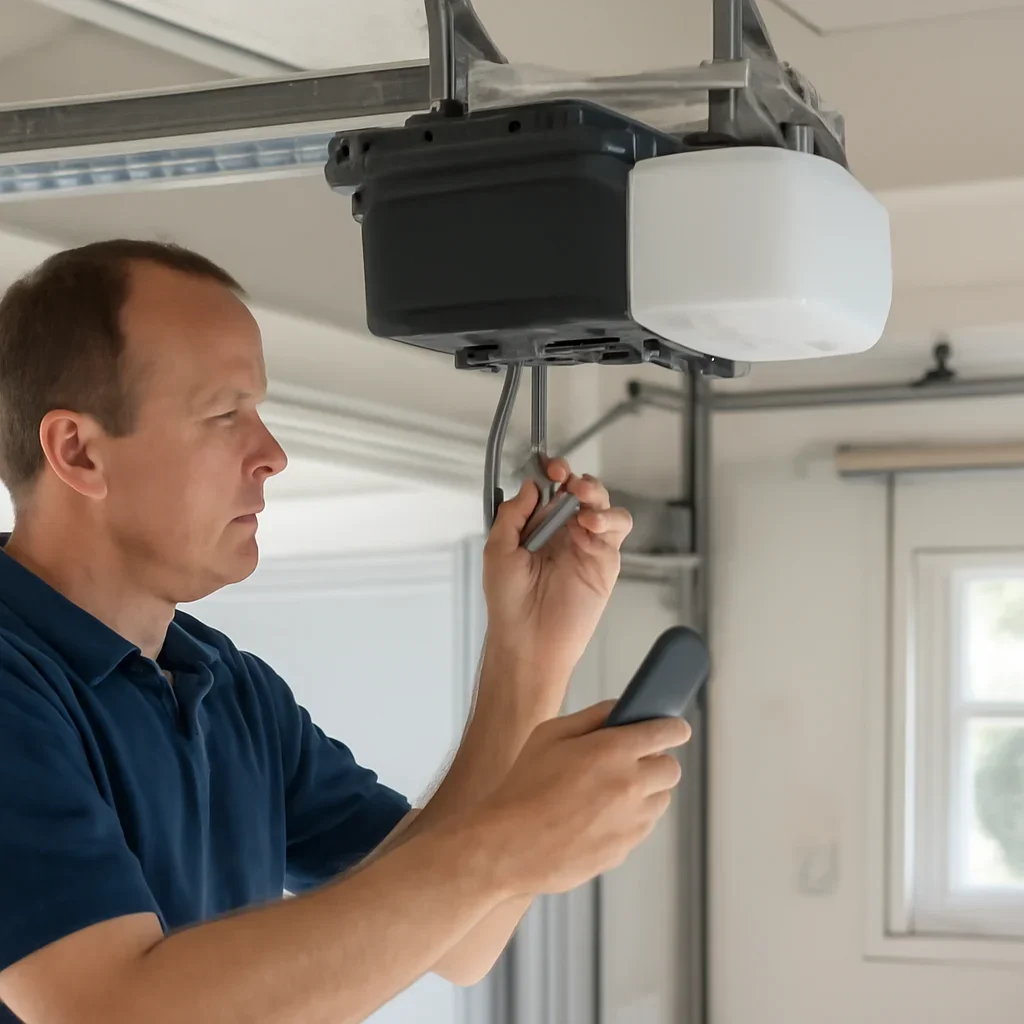
The opener and door depend on each other. A complete diagnosis checks the control signal, power, safety systems, operator hardware, door balance, and mechanical travel.
Check the outlet, breaker, wall control, lock mode, remote batteries, programming, receiver response, and keypad behaviour.
Review sensor alignment, wiring, indicator lights, travel limits, force settings, safety reversal, and closing position.
Inspect balance, resistance, springs, cables, rollers, tracks, trolley, rail, drive system, mounting, and motor noise.
The process should identify whether the fault is in a control, sensor, opener component, setting, power source, or the mechanical door system.
Explain which controls work, what lights flash, where movement stops, whether the motor runs, and whether the problem is intermittent.
Review remotes, keypad, wall control, receiver, programming, sensors, wiring, travel, force, and reversal behaviour.
Confirm balance, track travel, springs, cables, trolley, rail, drive system, mounting, noise, and motor load.
Complete the suitable work, then test every control, safety reversal, closing position, and full door cycle.
Housing type, garage access, door age, shared parking, moisture exposure, and control needs vary by area. Use the local page closest to the property.
These answers cover movement without lifting, reversal problems, repair-versus-replacement decisions, and local operating conditions.
The problem may involve a disconnected trolley, damaged internal gear or drive part, broken spring, cable issue, door resistance, or another mechanical fault. The door and opener should be assessed together before the motor unit is replaced.
Common causes include blocked or misaligned safety sensors, track resistance, incorrect travel or force settings, an obstruction, poor door balance, or a closing-position problem.
The decision depends on age, condition, available parts, noise, safety features, reliability, door compatibility, repair history, and whether the unit still suits the property's access needs.
Yes. Moisture, cold periods, attached garages, steep driveways, door balance, wet debris, power interruptions, and older hardware can affect opener strain, sensors, controls, and door movement.
Include the opener brand if known, which remotes or keypads respond, any flashing lights or sounds, where the door stops, whether the motor runs, and whether the door feels heavy, uneven, or difficult to move.