North Vancouver Garage Door Guide
Garage Door Threshold Seal vs Bottom Seal
The best choice depends on the size and shape of the gap, water direction, vehicle clearance, floor condition, and door operation. Installing a threshold without mapping runoff can trap water inside or redirect it toward walls.
Review the best sealing approach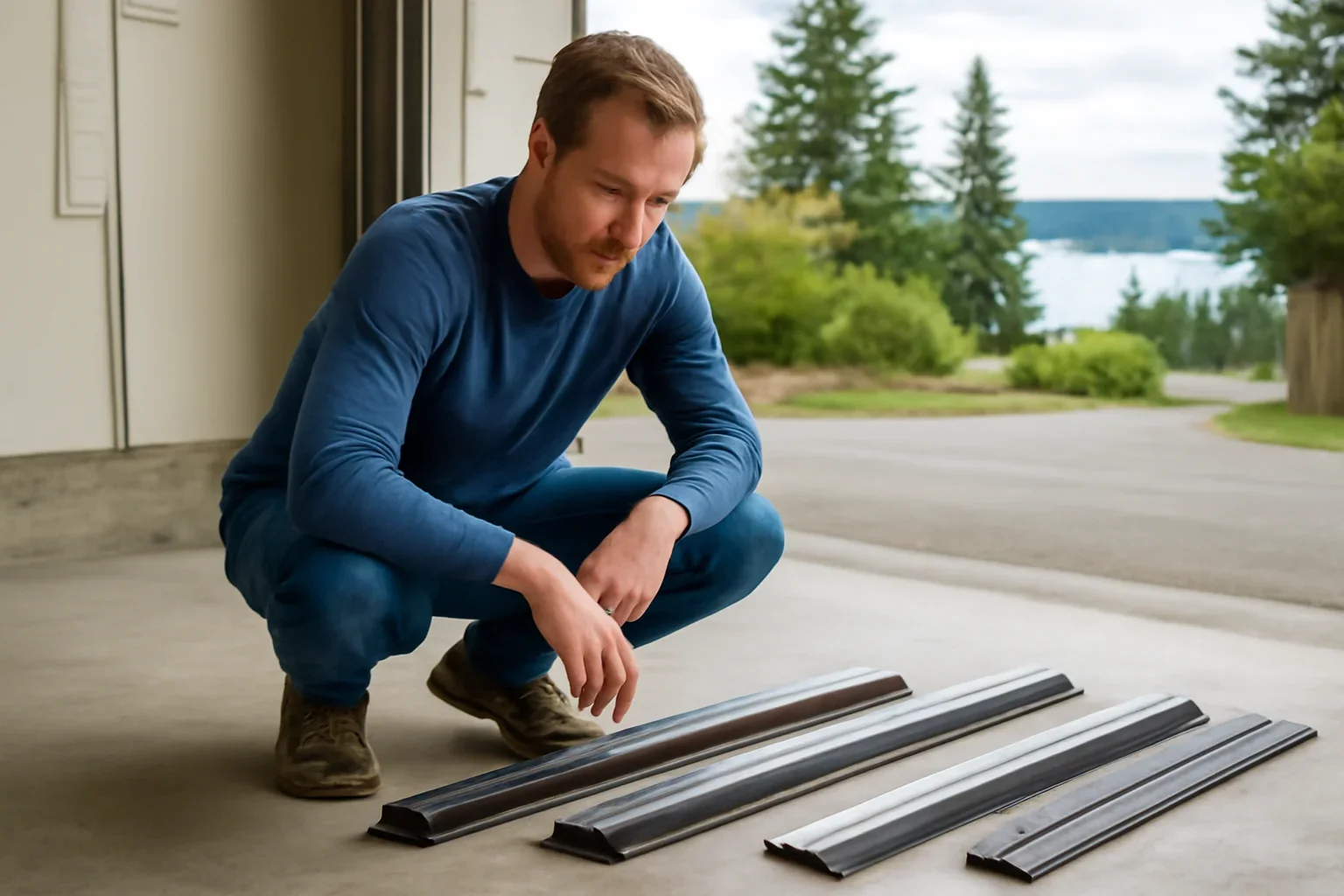
Quick answer
A bottom seal moves with the door and closes the gap at the panel edge. A threshold seal attaches to the floor and creates a raised contact surface. Many garages use both, but neither replaces proper drainage, door alignment, or a sound floor.
What to understand first
Bottom seals address the moving door edge
They help with drafts, debris, pests, and minor water when they contact the floor evenly.
Thresholds compensate for shallow floor variation
A raised strip can improve contact across small low spots.
Thresholds affect vehicles and cleaning
The height and shape must allow tires, equipment, and water to cross safely.
Neither is a flood-control system
Significant runoff requires drainage, grading, or building-envelope work.
Safe checks and next steps
- Identify the main problem. Decide whether the priority is wind, pests, daylight, minor seepage, or flowing water.
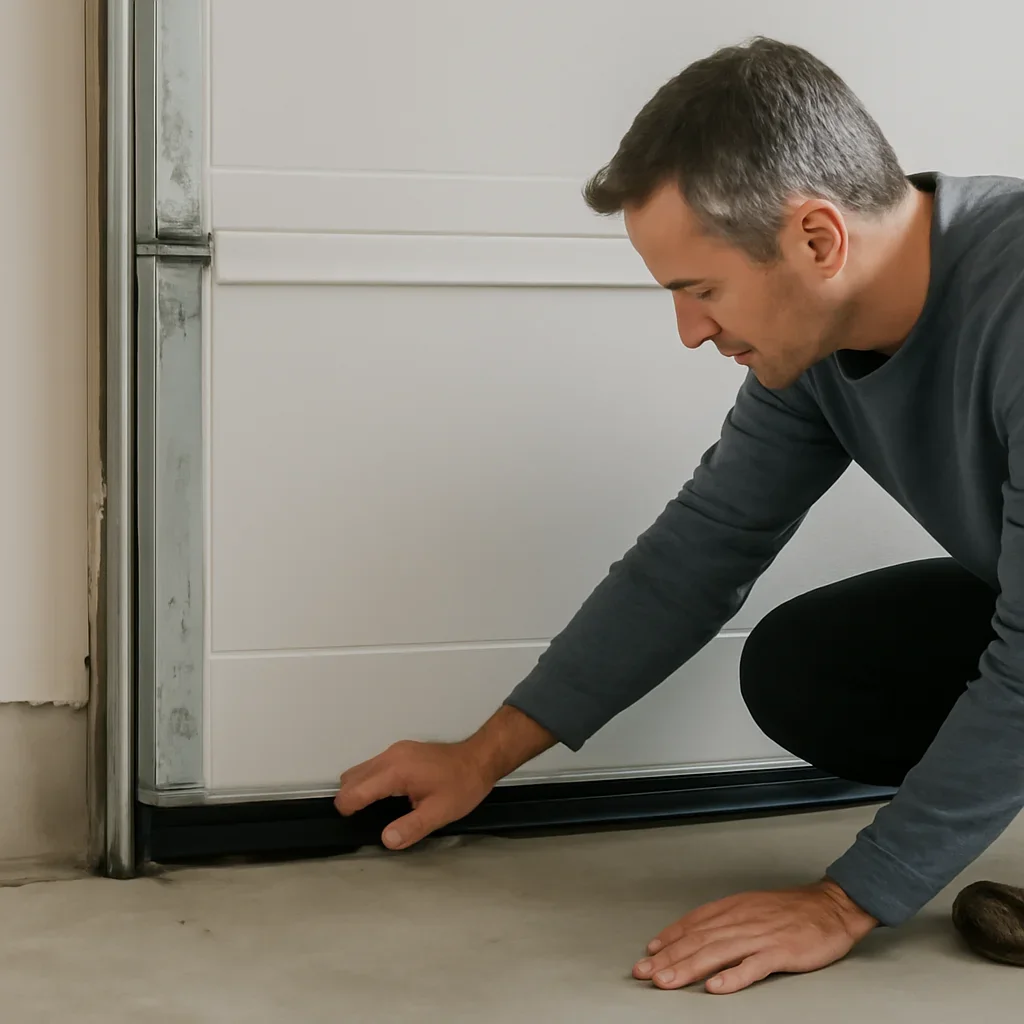
- Check the door’s level contact. A crooked door should be repaired before adding a threshold.
- Map the water path. Confirm the threshold will not trap water inside the garage.
- Measure clearance. Consider the door bottom, vehicles, floor coatings, and snow or debris.
- Plan maintenance. Both seals need cleaning and inspection as they age.
Do not loosen, wind, cut, or reposition garage door springs, cables, drums, bottom brackets, or loaded track hardware. Stop if the door is heavy, crooked, partly off track, or moving unpredictably.
North Vancouver conditions to consider
On steep or rain-exposed driveways, a threshold may help with shallow wind-driven water but should be coordinated with drains and runoff control.
For adjacent guidance, review diagnosing garage water entry and understanding bottom seal profiles.
When professional service makes sense
Use professional advice when the slab is cracked or uneven, the door does not close level, or water volume suggests a drainage problem beyond the door.
The most relevant service resource is garage door sealing service.
Frequently asked questions
Can a threshold replace a damaged bottom seal?
It may improve contact, but a torn or missing bottom seal should still be addressed.
Will a threshold keep mice out?
It can reduce gaps when paired with a sound bottom seal, but edges and side seals also matter.
Can I put a threshold over painted concrete?
Adhesion depends on the coating, cleanliness, moisture, and product instructions.
Get a clear next step for your garage door
Share what the door is doing, where it stops, which control you used, and any visible damage. The team can use those details to point you toward the appropriate inspection, repair, programming, or replacement service.
Review the best sealing approach