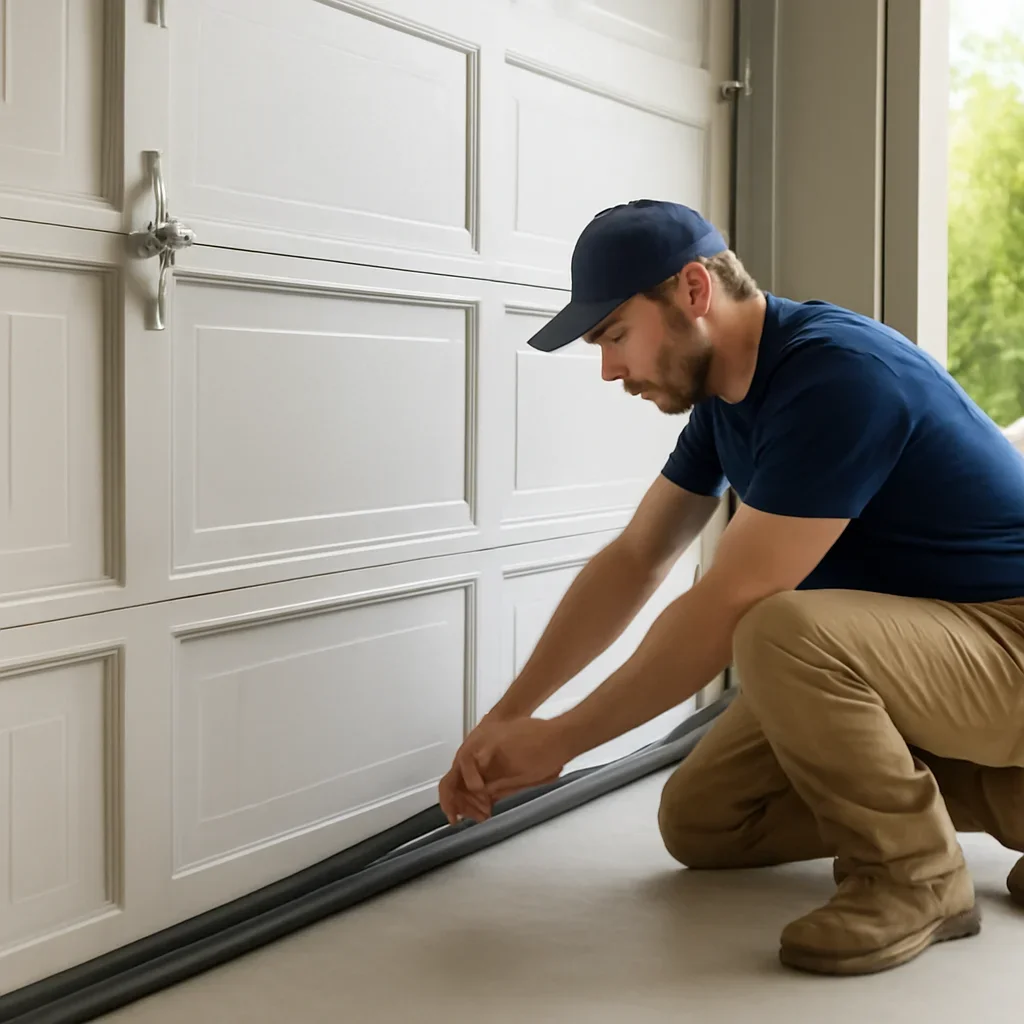
Cracked Or Brittle Bottom Seal
Older rubber can harden, split or lose flexibility. Once the seal no longer compresses against the floor, water, light and debris may enter beneath the door.

Replace cracked, flattened, loose or missing garage door seals that allow rain, drafts, light, leaves and pests around the opening. We assess the bottom seal, side and top weatherstripping, floor contact and door alignment before recommending the right sealing work for your North Vancouver property.
A weather seal should make even contact around the closed door without preventing safe movement. If light or water enters only at one corner, the problem may involve an uneven floor, damaged retainer, worn seal or door alignment rather than the rubber alone.
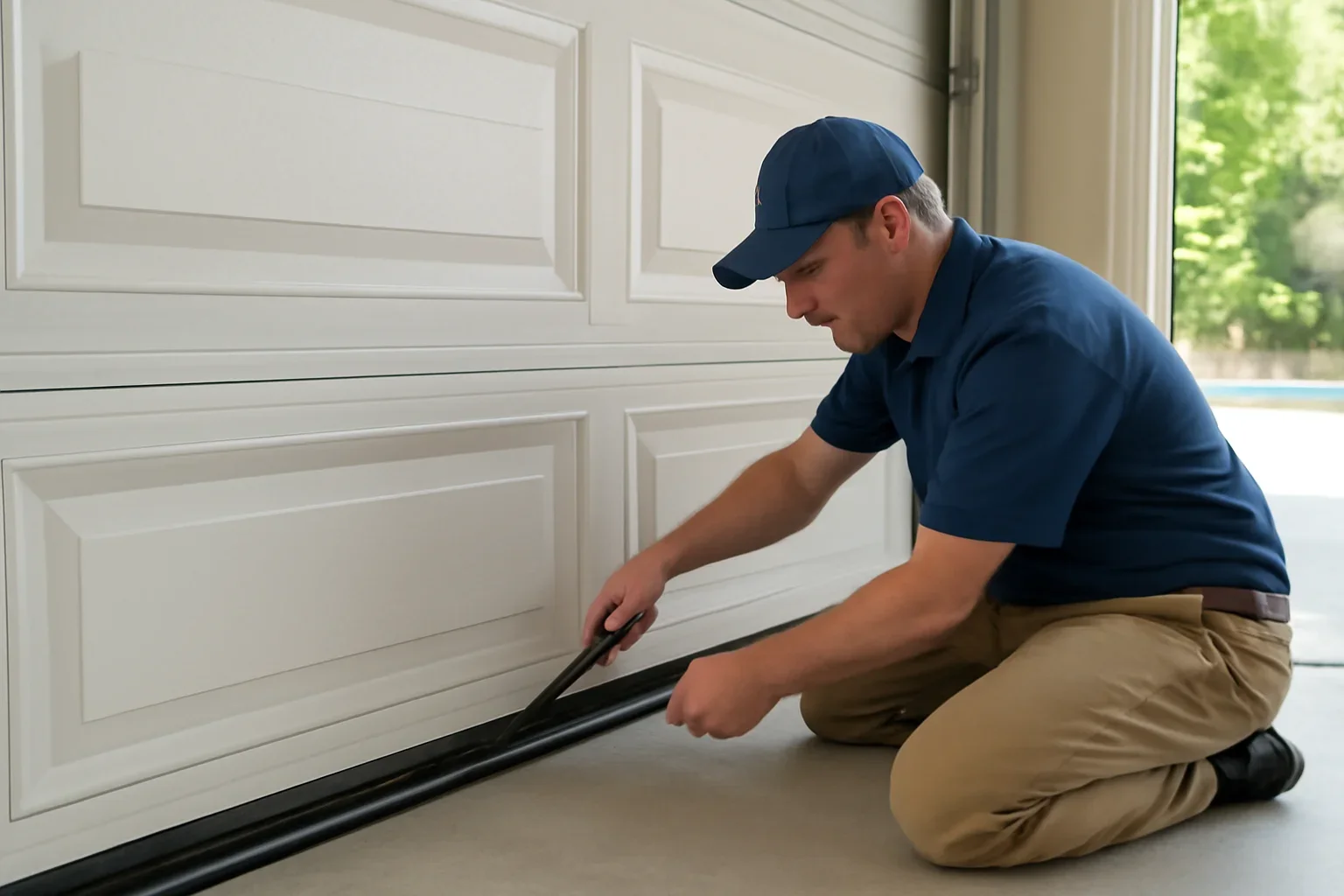
Garage door weather seals help close the small gaps between the moving door and the building opening. The bottom seal meets the garage floor, while perimeter weatherstripping helps close gaps along the sides and top of the door.
These components can reduce wind-driven rain, drafts, leaves, insects, dust and visible light. They can also help an attached garage feel less exposed, but they cannot fix drainage problems, a severely uneven slab or a door that is closing crooked.
A proper assessment should check the seal profile, retainer, floor contact, perimeter trim and complete door position. If the door is uneven or does not close correctly, review garage door balance and alignment before treating the gap as a seal-only problem.
Learn more about North Vancouver Garage Doors and the residential, strata and commercial properties we serve.
The visible gap may come from worn rubber, damaged trim, uneven floor contact or a door that is no longer closing squarely. These are common reasons to request an assessment.
Older rubber can harden, split or lose flexibility. Once the seal no longer compresses against the floor, water, light and debris may enter beneath the door.
A seal may remain permanently compressed after years of use. Flattened areas can leave visible gaps, especially where the garage floor is not perfectly level.
Perimeter trim can pull away, crack or stop making contact with the door. This may allow wind-driven rain and drafts along the sides of the opening.
The metal or vinyl retainer that holds the bottom seal can bend, corrode or separate from the panel. A new seal may not sit correctly until the retainer is repaired.
Review Panel DamageA low corner, sloped slab or damaged threshold can leave a gap even when the seal is new. The floor profile and door level should be checked before selecting a solution.
Cable, track, roller or balance problems can make one side of the door sit higher than the other. Replacing the seal alone will not correct an uneven closing position.
Request A Door Repair AssessmentDifferent seals protect different parts of the opening. The correct replacement depends on where the gap appears and how the door meets the floor and frame.
The bottom seal fits into or attaches to a retainer along the lowest garage door section. It compresses against the floor when the door closes.
Flexible weatherstripping around the frame helps cover small side and top gaps while allowing the sectional door to move freely.
Some openings may benefit from additional floor-level sealing, but the slab condition, drainage direction and door travel must be reviewed first.
Seal profiles and retainers vary between garage door systems. A replacement should be selected according to the existing door and retainer rather than by appearance alone. Review our garage door pricing guidance when planning the work.
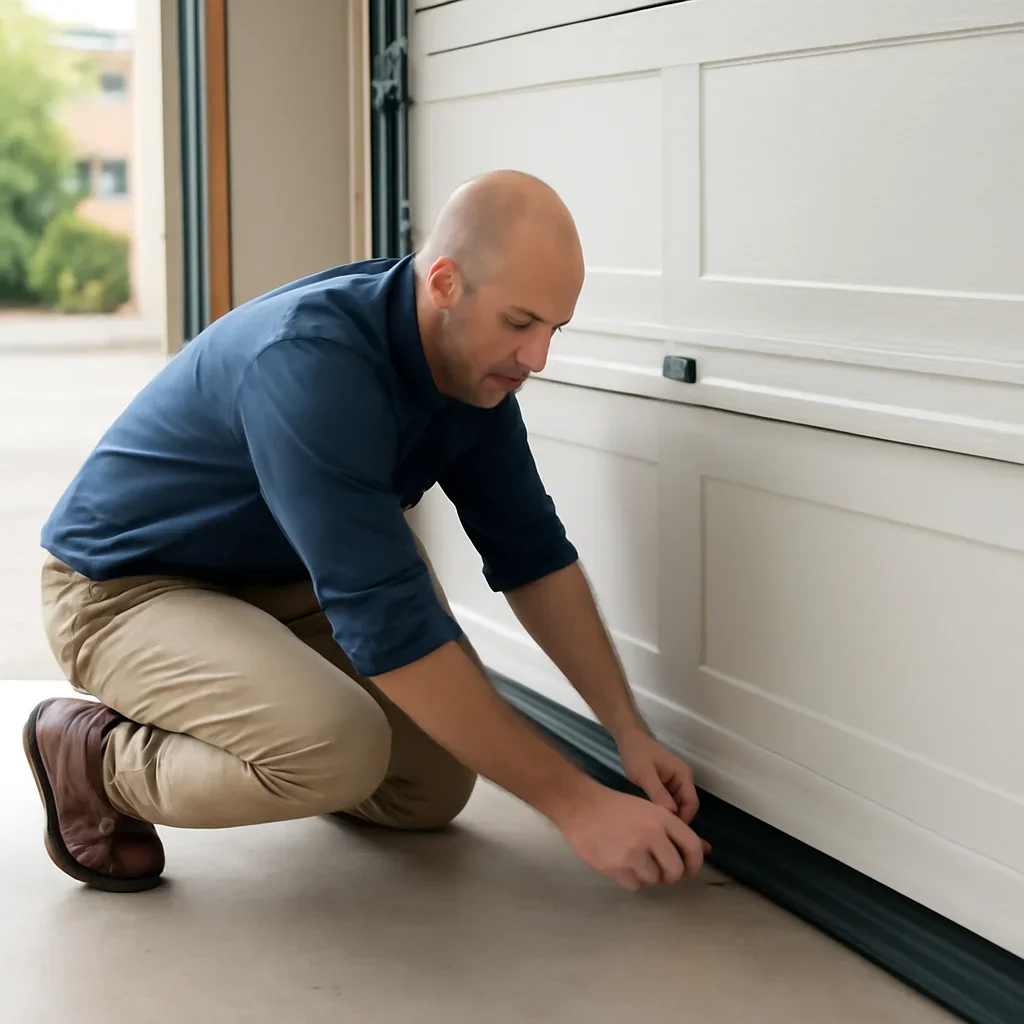
North Vancouver garage doors regularly face wet conditions, wind-driven rain, damp debris and moisture around the lower part of the opening. A worn bottom seal can make these conditions more noticeable, particularly when water already travels toward the garage.
Sloped driveways and uneven garage slabs can also affect how the bottom seal meets the floor. A uniform seal may contact correctly in the centre while leaving a gap near one corner, so floor shape and door level should be checked together.
Dense townhome and strata properties may have shared parking, underground access or doors that operate many times each day. Detached garages throughout the District may face greater exterior exposure, surrounding vegetation and more leaves or debris near the threshold.
A gap around the closed door does not always mean the weather seal is the only failed component. Door movement, alignment, panel condition and the garage floor can all affect sealing.
A door that will not close correctly may need garage door closing troubleshooting or a complete garage door inspection before weatherstripping is replaced.
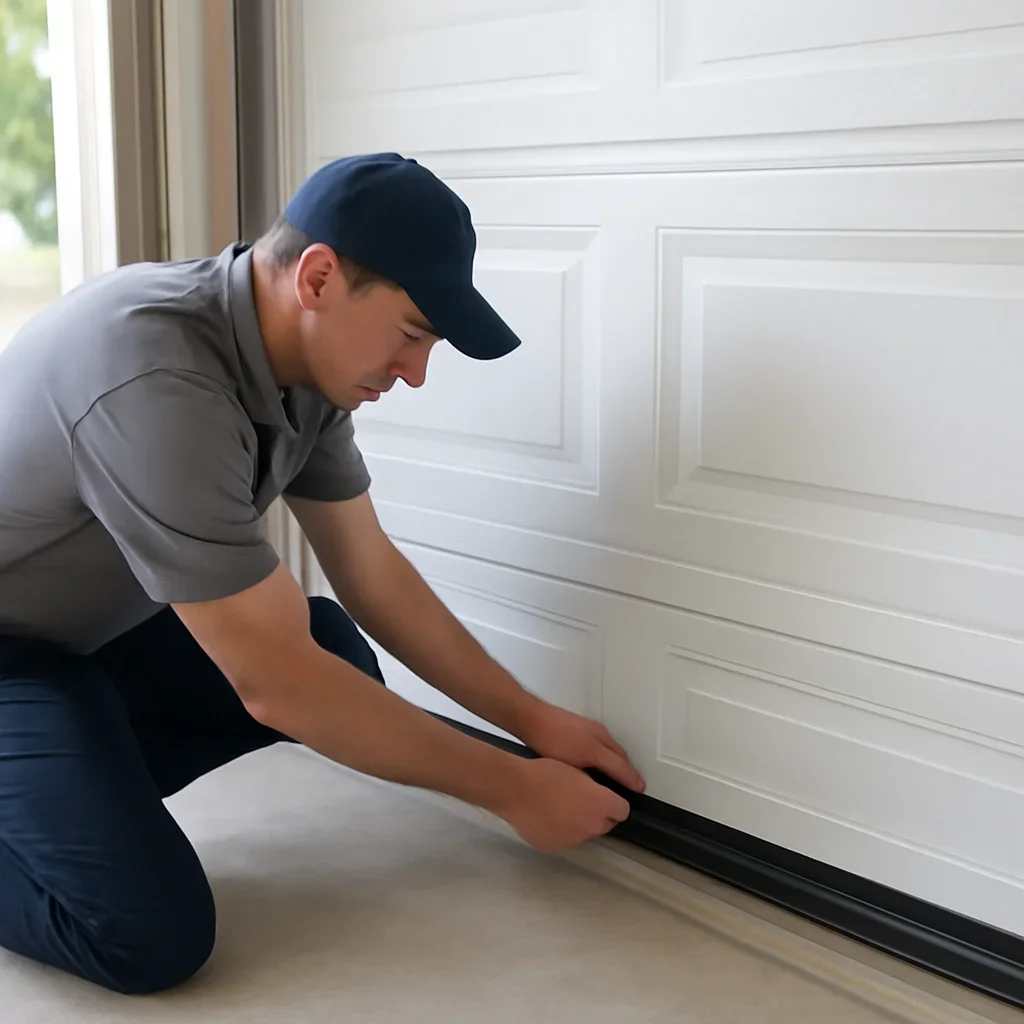
The process begins by locating the gaps and confirming whether the door, retainer and floor are suitable for a replacement seal.
Door size, exposure, floor condition and operating frequency affect how the opening should be inspected and sealed.
Address gaps that allow drafts, water, leaves or pests into garages used for vehicles, storage, workshops or access to the home.
Strata doors may require coordinated access and consistent exterior appearance. High-use shared doors should also be checked for movement and alignment.
Larger commercial openings may face frequent vehicle use, exterior exposure and debris. Seals, retainers and door operation should be assessed together.
Commercial Garage Door ServiceWe assist with bottom seals, perimeter weatherstripping and related garage door closing problems across the City and District of North Vancouver.
These answers cover seal wear, water entry, uneven floors, perimeter gaps and the difference between weatherstripping and wider garage door repairs.
Common signs include visible cracks, flattened rubber, missing sections, daylight under the closed door, drafts, leaves or water entering around the opening. The door should also be checked for level closing and even floor contact.
A new seal may reduce water entering through a normal gap beneath the door. It cannot correct water flowing toward the garage because of drainage, grading, flooding or a severely uneven slab.
A corner gap may be caused by an uneven garage floor, a door closing out of level, a damaged retainer or a seal that does not match the floor profile. The door and slab should be inspected before choosing a thicker replacement.
Yes. Cracked, loose or worn perimeter weatherstripping can be replaced when the frame and door position are suitable. The trim should contact the closed door without causing heavy friction during movement.
Proper seals can reduce small gaps used by insects and some small pests. They cannot close structural openings elsewhere in the garage or repair damaged framing, siding or walls.
Yes. Bottom retainers use different channels and attachment styles. The replacement seal must be compatible with the existing retainer, or the retainer may need to be changed or repaired.
Yes. A bent, rusted or cracked bottom panel can prevent the retainer and seal from sitting correctly. Review damaged garage door panel symptoms when the lower section is visibly affected.
Explain where the gap or water appears, whether it affects the full width or one corner, and whether the door closes level. Photos of the closed door from the inside, the bottom seal and the floor contact can help clarify the problem.
You can also review our garage door FAQs, arrange garage door maintenance or contact customer support.
Describe whether the gap appears along the bottom, sides, top or one corner of the door. Include photos of the closed door, worn seal and garage floor so the door position, retainer and floor contact can be considered.
Service requests are handled according to our Privacy Policy and Terms of Service.