
North Vancouver Garage Door Guide
Low-Headroom Garage Door Options for Tight Garages
Headroom is the vertical space above the finished opening. It must accommodate the top section’s turn, tracks, springs, opener hardware, and safe installation access.
Request a low-headroom assessment
Quick answer
Low-headroom garages can often use specialized track geometry, spring placement, rear-torsion systems, jackshaft openers, or modified framing—but the correct solution depends on precise opening and ceiling measurements. Standard hardware should not be forced into inadequate clearance.
What to understand first
Obstructions matter as much as ceiling height
Beams, ducts, pipes, lights, and storage can interrupt otherwise adequate space.
Track and spring systems use space differently
Front torsion, rear torsion, extension springs, and low-headroom tracks have different requirements.
The opener can be the limiting component
A ceiling-mounted rail may conflict even when the door tracks fit.
Low clearance can affect serviceability
Hardware must remain accessible for inspection and repair.
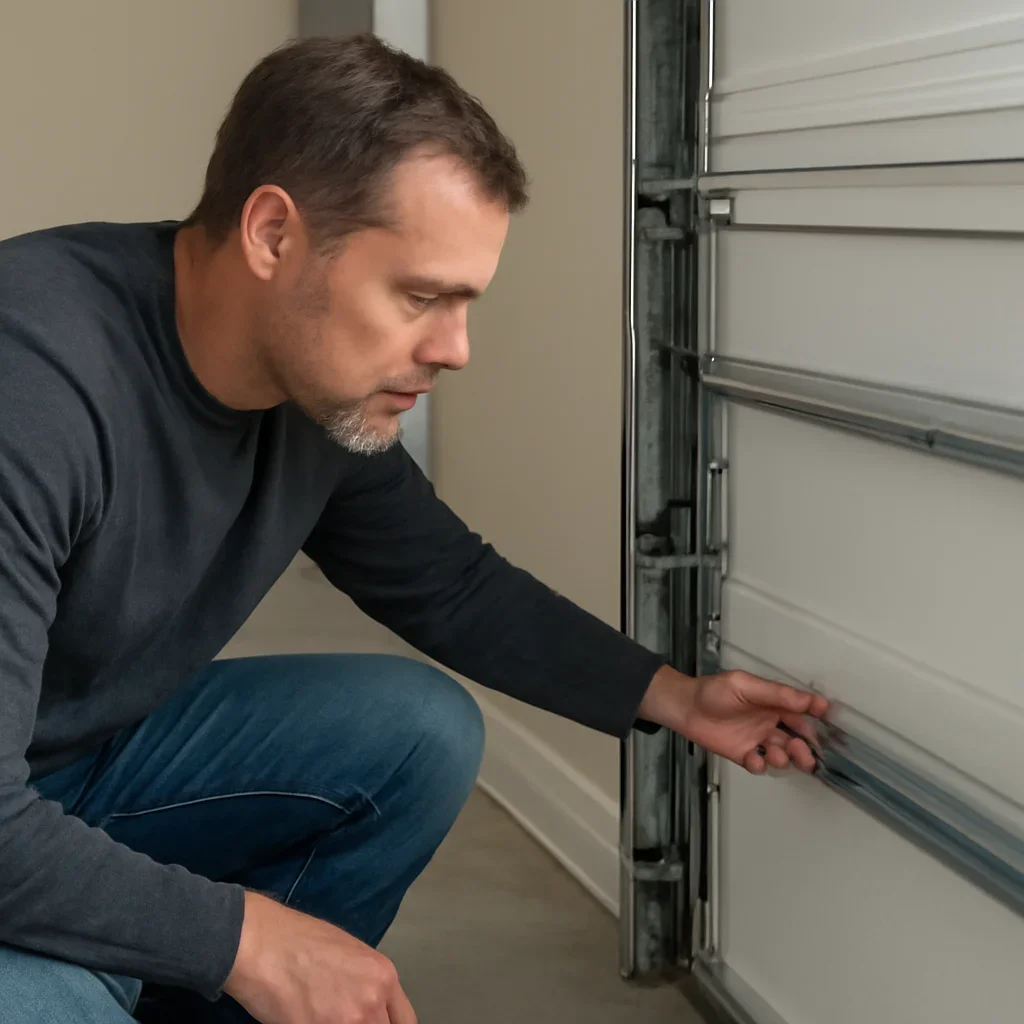
Safe checks and next steps
- Measure the finished opening. Record width and height at multiple points.
- Map the full ceiling area. Include beam depth, ducts, pipes, lights, and existing opener rail.
- Measure side room and backroom. Wall-mounted openers and track systems need lateral and depth clearance.
- Photograph obstructions. Provide wide and close views for planning.
- Have the installer select the system. Clearances, door weight, spring choice, and opener compatibility must be considered together.
Do not loosen, wind, cut, or reposition garage door springs, cables, drums, bottom brackets, or loaded track hardware. Stop if the door is heavy, crooked, partly off track, or moving unpredictably.
North Vancouver conditions to consider
Older garages, basement garages, and renovations around original framing can create tight clearances. A custom low-headroom plan may preserve door height without unsafe improvisation.
For adjacent guidance, review garage opening measurements and garage door installation planning.
When professional service makes sense
Professional design and installation are essential. Do not cut structural framing, relocate springs, or modify tracks without qualified assessment.
The most relevant service resource is garage door installation service.
Frequently asked questions
Can a standard garage door use low-headroom tracks?
Sometimes, but compatibility depends on the door, springs, opening, and available clearance.
Is a wall-mounted opener always the answer?
No. It needs suitable torsion hardware, side room, electrical access, and door compatibility.
Will low-headroom hardware reduce opening height?
Some configurations may affect clear opening or track position; the installer should explain the trade-offs.
Get a clear next step for your garage door
Share what the door is doing, where it stops, which control you used, and any visible damage. The team can use those details to point you toward the appropriate inspection, repair, programming, or replacement service.
Request a low-headroom assessment