North Vancouver Garage Door Guide
How to Lubricate a Garage Door Properly
Proper lubrication reduces friction and helps hardware move smoothly, but it is not a repair for broken springs, loose cables, bent tracks, cracked rollers, or poor balance. Start with a visual inspection and stop if the door is unstable.
Schedule maintenance for persistent noise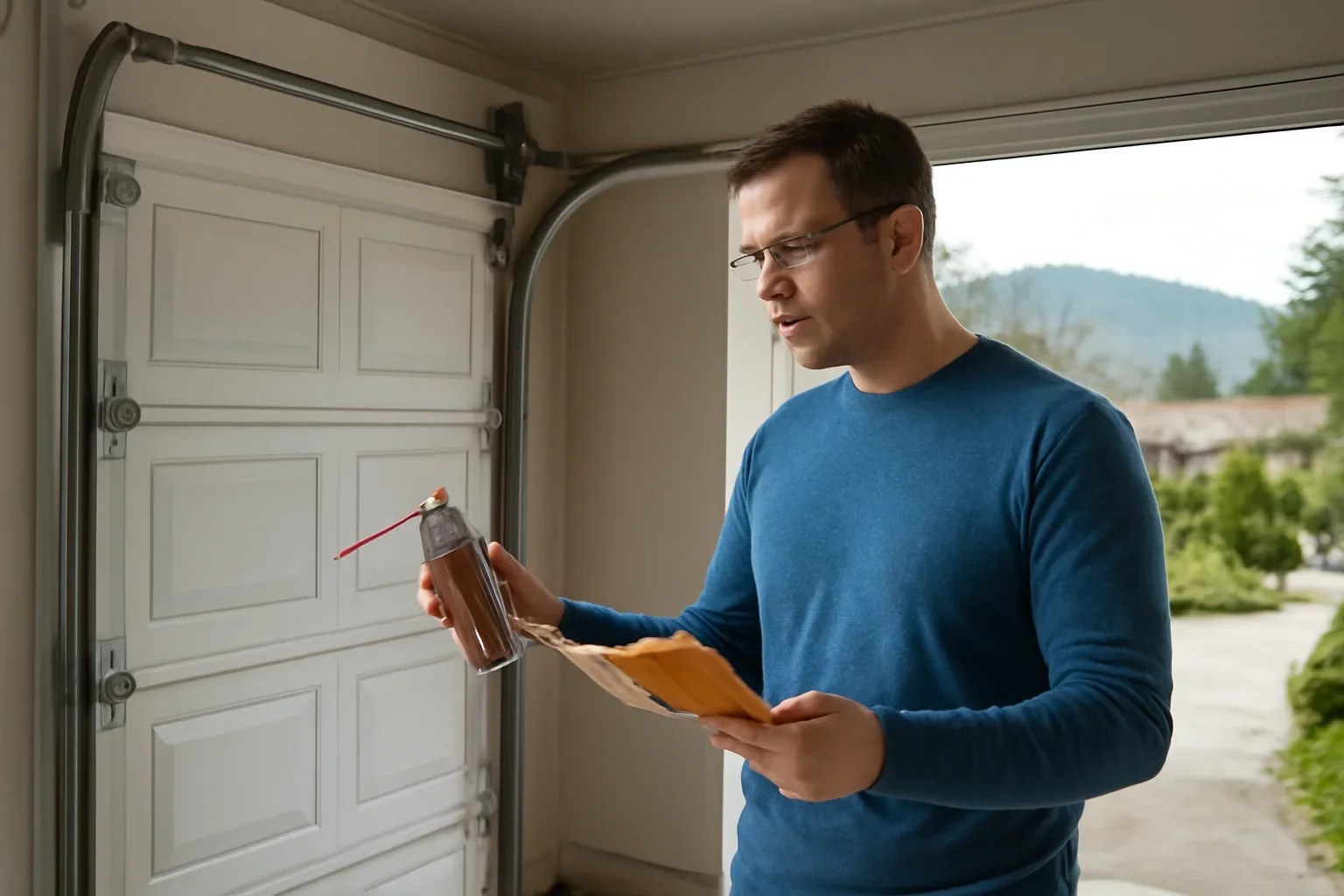
Quick answer
Use a garage-door-rated lubricant sparingly on approved metal pivot points, roller bearings when serviceable, hinges, and springs as the manufacturer recommends. Do not grease the tracks, soak sensors, or use lubrication to mask damaged parts.
What to understand first
Tracks should be clean, not greasy
Lubricant in the vertical or horizontal track can collect grit and cause rollers to slide rather than roll.
Not every roller is serviceable
Sealed nylon rollers may have no exposed bearing to lubricate. Follow the roller design and manufacturer guidance.
A small amount is enough
Excess spray drips onto panels, floors, sensors, and vehicles and attracts dirt.
The wrong product can leave sticky residue
Use a product labelled for garage doors or the component manufacturer’s recommendation, not heavy grease or general water-displacing spray as a long-term lubricant.

Safe checks and next steps
- Close the door and disconnect automatic use. Prevent another person from cycling the opener while you work.
- Wipe accessible dust and old residue. Use a clean cloth without reaching into hinges or tensioned components.
- Apply a light amount to approved points. Focus on moving metal joints and exposed bearings, not the track surface.
- Cycle the door from a safe position. Use the opener once or twice to distribute lubricant while listening for changes.
- Wipe away drips. Keep the floor, sensor lenses, and panel finish clean.
Do not loosen, wind, cut, or reposition garage door springs, cables, drums, bottom brackets, or loaded track hardware. Stop if the door is heavy, crooked, partly off track, or moving unpredictably.
North Vancouver conditions to consider
Coastal moisture can wash away light lubrication and encourage surface corrosion. A modest seasonal check is more useful than heavy over-application.
For adjacent guidance, review diagnosing garage door noise and shaking garage door causes.
When professional service makes sense
Call for service if noise comes with jerking, grinding, a heavy door, loose cables, cracked rollers, or bent tracks. Lubrication should never be the only response to unstable movement.
The most relevant service resource is professional garage door tune-up.
Frequently asked questions
Can I use WD-40 on a garage door?
A water-displacing product is not the same as a lasting garage-door lubricant. Use the product recommended for the hardware.
Should I lubricate garage door tracks?
No. Clean loose debris from tracks, but do not coat the running surface with grease.
How often should I lubricate the door?
Follow the door and component manufacturer’s guidance and adjust for use, climate, and observed dryness.
Get a clear next step for your garage door
Share what the door is doing, where it stops, which control you used, and any visible damage. The team can use those details to point you toward the appropriate inspection, repair, programming, or replacement service.
Schedule maintenance for persistent noise