North Vancouver Garage Door Guide
Why a Garage Door Shakes While Moving
Smooth travel depends on many components moving in sequence. Vibration at one section height often indicates a localized roller, hinge, or track problem, while vibration through the whole cycle may involve balance or the opener drive.
Garage door track repair
Quick answer
A garage door that shakes or jerks may have worn rollers, loose hinges, track damage, poor balance, a misaligned opener rail, or a worn chain, belt, or gear. The movement should be inspected before loose parts become a larger failure.
What to understand first
Worn rollers can wobble in the track
Flat spots, damaged bearings, or cracked nylon create repeated vibration.
Loose hinges let sections shift
Panel joints can move unevenly and transfer shock through the door.
A track defect may catch one roller
Dents, spacing problems, or loose brackets can create a jerk at the same height.
The opener drive can transmit vibration
A loose chain, worn belt, rail misalignment, or internal gear issue may shake the top section.
Safe checks and next steps
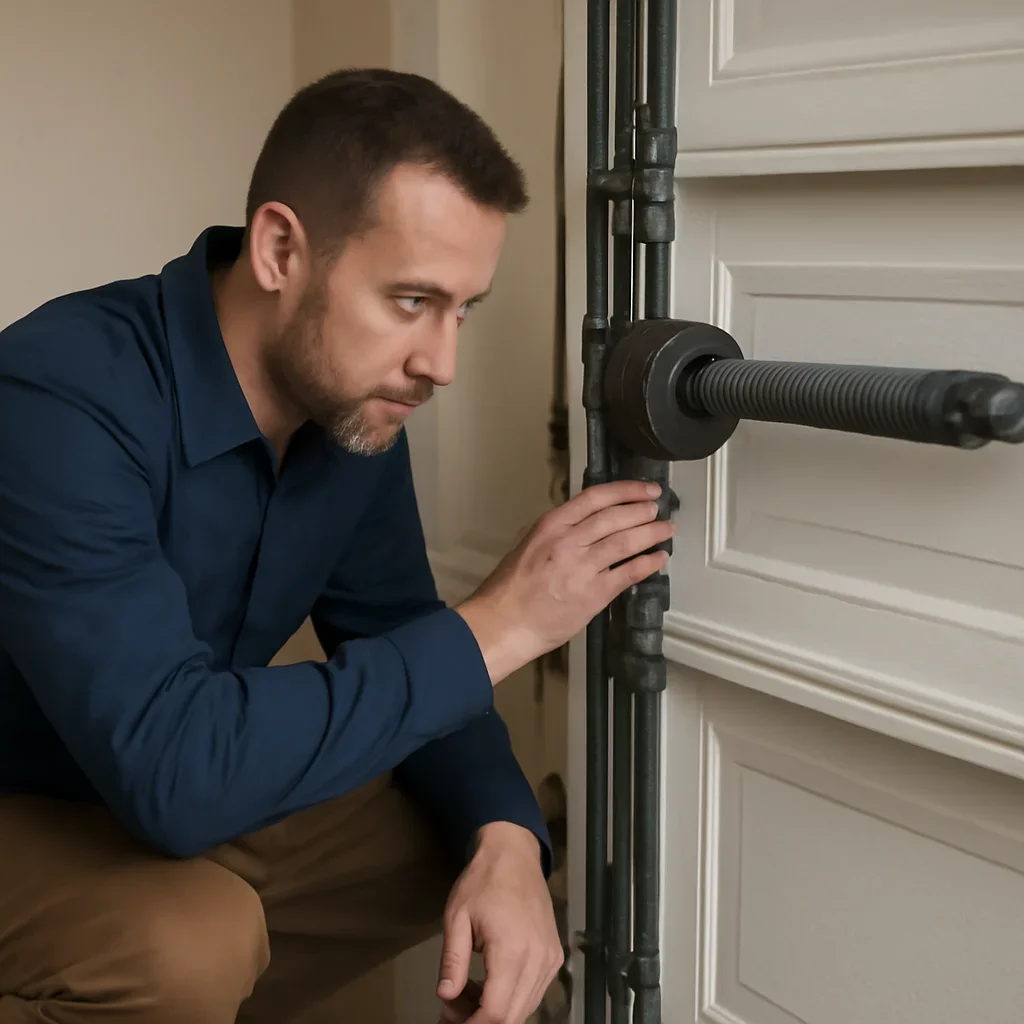
- Observe from inside at a safe distance. Note where the shaking begins and whether one side moves first.
- Listen for repeating clicks. A sound once per roller rotation suggests a different issue from constant motor vibration.
- Inspect visible fasteners. Do not tighten hardware connected to springs, cables, bottom brackets, or tracks under load.
- Stop using the door if it becomes crooked. Uneven support can lead to off-track movement.
- Request a full-system inspection. The door and opener should be evaluated together.
Do not loosen, wind, cut, or reposition garage door springs, cables, drums, bottom brackets, or loaded track hardware. Stop if the door is heavy, crooked, partly off track, or moving unpredictably.
North Vancouver conditions to consider
Coastal moisture can accelerate bearing and hardware wear. Shaking that appears after a wet season may reflect corrosion or lubrication loss.
For adjacent guidance, review garage door roller options and uneven garage door movement.
When professional service makes sense
Professional repair is needed when a roller is leaving the track, a hinge is cracked, the door is crooked, cables are loose, or vibration comes with loud impact sounds.
The most relevant service resource is garage door roller replacement.
Frequently asked questions
Can a loose opener chain make the door shake?
Yes, but chain adjustment must follow the opener specification; over-tightening can damage the system.
Is shaking only a noise problem?
No. It can indicate wear, misalignment, or unstable movement.
Will new rollers fix every shaking door?
No. Tracks, hinges, balance, panels, and opener alignment may also contribute.
Get a clear next step for your garage door
Share what the door is doing, where it stops, which control you used, and any visible damage. The team can use those details to point you toward the appropriate inspection, repair, programming, or replacement service.
Garage door track repair