
North Vancouver Garage Door Guide
What Garage Door Opener Flashing Lights Mean
Motor-unit lights, wall-console lights, learn-button LEDs, and sensor indicators can all flash for different reasons. Counting flashes without identifying the source can lead to the wrong fix.
Share the flashing-light pattern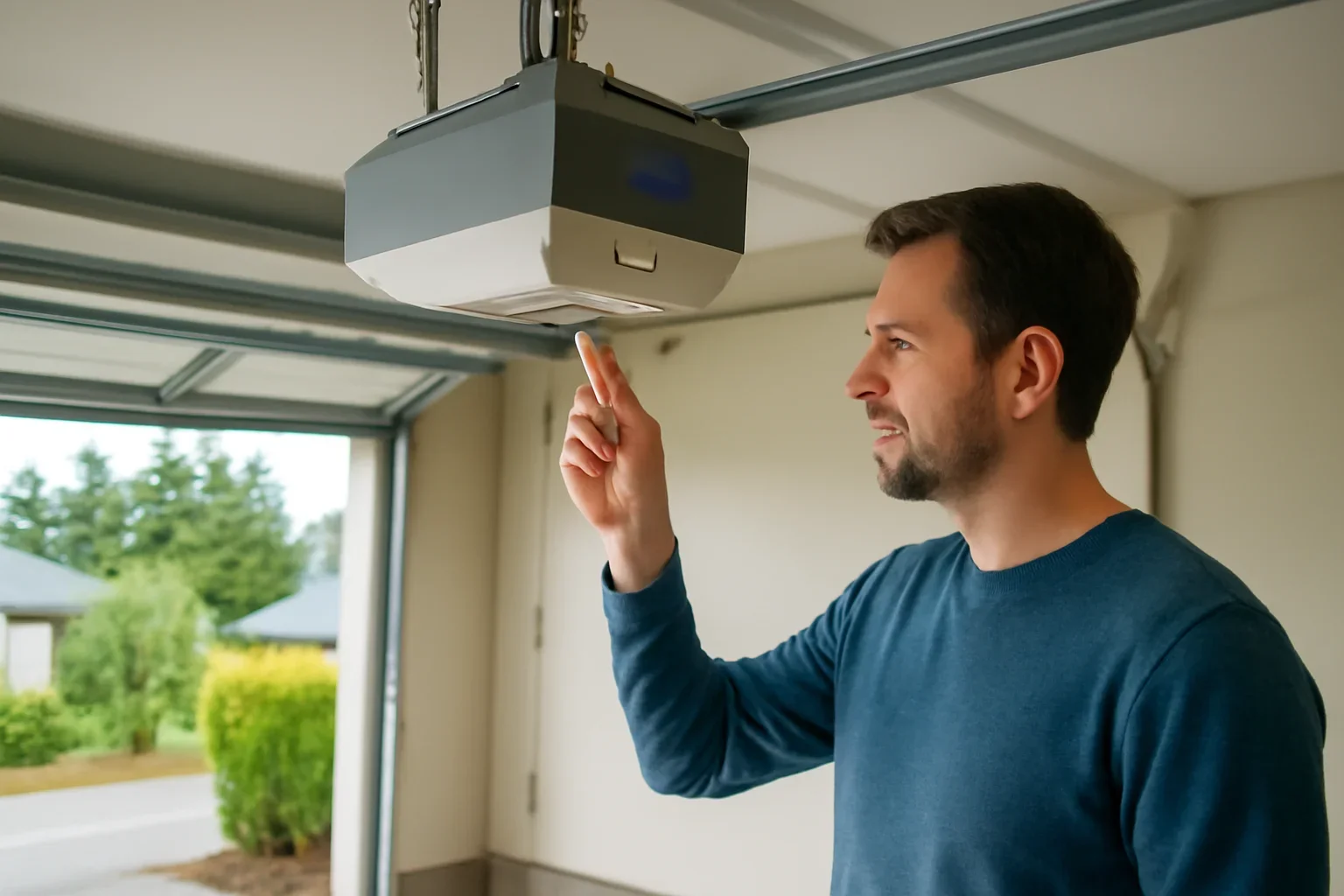
Quick answer
A flashing garage door opener light is a diagnostic clue, not a universal code. It may indicate blocked or misaligned sensors, lock mode, a programming state, a travel fault, battery status, or an internal error. Identify which light is flashing and consult the exact model manual.
What to understand first
Sensor lights report beam status
A flickering or dark photo-eye indicator often relates to alignment, wiring, or obstruction.
Wall-console lights may show lock mode
A remote can appear broken when the console has intentionally disabled wireless controls.
Learn-button LEDs may show programming or error codes
The same LED can behave differently after a short press, a long hold, or a failed cycle.
Main lights can flash after safety reversal
Some openers use the courtesy lights to signal that the sensor system prevented closing.

Safe checks and next steps
- Identify the exact flashing component. Write down whether it is the opener light, wall button, learn LED, or a sensor.
- Count the pattern and duration. Some codes repeat in groups, while others remain steady.
- Check simple visible conditions. Clear the doorway, clean lenses, and inspect for obvious loose wiring without touching exposed conductors.
- Review lock and programming modes. A recent button press may have placed the opener in a temporary mode.
- Use the model manual. Match the exact pattern rather than relying on a generic online chart.
Do not loosen, wind, cut, or reposition garage door springs, cables, drums, bottom brackets, or loaded track hardware. Stop if the door is heavy, crooked, partly off track, or moving unpredictably.
North Vancouver conditions to consider
Moisture, low-angle sunlight, and debris can trigger sensor-related indicators in coastal garages. Note whether the flashing happens after rain or at a particular time of day.
For adjacent guidance, review garage door sensor alignment and understanding opener lock mode.
When professional service makes sense
Request service when the code indicates an internal fault, wiring is damaged, the opener cycles unpredictably, or the manual’s safe checks do not resolve the signal.
The most relevant service resource is opener diagnostic service.
Frequently asked questions
Why does the opener light flash and the door not close?
The sensor system may be blocked, misaligned, or damaged, though the exact meaning depends on the model.
Why is the wall button flashing but remotes do not work?
Lock mode may be active.
Can I ignore a flashing light if the door still moves?
No. Record the pattern and identify the cause, especially if safety reversal or travel is affected.
Get a clear next step for your garage door
Share what the door is doing, where it stops, which control you used, and any visible damage. The team can use those details to point you toward the appropriate inspection, repair, programming, or replacement service.
Share the flashing-light pattern