
North Vancouver Garage Door Guide
Torsion vs Extension Garage Door Springs
Spring type is determined by the door system, available space, weight, track layout, and engineering. Homeowners should understand the difference without attempting adjustment or replacement.
Garage door spring inspection
Quick answer
Torsion springs twist on a shaft above the door, while extension springs stretch along the horizontal tracks. Both counterbalance the door, but they use different hardware, space, motion, and safety systems.
What to understand first
Torsion systems apply torque through drums and cables
They can provide controlled balance across the shaft when correctly sized and installed.
Extension systems stretch and contract
They use pulleys and should include properly installed containment cables where applicable.
Space requirements differ
Low headroom, rear torsion, and extension layouts each use ceiling and side space differently.
Service methods are not interchangeable
Parts, tools, winding, cable routing, and safety procedures differ significantly.
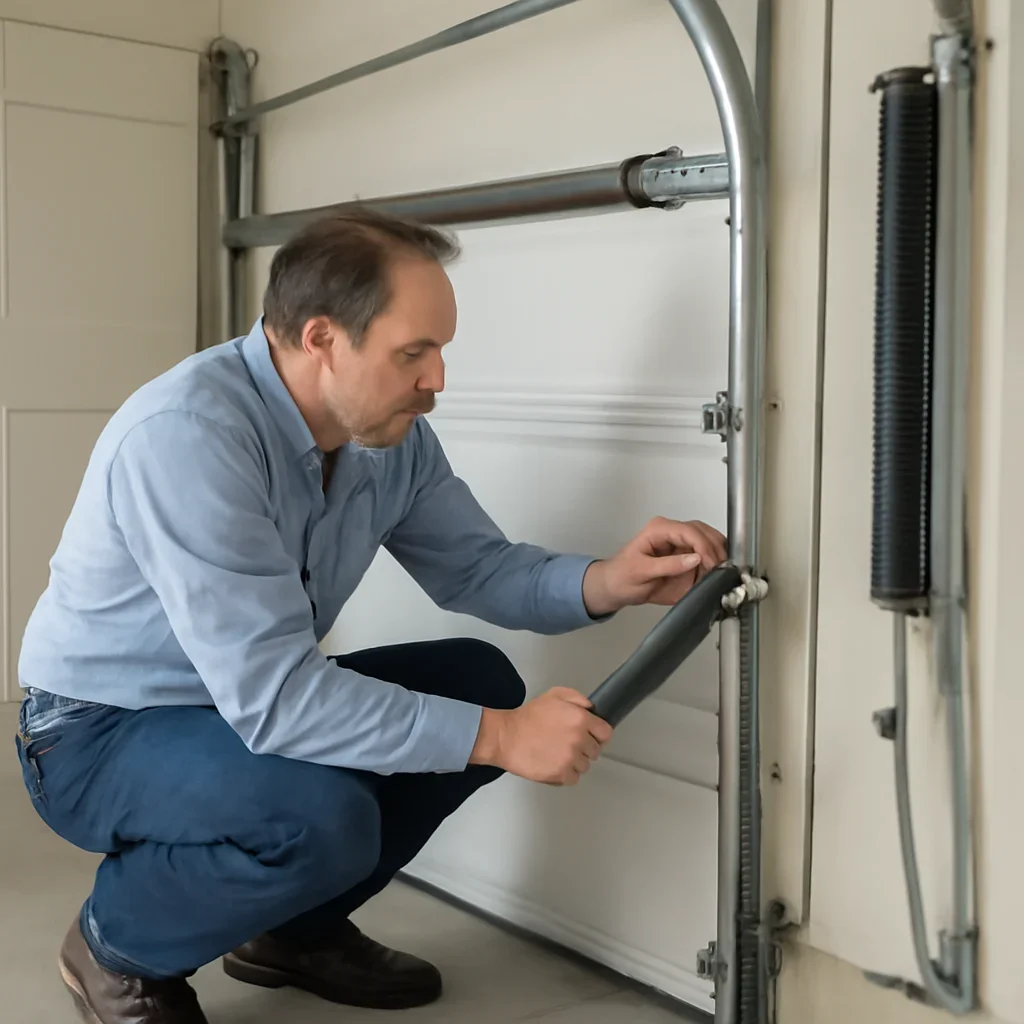
Safe checks and next steps
- Identify the spring location from a distance. Do not touch or test spring hardware.
- Note the door size and construction. Weight, insulation, and windows affect spring selection.
- Inspect for visible gaps, stretching, or loose parts. Stop using the door if a spring or cable appears damaged.
- Ask about cycle rating and matched replacement. Spring selection should consider actual door weight and use.
- Keep records after service. Document spring type, size, cycle rating, and replacement date.
Do not loosen, wind, cut, or reposition garage door springs, cables, drums, bottom brackets, or loaded track hardware. Stop if the door is heavy, crooked, partly off track, or moving unpredictably.
North Vancouver conditions to consider
Corrosion and damp conditions affect both systems. Regular visual inspection helps identify surface changes, but only a technician should determine whether a spring remains serviceable.
For adjacent guidance, review garage door spring lifespan and high-cycle spring options.
When professional service makes sense
Spring adjustment, conversion, and replacement require professional training and tools. Never loosen set screws, cable drums, bottom brackets, or pulleys.
The most relevant service resource is garage door spring repair.
Frequently asked questions
Which spring type is better?
The best system depends on the door and site. Torsion systems are common for controlled balance, while extension systems may suit certain layouts.
Can extension springs be converted to torsion?
Sometimes, when headroom, framing, door weight, and hardware allow professional conversion.
Do both types break suddenly?
Both can fail after fatigue or corrosion. Warning signs are not always obvious.
Get a clear next step for your garage door
Share what the door is doing, where it stops, which control you used, and any visible damage. The team can use those details to point you toward the appropriate inspection, repair, programming, or replacement service.
Garage door spring inspection