North Vancouver Garage Door Guide
When to Stop DIY Garage Door Troubleshooting
Garage doors combine heavy moving sections, stored spring tension, overhead hardware, and powered controls. Good troubleshooting is not about doing every repair yourself; it is about identifying the symptom without creating a second hazard.
Describe the problem safely
Quick answer
Homeowners can safely handle basic observations, remote batteries, keypad codes, gentle sensor cleaning, and clearing loose debris. Stop DIY troubleshooting when springs, cables, bottom brackets, electrical housings, a crooked door, uncontrolled weight, or structural damage are involved.
What to understand first
High-tension components are not DIY items
Springs, cables, drums, and bottom brackets can release force suddenly.
A partly open damaged door is unstable
Do not stand under it, pull the release, or try to support it with improvised objects.
Electrical faults require proper qualification
Burnt smells, repeated breaker trips, exposed wiring, and wet electronics need professional attention.
Structural damage changes the risk
Bent tracks, cracked panels, separated hinges, and off-track rollers can shift under load.
Safe checks and next steps
- Safe: observe one full cycle. Keep clear and note sound, speed, stopping point, and indicator lights.
- Safe: compare controls. Test wall button, remote, keypad, and app to identify the affected layer.
- Safe: clean accessible sensor lenses. Use a soft cloth without moving or bypassing the sensors.
- Stop: the door feels heavy or crooked. Do not continue manual or powered operation.
- Stop: repair requires tension or electrical adjustment. Describe the symptom and arrange service.
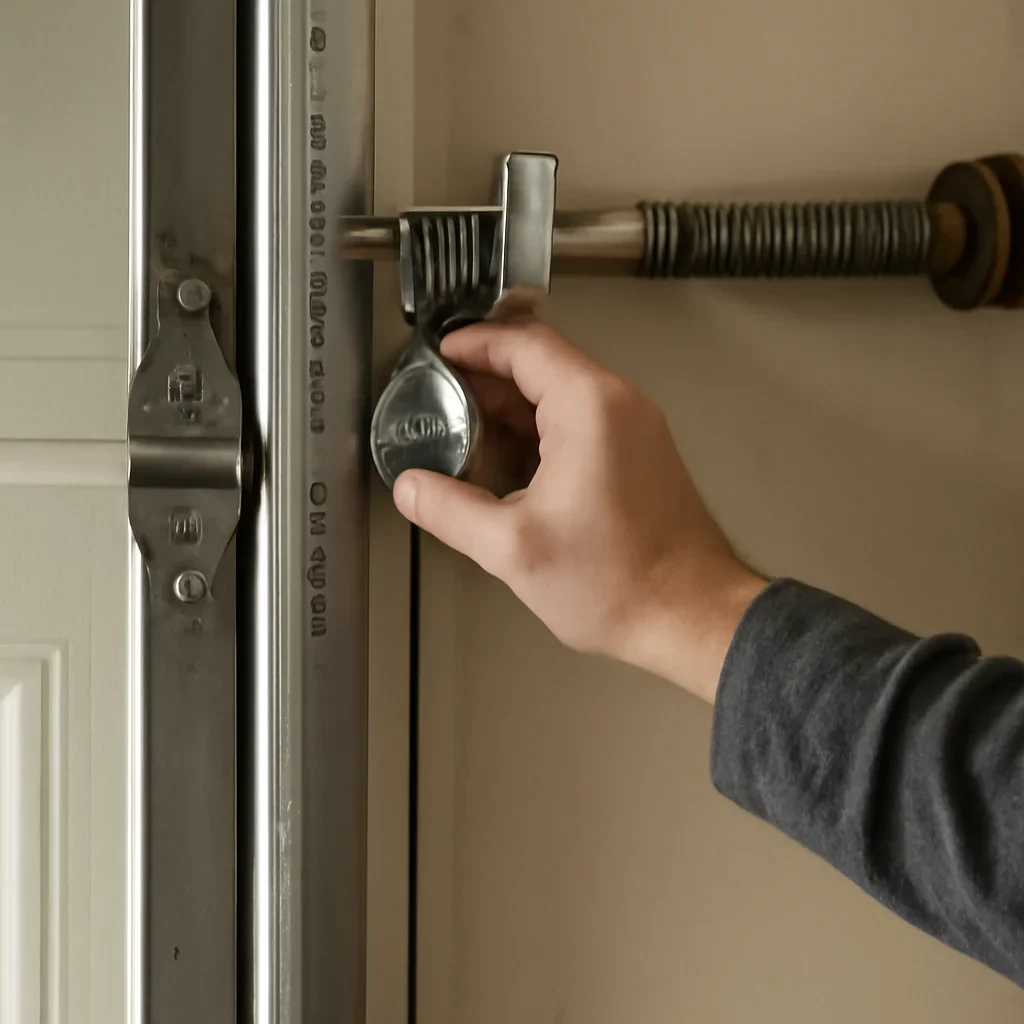
Do not loosen, wind, cut, or reposition garage door springs, cables, drums, bottom brackets, or loaded track hardware. Stop if the door is heavy, crooked, partly off track, or moving unpredictably.
North Vancouver conditions to consider
Rain, corrosion, and sloped driveways can complicate what looks like a simple alignment or sealing issue. A local technician can assess the door in its actual site conditions.
For adjacent guidance, review choosing a garage door company and garage door safety tips.
When professional service makes sense
Choose professional service whenever the door cannot be secured, the opening is blocked, a vehicle is trapped, or the system moves unpredictably.
The most relevant service resource is emergency garage door repair.
Frequently asked questions
Is lubricating a garage door safe for homeowners?
Basic lubrication can be, when limited to approved points and products. Do not loosen hardware or spray tracks indiscriminately.
Can I replace a broken spring myself?
No. Spring replacement involves high stored energy and specialized tools.
What information should I give a technician?
Share the door position, symptom, sounds, visible damage, control used, and whether the opening is secure.
Get a clear next step for your garage door
Share what the door is doing, where it stops, which control you used, and any visible damage. The team can use those details to point you toward the appropriate inspection, repair, programming, or replacement service.
Describe the problem safely