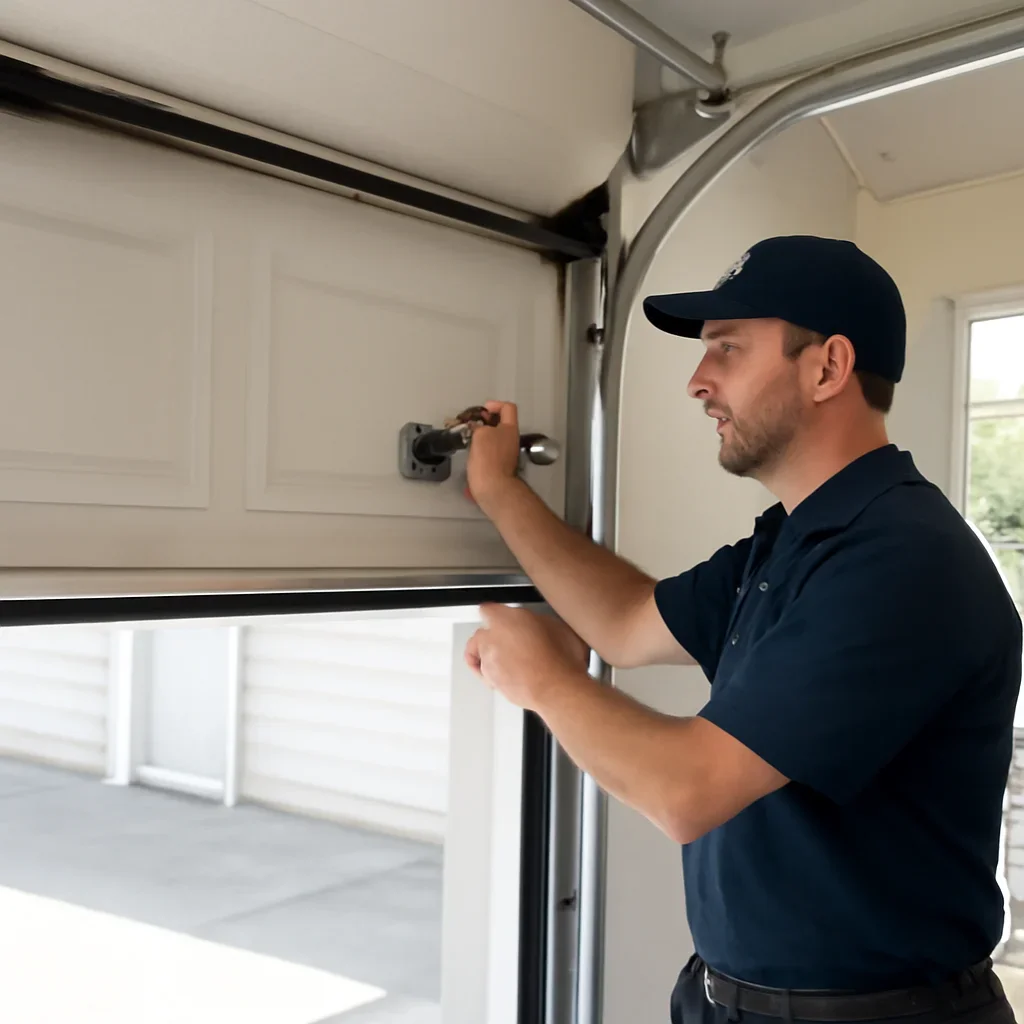
Balance and manual movement
Review whether the door is evenly supported and can move without unusual resistance or side-to-side change.

Keep the door moving smoothly, reduce avoidable opener strain and identify developing wear before it becomes a breakdown. Lynn Valley maintenance can account for regular moisture, needles and leaves near the opening, attached living space, sloped driveways and the high daily use common in family homes, townhomes and strata properties.
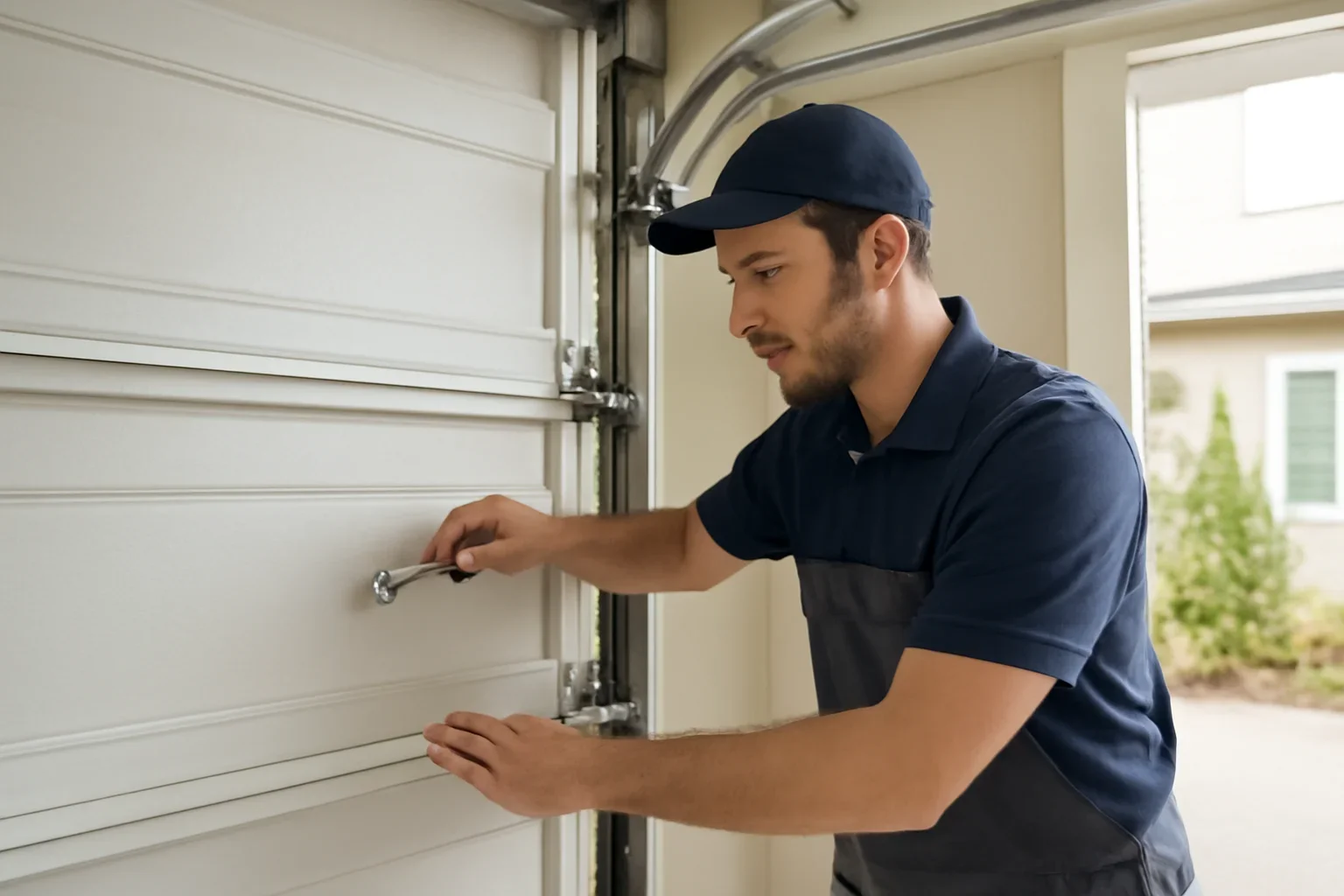
Garage door maintenance is most useful when it checks how the complete system is performing. The door should move evenly, remain properly supported, travel without binding and avoid placing unnecessary load on the opener.
A practical visit can review balance, moving hardware, fasteners, rollers, tracks, seals, sensors and opener performance. It should also identify parts that are wearing unevenly or showing early signs of corrosion, looseness, misalignment or vibration.
Maintenance cannot safely correct every problem. A broken spring, frayed cable, off-track roller, damaged panel or unstable door requires repair. Review the broader garage door maintenance and tune-up service for more information.
Maintenance focuses on controlled movement, developing wear and the small changes that can increase noise, resistance and opener strain over time.
Review whether the door feels evenly supported and travels without leaning, binding or placing excess load on the opener.
Review balance service 02Check movement, wear, track condition, hinge points and developing vibration or noise.
Request a system check 03Review brackets, bolts and other mounting points that may loosen as the door cycles and vibrates.
Check the hardware 04Identify cracked, flattened or missing seals that allow water, cold air, insects and debris into the garage.
Review weather seal service 05Check travel, response, unusual sound, rail movement and how the opener works with the door's current balance.
Review opener service 06Review sensor alignment, sightlines, wiring condition and relevant reversal behaviour.
Review sensor service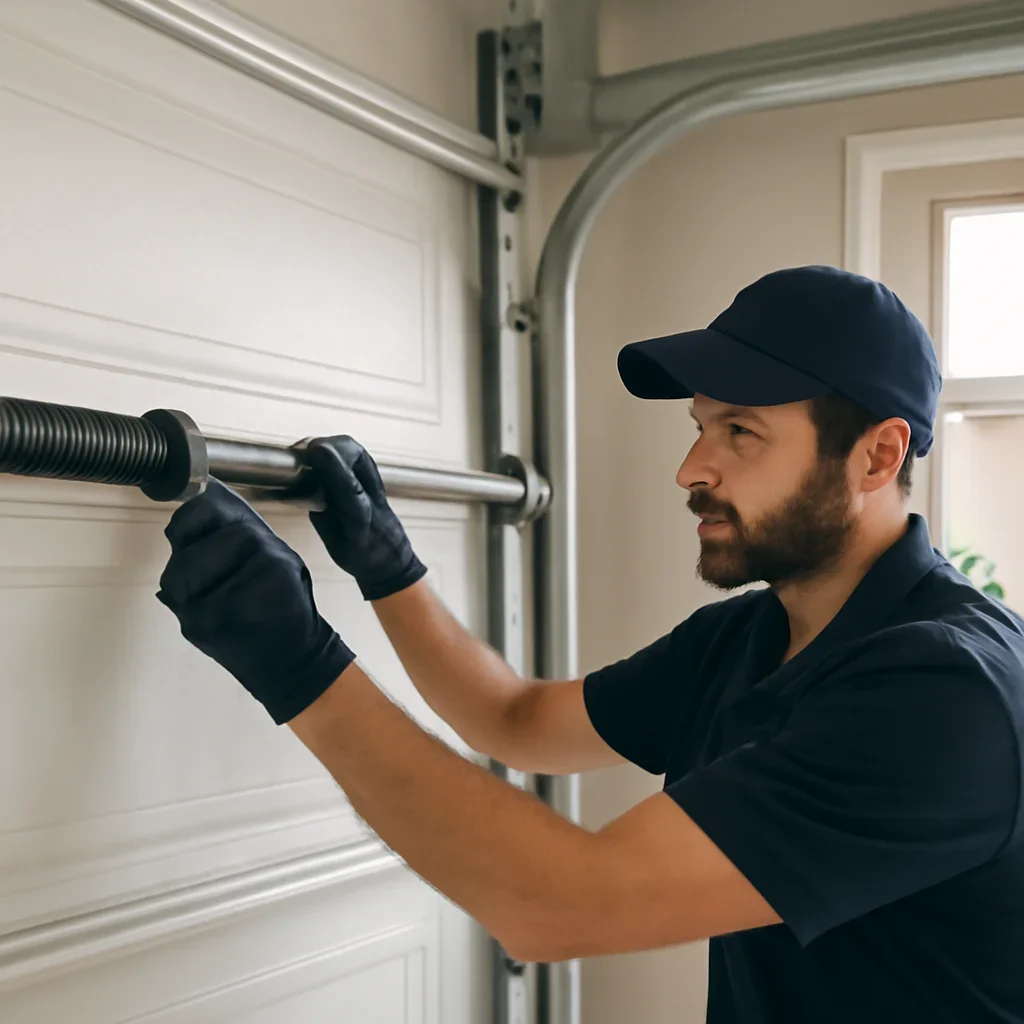
Lynn Valley includes established detached homes and newer townhome and multifamily housing around the Town Centre. Garage doors may serve as a main family entrance, sit beneath living areas or open onto short and sloped driveways.
Needles, leaves, dirt and water can collect around the lower opening, tracks, threshold and safety sensors. Moisture may contribute to corrosion on exposed hardware, while damaged seals can allow water and debris into the garage.
Where the garage is attached or located beneath occupied space, developing noise and vibration may be noticed earlier. Maintenance can help identify whether the sound comes from rollers, hinges, mounting hardware, track movement, door balance or the opener.
Maintenance is preventative. It should not be used to keep an unsafe door operating when a spring, cable, roller, track, panel or supporting component has already failed.
Stop using the system when the door is crooked, hanging from one side, off-track, unusually heavy or moving without control. Repeated opener use can increase damage when the door cannot move correctly.
The exact scope depends on the door and current condition, but a useful tune-up should look beyond one noisy hinge or roller.
Review whether the door is evenly supported and can move without unusual resistance or side-to-side change.
Look for visible wear, corrosion, fraying, displacement or other signs that require repair rather than adjustment.
Check travel, wear, track condition, roller movement and points where noise or vibration is developing.
Review supporting hardware and mounting points for looseness, wear or movement.
Inspect bottom and perimeter seals, threshold contact and areas where water or debris can enter.
Review controls, travel, sensor condition and relevant opening, closing and reversal behaviour.
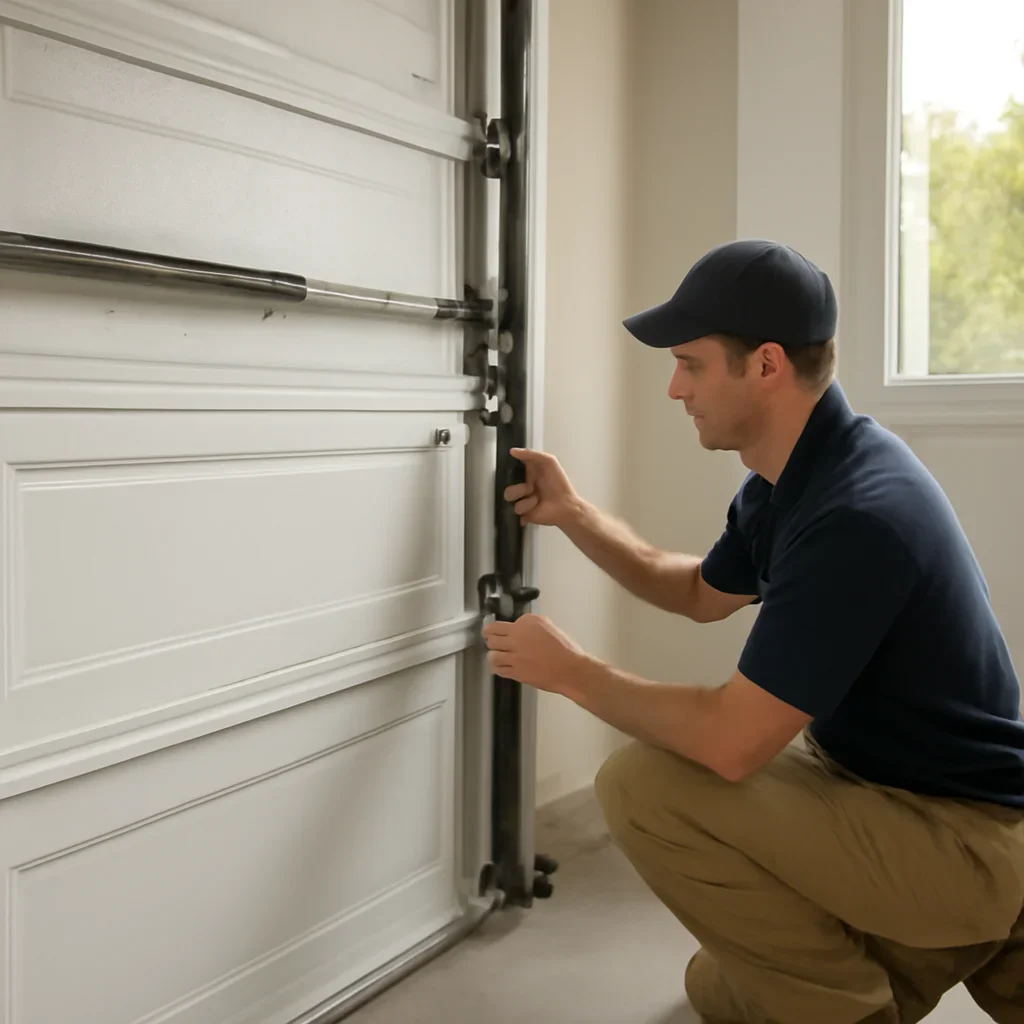
The process begins with how the door has been performing. Movement, sound, visible wear and opener behaviour help identify which parts need closer attention.
There is no single interval that fits every property. Timing should reflect how often the door moves, its age, exposure and whether small changes have appeared.
Maintenance recommendations should be based on the door's actual condition and usage, not unnecessary part replacement. Review the pricing guidance before requesting service.
Clear information about performance, use and property access helps focus the visit on the most relevant wear points.
Share new sounds, slower movement, vibration, seal damage or changes in opener behaviour.
Include the nearest cross street, driveway slope and any gate, strata or visitor-parking instructions.
Review balance, moving parts, hardware, tracks, seals, opener performance and visible wear.
Identify completed maintenance, parts to monitor and any repair that should be handled separately.
Use the local hub for neighbourhood-wide service information, review related maintenance and inspection guidance or send the current performance and access details.
These answers cover tune-up scope, lubrication, wet-weather exposure, noise, inspection timing and the difference between maintenance and repair.
The scope depends on the system, but maintenance may include balance review, moving-part inspection, hardware checks, track and roller review, suitable lubrication, seal inspection, opener performance and relevant safety checks.
No. Lubrication may be one part of maintenance, but it does not correct poor balance, loose hardware, damaged rollers, worn seals, sensor issues or parts that have already failed.
Yes. Water, needles, leaves and dirt can collect around tracks, thresholds, seals and safety sensors. Moisture can also contribute to corrosion on exposed metal hardware.
It may help when noise comes from dry movement, loose hardware, vibration or developing roller and hinge wear. Grinding, sudden banging or noise from damaged parts may require repair instead.
Timing depends on usage, age, exposure and current performance. A frequently used, shared or weather-exposed door may need attention sooner than a lightly used, protected garage.
Request repair when the door is crooked, off-track, unusually heavy, unstable or affected by a broken spring, damaged cable, failed roller or structural panel damage.
Share any new noise, vibration, slower movement, seal damage, opener strain or visible wear. Include how often the door is used and provide driveway, gate, strata or visitor-parking instructions.