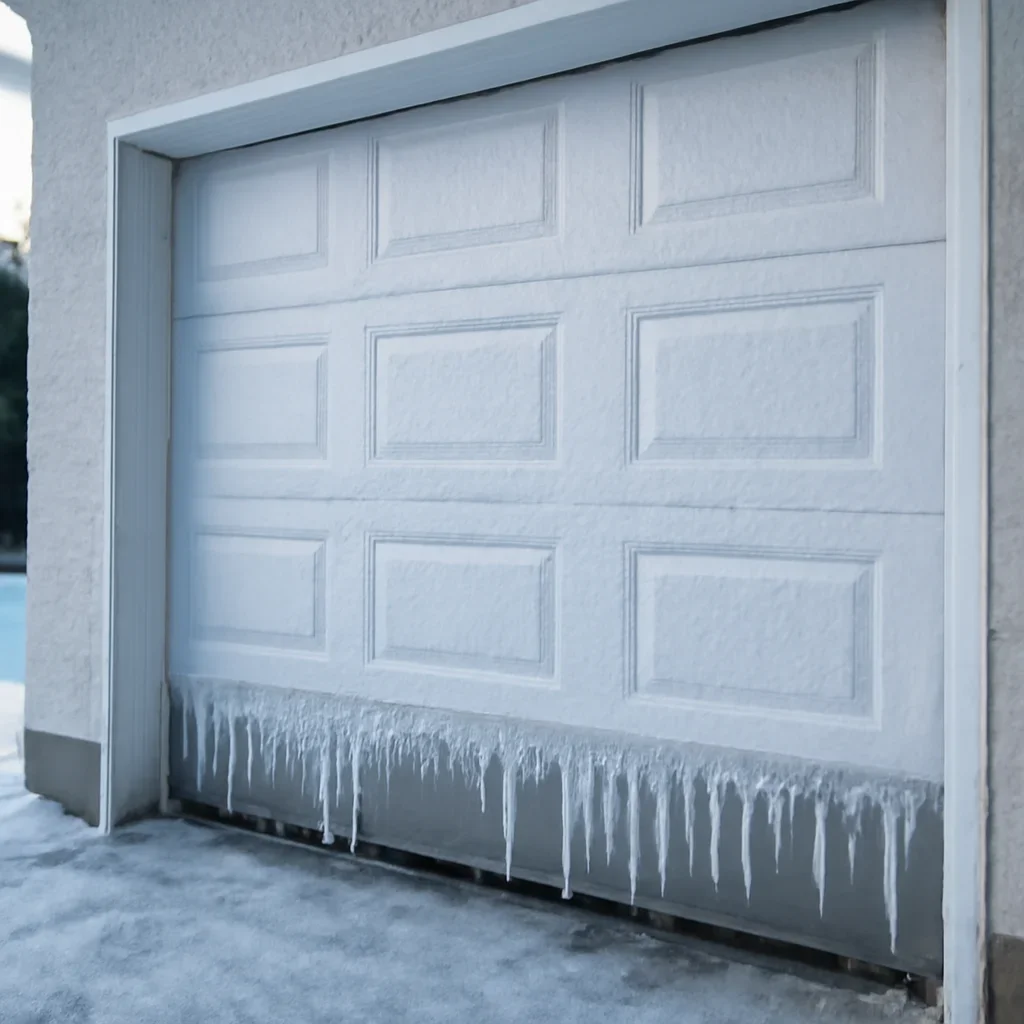
Bottom seal frozen to the threshold
Water beneath the rubber seal can freeze overnight and bond the lowest section to the concrete or driveway edge.

A North Vancouver garage door can freeze to the threshold when rain, melting snow or tracked-in moisture collects around the bottom seal and temperatures drop. Ice can also build around the side seals, tracks or rollers. Forcing the opener can damage gears, trolleys, panels and lifting hardware.
Stop pressing the remote if the opener strains but the door does not move. Check whether the bottom seal is visibly frozen to the floor and clear loose snow from outside the opening. Allow gentle, even warming from the garage side and wait for the bond to release. Do not force the door, strike the panel, use an open flame or pour boiling water across the threshold.
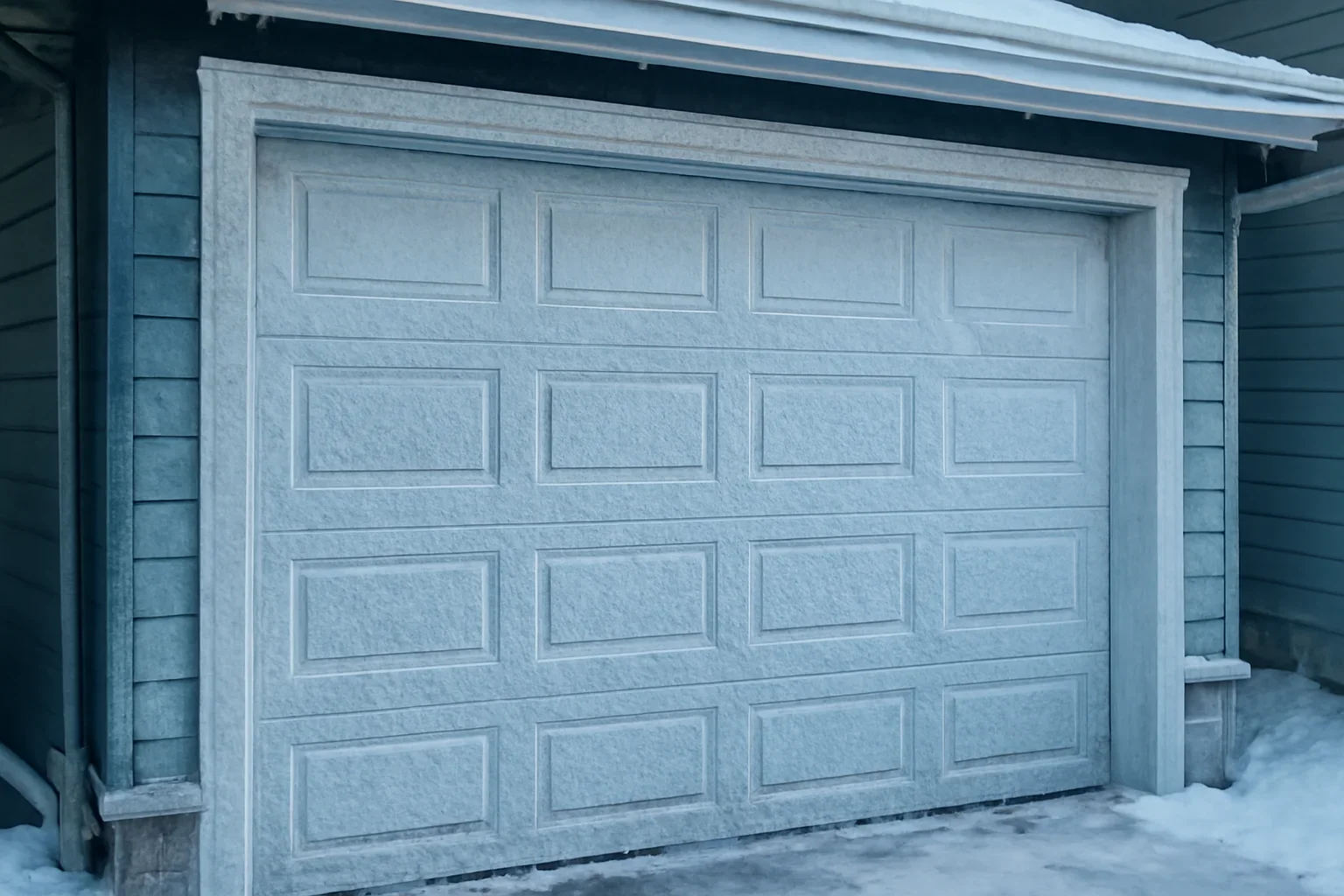
The bottom seal is the most common freezing point, but not every winter failure is caused by ice. The door, opener and lifting system still need to be considered.
Water beneath the rubber seal can freeze overnight and bond the lowest section to the concrete or driveway edge.
Packed snow, refrozen slush or ice near the side tracks can block movement or interfere with safe closing.
Older seals may harden, stick or fold during cold conditions, creating extra resistance around the opening.
A marginal opener or worn drive system may struggle when grease, rollers or seals create more resistance than usual.
A heavy door that opens only a few inches may have a spring or cable problem rather than a frozen threshold.
Water that cannot drain away from the opening can repeatedly freeze beneath the seal during overnight temperature drops.
The goal is to release the ice without loading the opener or deforming the bottom section. Keep people and vehicles clear while you check the opening.
Do not use an open flame, strike the door, pry against the panel or pour boiling water over the threshold. Sudden heat can damage seals and finishes, while added water may refreeze around the opening.
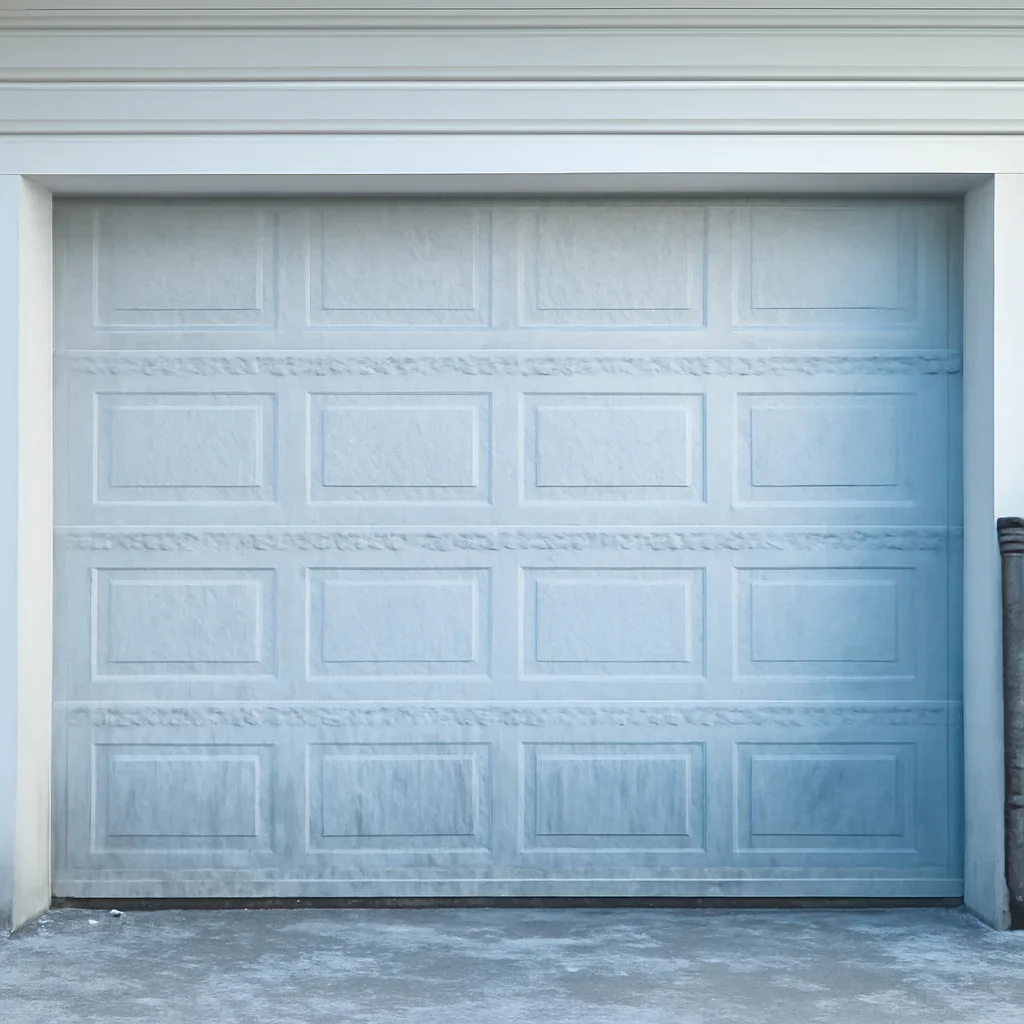
Cold weather can reveal existing wear in the opener, rollers, springs, cables and seals. If the threshold is clear but the door is still heavy, crooked or noisy, the problem should be treated as a garage door fault rather than a thawing issue.
A door that will not move after the opening is clear may need garage door repair . If the motor clicks or hums without moving the door, also review garage door opener troubleshooting .
North Vancouver winters often involve rain, wind and periods of snow rather than continuous deep cold. Garage doors may freeze after moisture collects during the day and temperatures fall overnight, especially where the threshold stays shaded or drainage is slow.
Higher-elevation and hillside neighbourhoods such as parts of Lynn Valley, Upper Lonsdale, Canyon Heights, Seymour and Grouse-area streets may experience colder conditions than lower waterfront areas. Even in milder locations, slush and meltwater can refreeze at the bottom seal.
Sloped driveways can direct water toward the garage opening. Leaves, grit and snow near drainage paths may also hold moisture at the threshold. Keeping the approach clear and allowing meltwater to move away from the door reduces repeated freeze-thaw problems.
Mention any repeated freezing at the same location. That can point toward a worn seal, low spot, drainage issue or door-alignment problem rather than a one-time weather event.
Prevention focuses on moisture control, a serviceable bottom seal and a door that closes evenly without trapping water beneath one section.
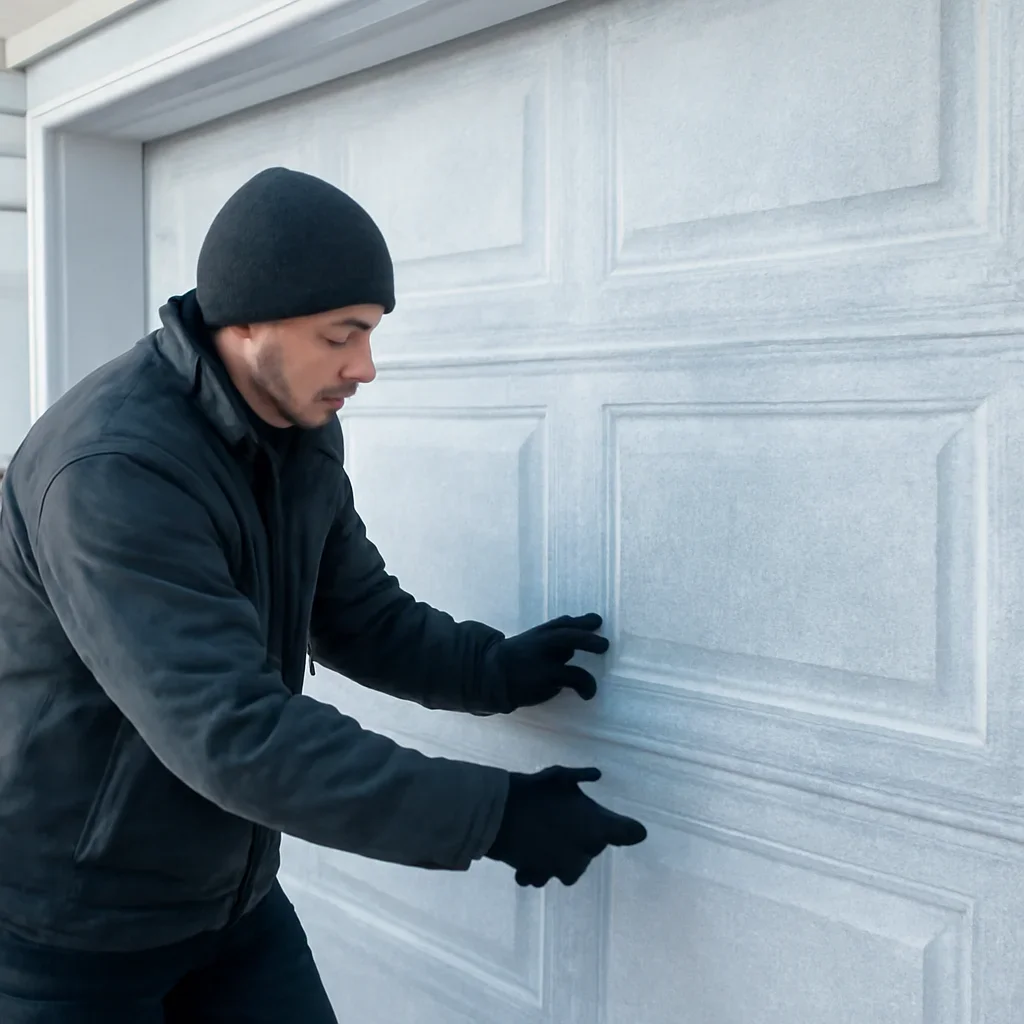
Once the door is safely released, the inspection should determine whether forcing, repeated opener attempts or existing wear affected the seal, tracks, rollers, springs, cables or opener.
Check the threshold, side seals, tracks and visible snow or ice without loading the opener.
Allow controlled thawing and clear moisture so the seal and panel are not damaged during release.
Review balance, springs, cables, rollers, tracks and opener load for signs of strain or pre-existing failure.
Address worn seals, poor alignment, drainage-related recurrence or damaged opener and door components.
A frozen bottom seal can often wait for controlled thawing when the property remains secure. It becomes urgent when a vehicle is trapped, the door is stuck open, the opener has been overloaded or the door is crooked, hanging or mechanically damaged.
Use emergency garage door repair when safety, security or essential access cannot wait.
Repeated freezing may be a seal or drainage issue, while a heavy, crooked or non-moving door may need mechanical repair.
These answers cover the safest first decisions when the door will not move during freezing conditions.
Rain, melting snow or tracked-in moisture may collect beneath the bottom seal and freeze when temperatures drop. A low spot, worn seal or drainage problem can make the same area freeze repeatedly.
No. Stop after the first sign that the opener is straining while the door remains still. Repeated attempts can damage gears, trolleys, rails, panels and lifting components.
Boiling water can damage rubber seals and finishes, and the added water may refreeze. Use patient, gentle warming from the garage side and remove accessible meltwater after the seal releases.
Visible ice bonding the seal to the threshold suggests freezing. A door that remains extremely heavy, opens only a few inches or has a visible spring gap may have a spring problem. Stop using the door and request repair when the cause is unclear.
The temperature itself may not be the only issue. The opener can be damaged when it repeatedly tries to lift a door that is frozen, jammed or unusually resistant.
Repeated freezing may point to standing water, poor drainage, an uneven threshold, a flattened seal or a door that does not close evenly. Correcting the underlying moisture path is more effective than repeatedly thawing the same spot.
Replacement may be appropriate when the seal is cracked, torn, flattened, hardened or pulled out of its retainer. A serviceable seal should remain flexible and contact the threshold evenly.
Explain whether the seal is visibly frozen, how the opener reacted, whether the door moved at all and whether it remains heavy after thawing. Include your North Vancouver neighbourhood, driveway conditions and property type.
Share whether the bottom seal is attached to ice, whether snow or slush is present near the tracks, and whether the opener clicked, hummed or strained. Mention whether the door remains heavy or uneven after thawing so the request can be directed to seal, opener or mechanical repair.