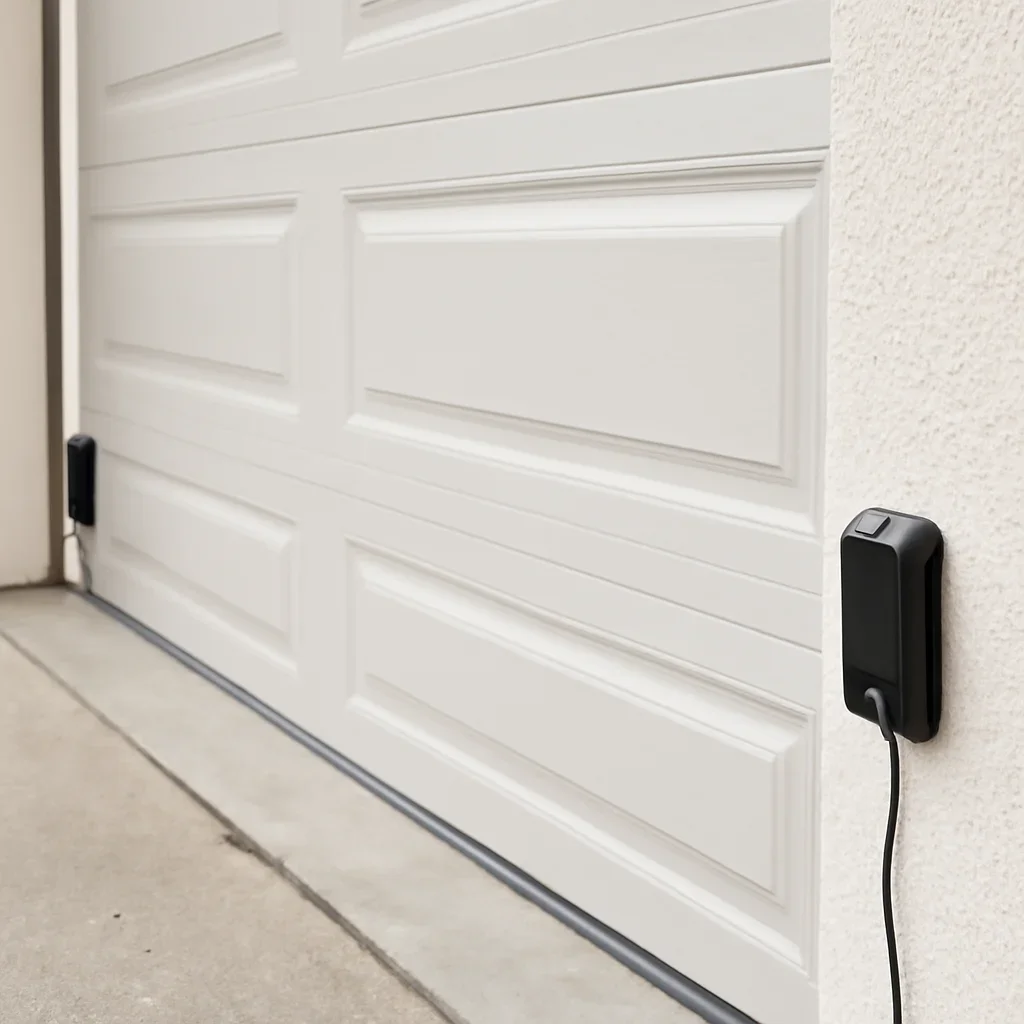
The door starts down and reverses
The opener may believe something is in the opening because the beam is blocked, unstable or not reaching the receiving sensor.

When garage door sensors are blocked, dirty, misaligned or damaged, the door may refuse to close, stop partway or reverse to the open position. The cause can be as simple as an object in the beam or as involved as loose wiring, failed sensors or a separate door problem.
Remove anything blocking the sensor path, gently clear visible dirt from the sensor lenses and check whether both indicator lights are steady. Do not bypass the sensors or force the door closed. Request service when the lights remain off or flashing, the brackets are loose, wiring looks damaged, or the door still reverses after the opening is clear.
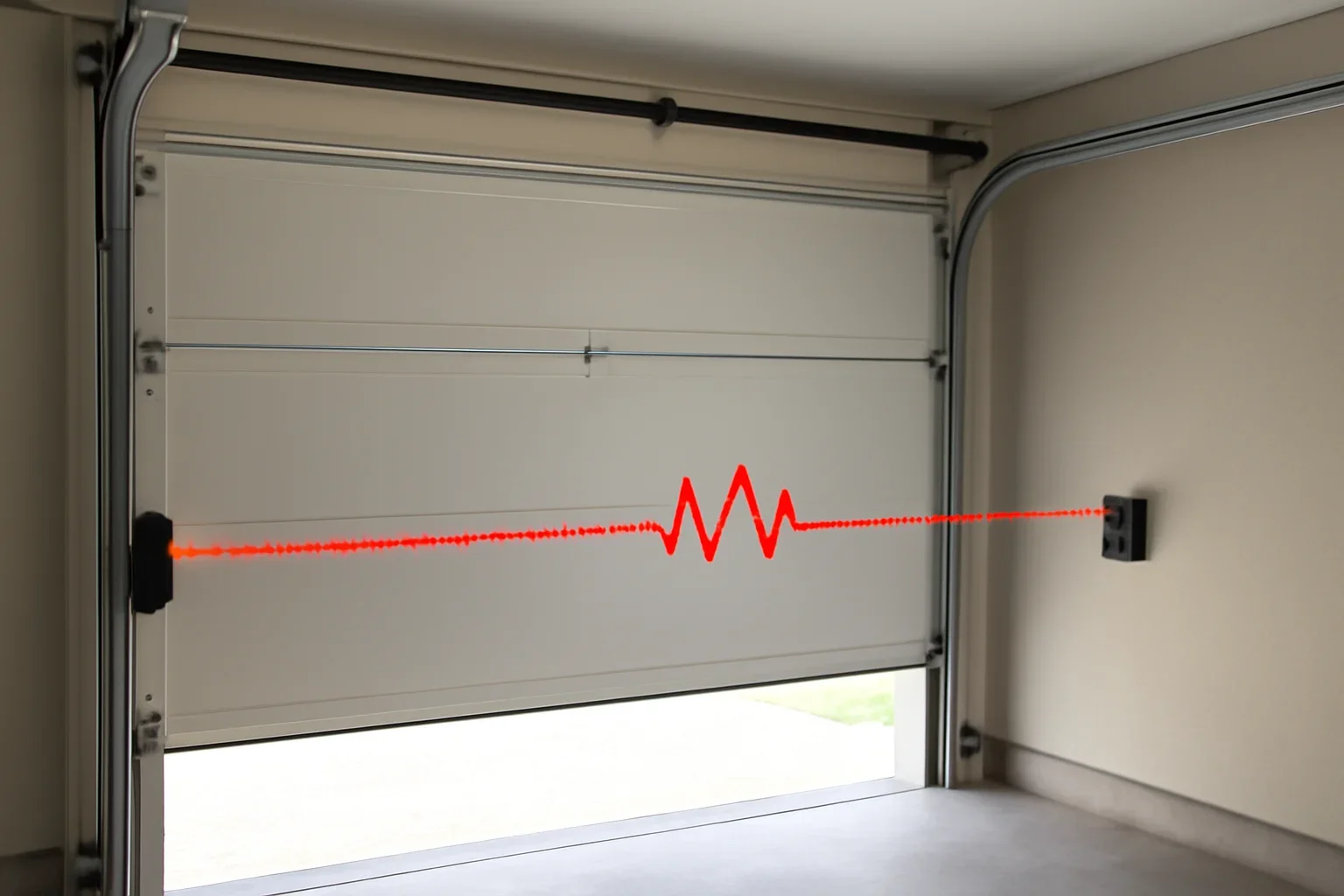
Sensor faults usually affect the closing cycle, but similar symptoms can also come from track resistance, incorrect opener settings or a mechanical problem with the door.
The opener may believe something is in the opening because the beam is blocked, unstable or not reaching the receiving sensor.
Many openers use flashing lights or control-panel indicators to report a safety-sensor interruption or alignment problem.
The sensor may have no power, loose wiring, physical damage or a bracket position that prevents the beam from connecting.
A loose bracket, vibration, wiring fault or marginal alignment may cause an intermittent signal and unpredictable closing.
Some systems allow controlled closing from the wall station when the safety circuit is not confirming a clear opening.
Moisture, direct light, movement around the brackets or damaged wiring can create a sensor problem that is not present every cycle.
Keep the checks simple and visible. You should not open electrical housings, alter the safety circuit or attempt to make the door close without working sensors.
The sensors help prevent the door from closing on people, pets, vehicles and stored items. A door that cannot confirm a clear opening should be diagnosed rather than forced to operate.
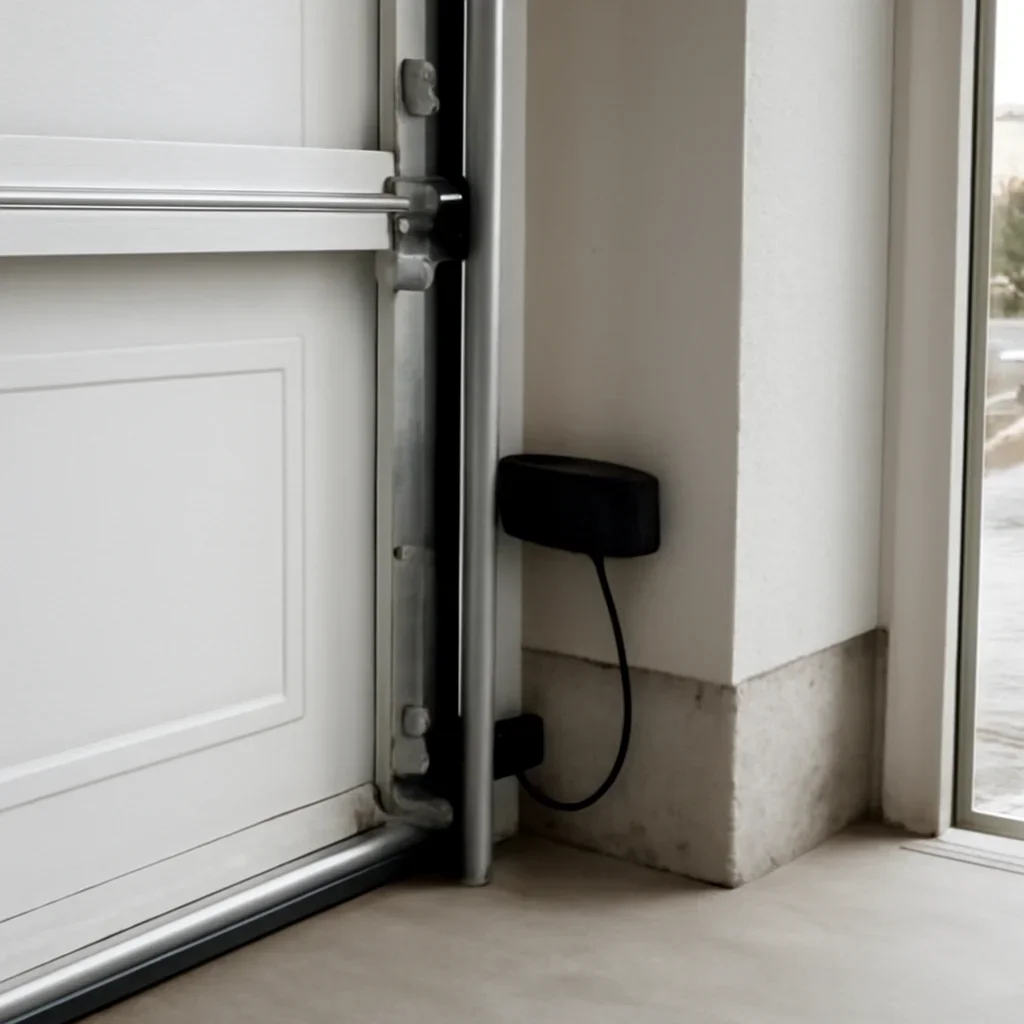
A door that reverses is not always caused by the sensors. The opener may also respond to excess resistance from the tracks, rollers, balance or closing settings. Diagnosis should confirm that the sensor circuit works and that the door can travel without binding.
When the opener clicks, hums, behaves inconsistently or has several control problems, review garage door opener troubleshooting . A crooked, heavy or noisy door may instead need complete garage door repair .
Sensor problems can develop suddenly after an object bumps the unit or gradually as brackets, wiring and the surrounding door system wear.
North Vancouver includes dense condo and mixed-use properties around Lower and Central Lonsdale, along with townhomes, detached houses and commercial buildings across the wider District. Each setting can create different access and troubleshooting requirements.
Shared strata doors may operate many times each day and rely on controlled access for residents. Detached garages in Lynn Valley, Seymour, Deep Cove, Edgemont and Capilano may have more exposure to damp air, wind-blown debris and items stored close to the sensor path.
When requesting service, include the property type, whether the issue affects one door or a shared entrance, and whether the opening can still be secured. This helps distinguish a standard sensor repair from an urgent access problem.
For a door that will not close at all, also review common garage door closing problems .
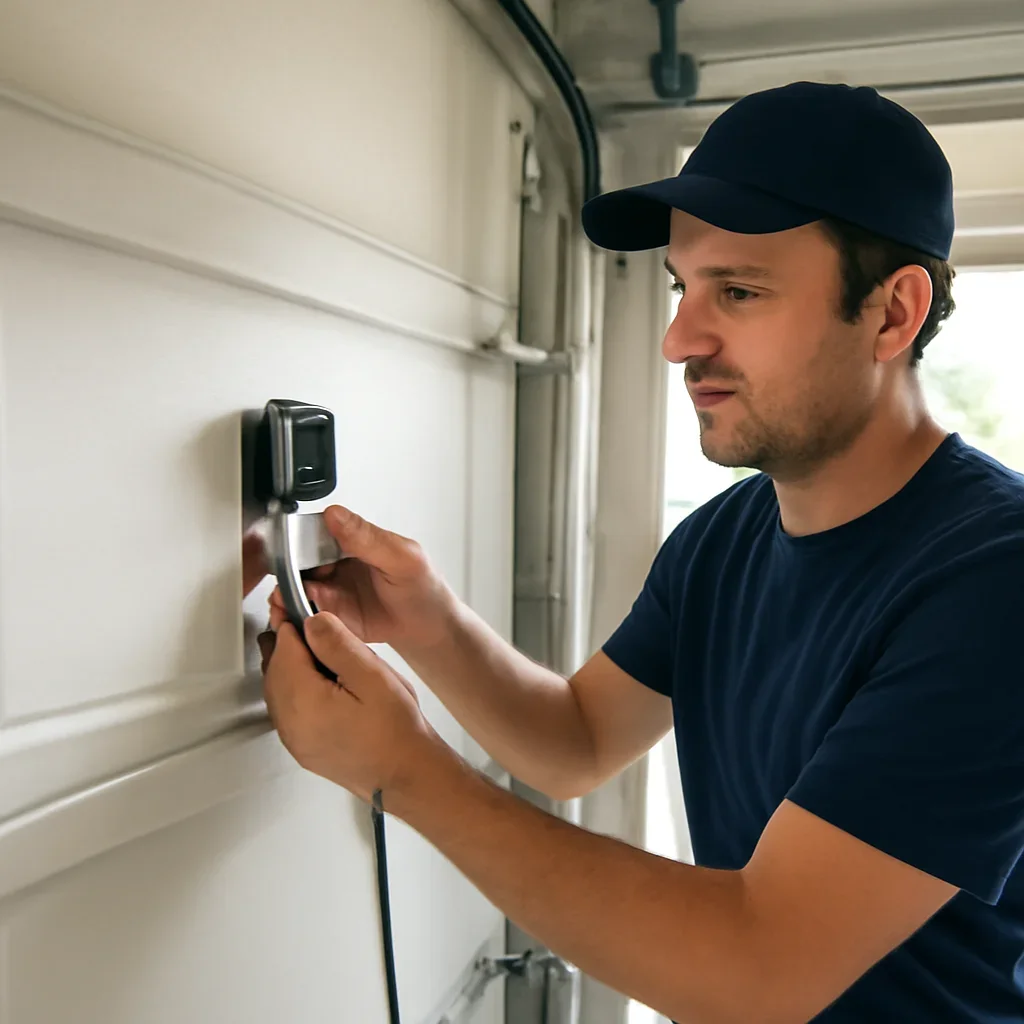
The goal is not only to make the indicator lights turn on. The door should close consistently, reverse correctly when the opening is interrupted and move without mechanical resistance.
Note when the door reverses, what the opener lights show and whether the issue changes between controls.
Check alignment, mounting stability, lens condition, power and visible low-voltage connections.
Confirm that settings, tracks, rollers, balance and resistance are not creating a false obstruction response.
Verify that the repaired system responds correctly before the service is considered complete.
A sensor fault is usually a standard repair when the door can remain safely closed. It becomes more urgent when the door is stuck open, the property cannot be secured, a shared entrance is unavailable or the door shows signs of a separate mechanical failure.
Use emergency garage door repair when security, essential vehicle access or safe operation is immediately affected.
Sensor problems can overlap with opener faults, closing problems and mechanical door resistance. These service paths help narrow the next step.
These answers address the most common decisions North Vancouver property owners face when the door will not close normally.
The safety sensors may be blocked, dirty, misaligned or not receiving power. The opener may also be detecting resistance from the tracks or door. Check the clear sensor path and indicator lights, then request diagnosis if the problem remains.
The sensor beam may be interrupted or unstable. Incorrect travel settings, track resistance, worn rollers or poor door balance can also trigger reversal. Steady sensor lights do not rule out other closing-system problems.
You can gently clear visible dust or moisture from the outside of the lenses without opening the sensors or moving electrical connections. Stop if wiring is exposed, a bracket is damaged or the issue remains after the beam path is clear.
The sensor may be out of alignment, loosely mounted, disconnected or damaged. Flashing can also indicate an unstable signal or wiring problem. The meaning of indicator lights varies by opener, so the complete sensor circuit should be checked.
Bright direct light, condensation, dirt and moisture around connections can contribute to unreliable response. Repeated weather-related problems may require bracket, wiring or sensor correction rather than temporary cleaning.
The sensors are an important safety feature and should not be bypassed. If the door cannot confirm that the opening is clear, keep people, pets and vehicles away from the door and request repair.
That depends on the opener, sensor design and failed component. Some systems use matched sensor pairs, while other problems may be resolved through alignment, bracket or wiring repair. Diagnosis should identify the cause first.
Explain whether the door refuses to close or reverses, what each sensor light is doing, whether the wall button must be held and whether anything recently struck or blocked the sensors. Include your North Vancouver neighbourhood and property type.
Describe whether the door refuses to close, reverses, or closes only while the wall button is held. Include the indicator-light behaviour, any recent impact or moisture exposure, and whether the door appears level and mechanically sound.