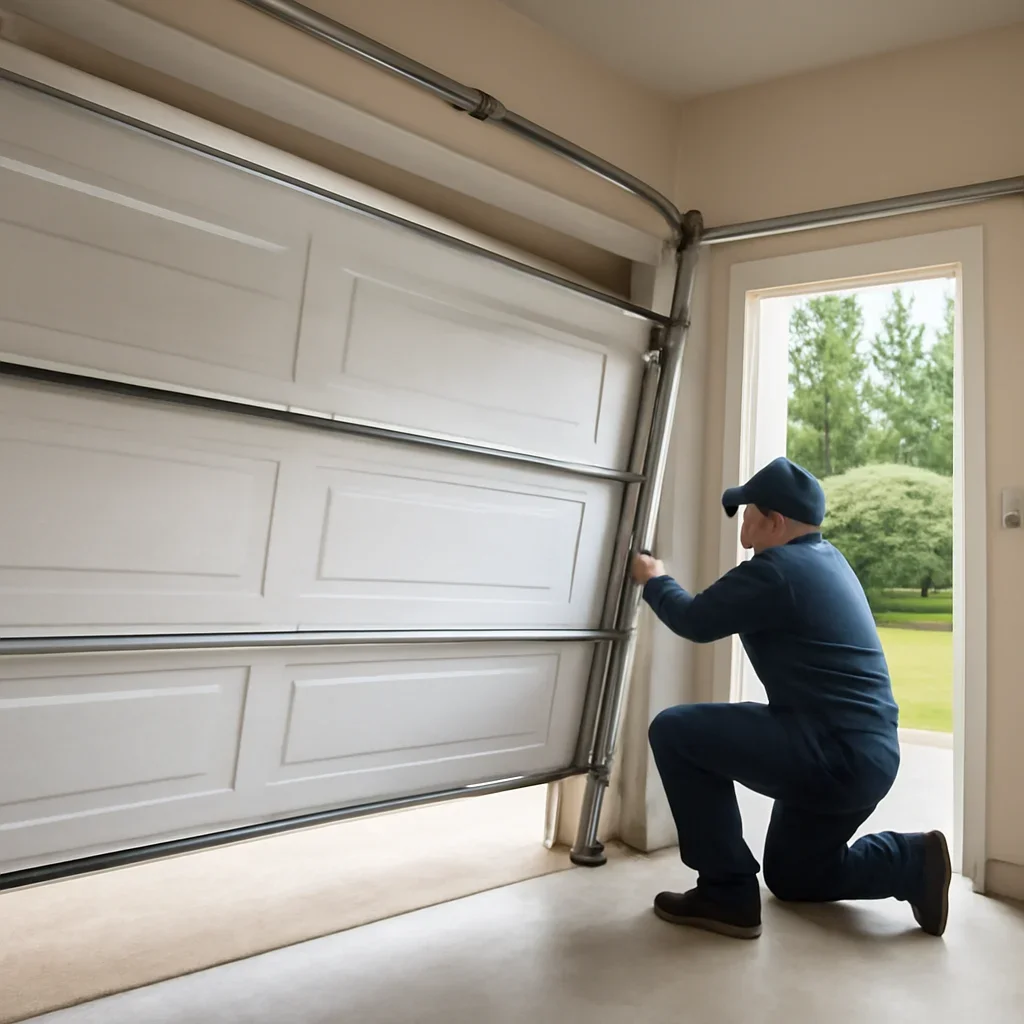
One side hangs lower
The bottom edge is no longer level, or the door appears twisted in the opening.

A garage door that is crooked, jammed or partly outside its tracks can become unstable without warning. Stop operating it and request an assessment before damaged rollers, cables, tracks or panels turn one failure into a larger repair.
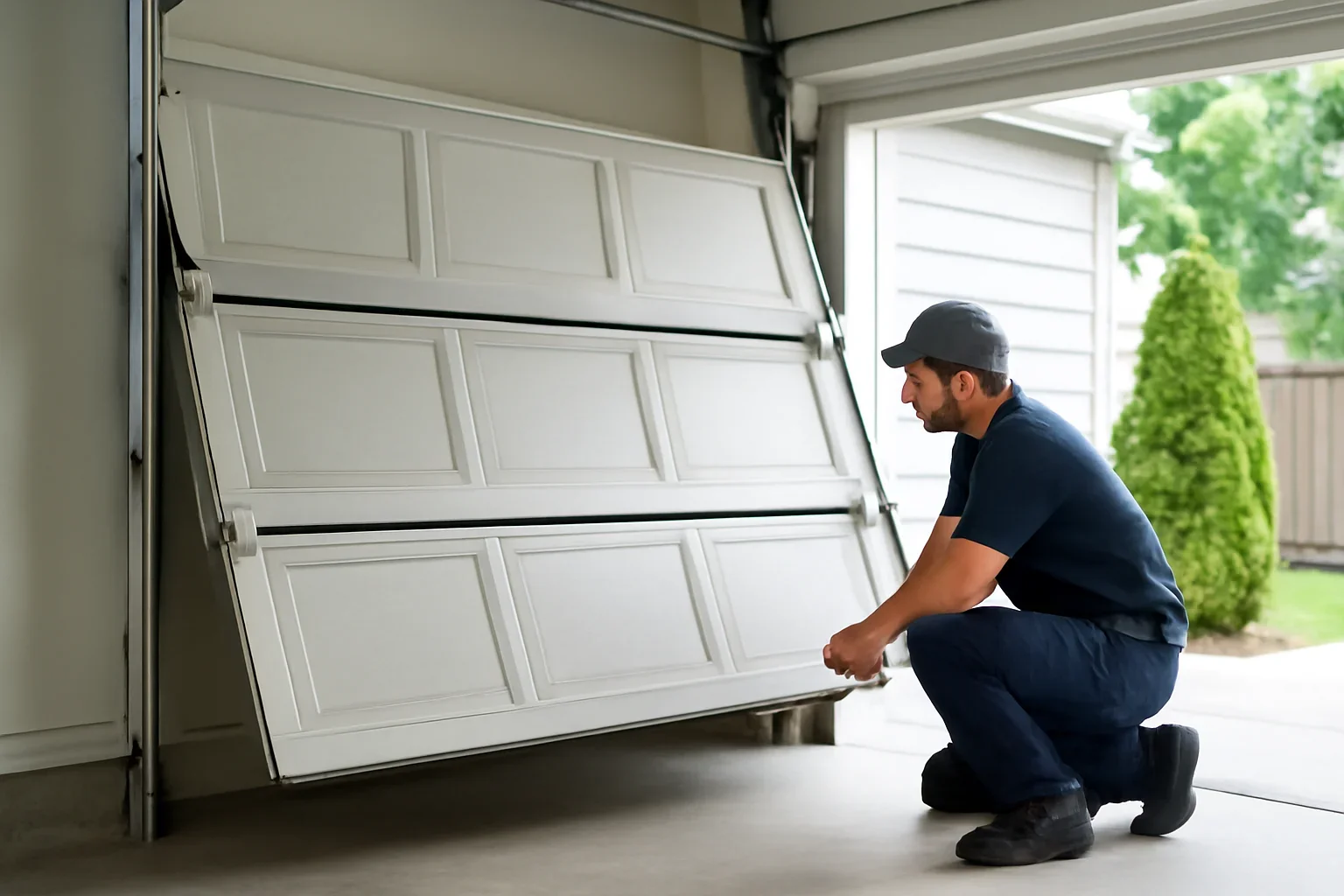
An off-track door may be carrying its weight unevenly. Moving it by hand, disconnecting components or repeatedly running the opener can cause sudden movement and additional damage.
When the door is stuck open, a vehicle is trapped or the opening cannot be secured, use the emergency garage door repair option.
You do not need to diagnose the hardware yourself. A few observations from a safe distance can help determine the right response.
The door does not always fall completely out of the track. Early warning signs can include uneven movement, new gaps, scraping and rollers that no longer sit correctly inside the metal guide.
The bottom edge is no longer level, or the door appears twisted in the opening.
One or more rollers have slipped past the track lip or are sitting at an unusual angle.
The door begins to move, catches at one point and stops or reverses.
A track may be pushed inward, pulled away from its brackets or visibly misaligned.
A lifting cable may be hanging, wrapped incorrectly or carrying less tension than the opposite side.
Metal-on-metal noise can indicate that rollers, hinges or tracks are no longer moving together correctly.
Putting a roller back into place is not enough when another failed component caused the door to shift. The complete lifting and guiding system should be checked before normal operation resumes.
The visible roller or track problem should be assessed together with the parts that lift, guide and hold the door. This reduces the chance of restoring movement while leaving the original fault unresolved.
Off-track movement can involve several parts. These service routes help connect the visible symptom with the most relevant next step.
Assess rollers, tracks, brackets, cables, balance and panel position before restoring movement.
View dedicated repair serviceUse this option when the door is noisy, uneven or unreliable but the exact failed component is unclear.
Explore repair optionsReview bent, separated or misaligned track sections that prevent the rollers from travelling safely.
Learn about track repairAddress loose, damaged or uneven lifting cables that may cause one side of the door to drop.
Review cable repairReplace worn, seized or damaged rollers that bind, wobble or leave the track during movement.
See roller replacementCompare repair, opener, maintenance, installation and replacement options for the complete system.
Browse service options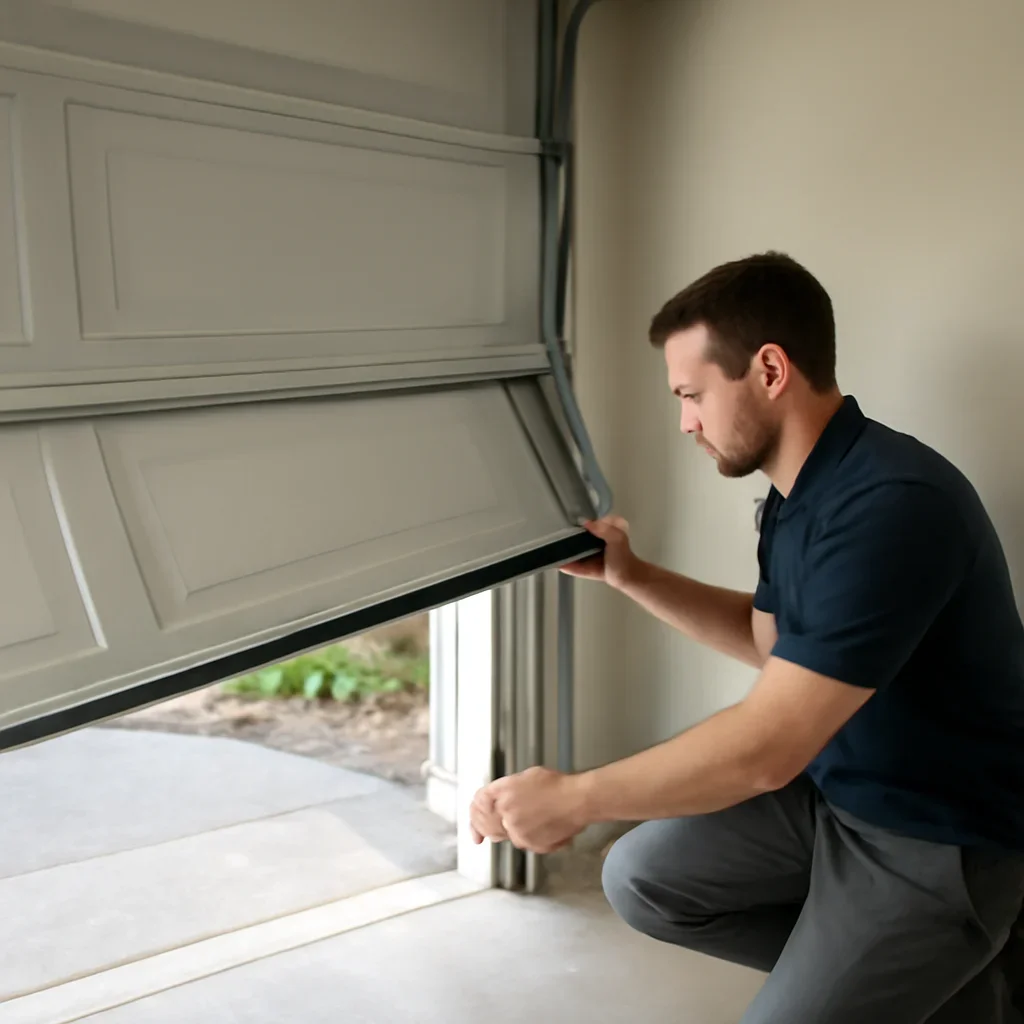
A useful inspection follows the load path from the door sections through the rollers, tracks, cables, springs and opener. This helps identify whether the off-track condition was caused by impact, wear, alignment, balance or more than one problem.
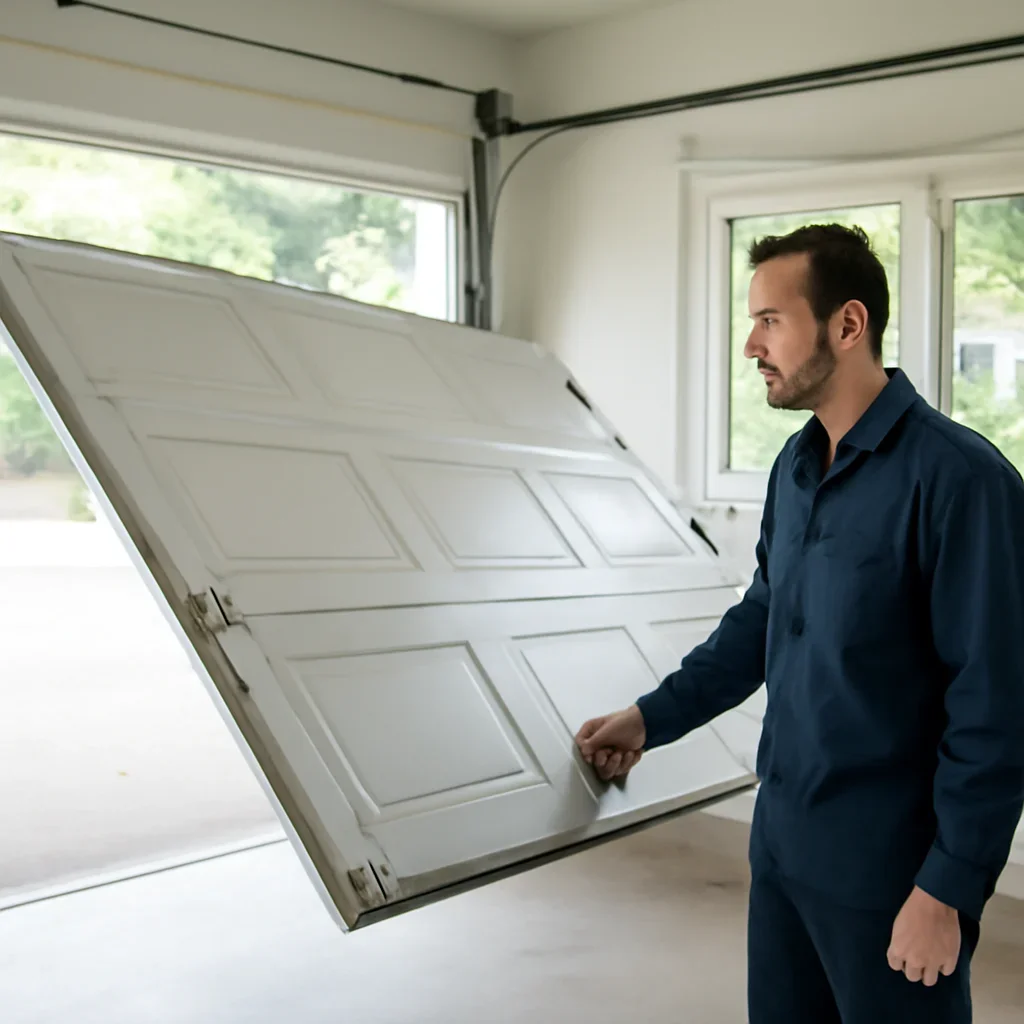
North Vancouver includes dense strata properties around the Lonsdale corridor, detached homes with sloped driveways, mountain-side neighbourhoods and commercial spaces where a blocked door can interrupt parking, deliveries or daily operations.
Wet conditions can also expose worn rollers, brackets and fasteners more quickly when protective finishes have failed. The repair should consider the condition of the complete system, not only the part that is visibly out of place.
Return to the North Vancouver garage door service homepage for repair, maintenance, opener, installation and replacement information.
Request urgent help when the door may fall, is hanging from one side, blocks essential access, traps a vehicle or leaves the property unsecured. Keep people, pets, vehicles and stored items away from the opening.
These answers cover the questions North Vancouver property owners commonly have when a door becomes crooked, jammed or unstable.
No. Stop operating the door. Continued use can bend tracks, damage panels, pull cables out of position and create uncontrolled movement.
That is not recommended. The door may be under uneven spring or cable tension, and the roller may have left the track because another component failed. A complete inspection is safer than repositioning one visible part.
Common causes include impact damage, bent tracks, loose brackets, damaged rollers, worn hinges, a failed lifting cable or a balance problem that causes one side to move differently from the other.
No. Tracks may be reusable when they remain straight, securely mounted and correctly aligned. Bent, cracked or heavily damaged sections may need repair or replacement.
The opener can add strain when it continues pulling against a jammed, unbalanced or obstructed door. The door hardware and balance should be corrected before the opener is tested again.
It is urgent when the door is unstable, hanging from one side, trapping a vehicle, blocking essential access or leaving the property open. Less urgent situations should still be assessed before the door is used again.
Replacement may be considered when the door sections are badly distorted, several major components are damaged or the existing system has a history of repeated failures. Many off-track problems can still be repaired when the panels and lifting system remain serviceable.
Explain whether the door is open, closed or stuck between positions; which side is lower; whether a roller or cable is visibly out of place; and whether the problem followed an impact, loud snap or sudden stop.
Review repair help for doors that are stuck, noisy, uneven or unreliable.
Explore repair service →Use this route when the door affects immediate safety, access or security.
Review urgent help →Understand the factors that influence repair and replacement recommendations.
See pricing information →Include whether the door is open, closed or stuck between positions, which side is lower and whether you noticed an impact, loud snap, loose cable or roller outside the track. Those details help guide the next step.