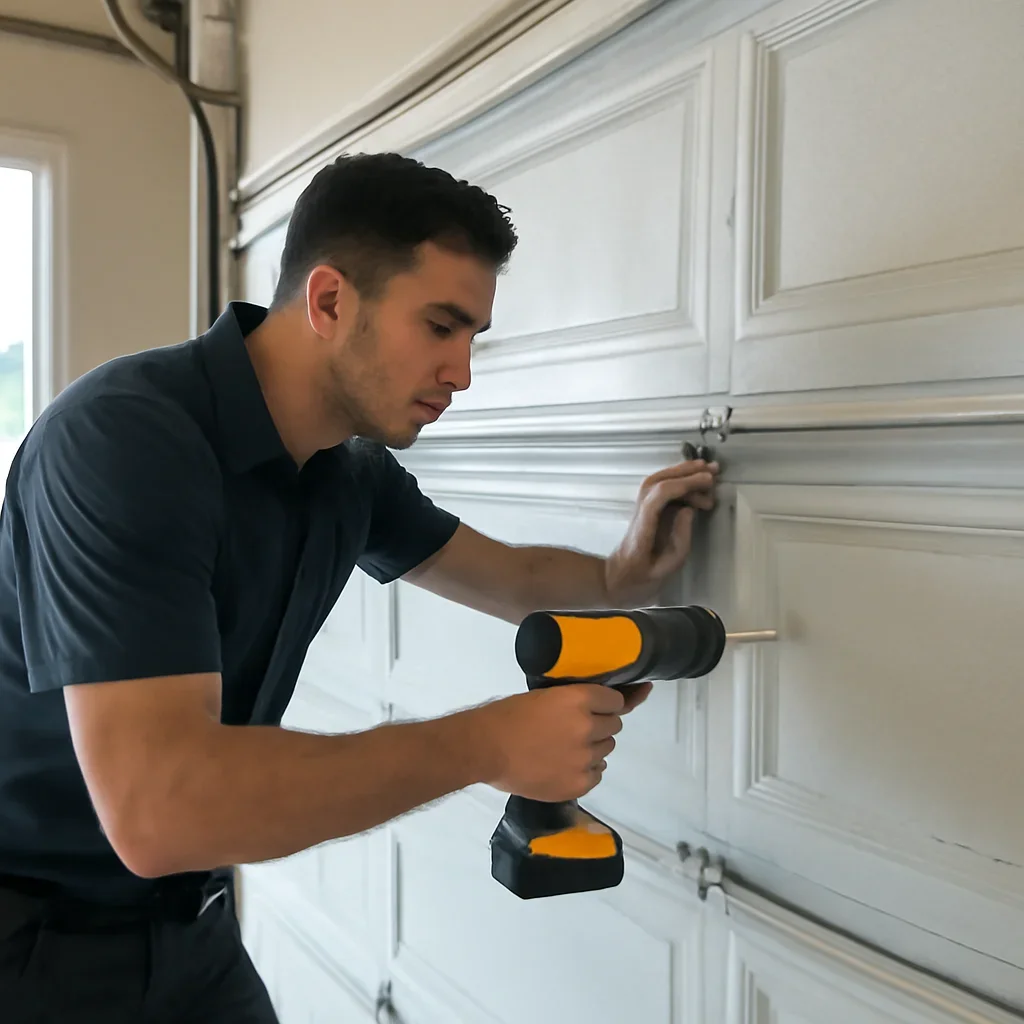
Rollers, Hinges Or Moving Joints
A repeated squeak may follow one roller, hinge or moving joint as the door changes position.
- Worn or dry roller movement
- Hinge movement between door sections
- Minor track contact
- Early hardware wear

A garage door that has become louder may have worn rollers, loose hinges, track resistance, poor balance, spring strain, opener vibration or damaged hardware. The type of sound and when it occurs can help narrow down which part of the system needs attention.
A light squeak may come from normal wear, but grinding, loud popping, heavy vibration or a sudden change in sound can point to a damaged or poorly aligned component. Stop using the door if noise appears with crooked movement, a loose cable, a broken spring or a roller outside the track.
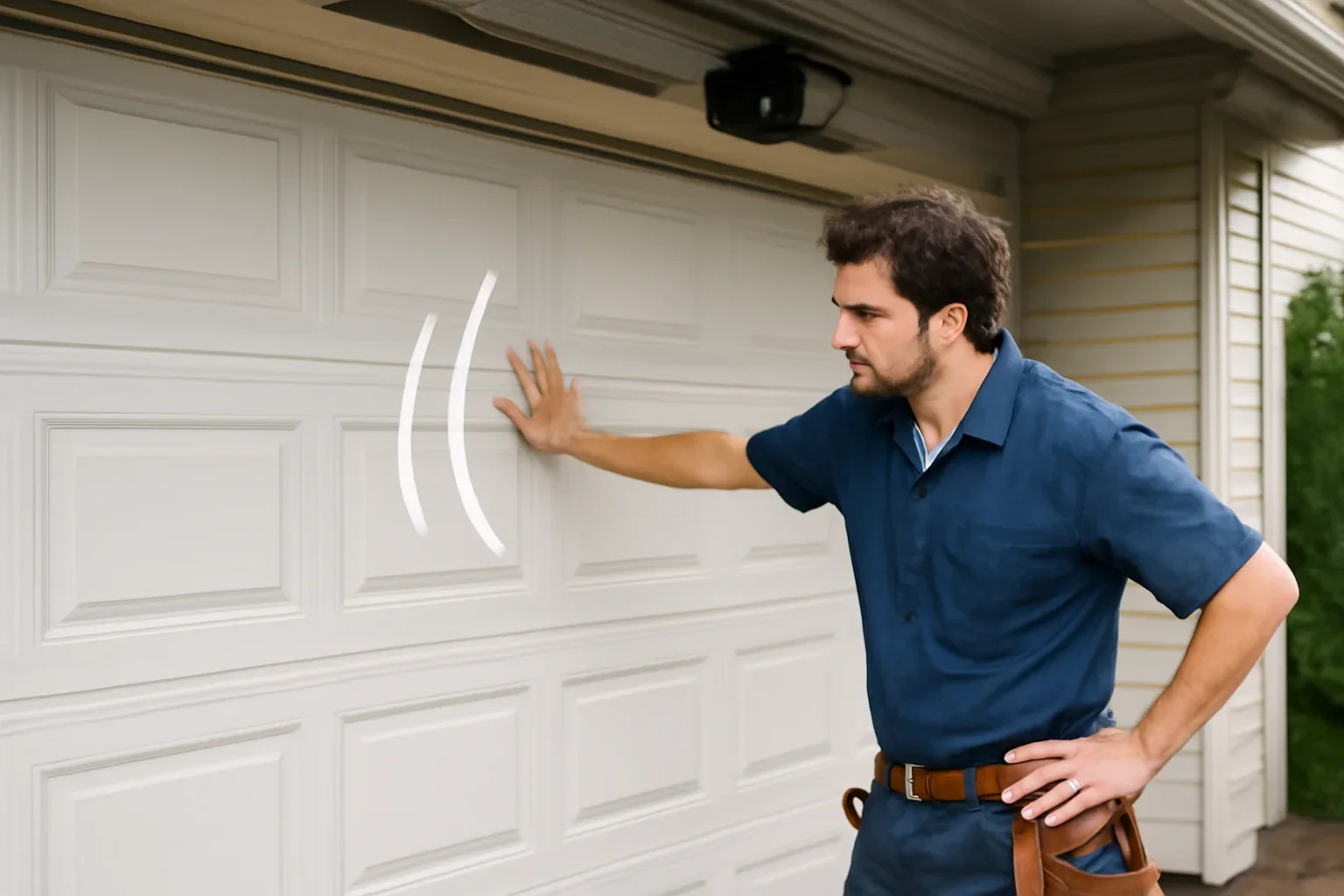
A garage door includes door sections, hinges, rollers, tracks, springs, cables and an opener. Each part creates a different movement, and a change in sound can show where resistance, looseness or wear is developing.
Noise does not always mean the entire door needs replacement. It may come from one worn roller, loose fastener or opener connection. However, replacing or adjusting the wrong part will not solve a balance, track or structural problem.
The most useful details are the type of sound, where it appears to come from and when it happens during the door cycle. A technician can compare those observations with the condition and movement of the complete system.
Wider mechanical problems can be handled through garage door repair in North Vancouver. Learn more about North Vancouver Garage Doors and the properties we assist.
The sound alone cannot confirm the repair, but it can identify which parts should receive closer attention during an inspection.
A repeated squeak may follow one roller, hinge or moving joint as the door changes position.
Grinding deserves prompt attention because it may indicate metal contact, a seized roller or a component moving outside its intended path.
Rattling may come from loose hinges, brackets, opener hardware or sections that vibrate as the door travels.
A loud pop during travel can occur when a spring, door section or binding component releases stored movement.
A humming opener may be attempting to move a heavy, disconnected or mechanically restricted garage door.
Vibration that affects the whole door may point to uneven lifting, worn rollers, loose tracks or poor door balance.
The point where the sound starts can be as useful as the sound itself. Note whether it happens immediately, halfway through movement, near the floor or only when the opener starts or stops.
A jolt, bang or hum as movement begins may involve the opener connection, spring load or a heavy door.
Repeated noise through the middle of travel often follows rollers, hinges or a specific track area.
A sound that occurs at the same height may point to a bent track, worn roller or loose bracket.
Noise near the bottom may involve floor contact, travel settings, the bottom seal or uneven closing.
A sharp stop, bounce or vibration may relate to travel settings, loose mounting or door balance.
Many North Vancouver garages sit beneath or beside living rooms and bedrooms. Vibration from the opener, tracks or door structure may travel through framing and make a developing mechanical issue sound louder inside the home.
Wet conditions can also contribute to corrosion around lower tracks, rollers, brackets and fasteners. Damp leaves or grit near the opening may increase resistance and create scraping or rough closing sounds.
Shared strata and commercial doors complete more cycles than many residential doors. Frequent operation can make roller, hinge, track and opener wear more noticeable, especially when maintenance has been delayed.
The urgency depends on the sound, door movement and whether any lifting or guidance component appears damaged.
A mild squeak or rattle with level, controlled movement may allow time for a standard inspection or maintenance visit. Note whether the sound is getting louder.
Grinding, repeated popping, heavy vibration or sudden opener strain should be assessed promptly, even if the door still completes its travel.
Stop operation if the door becomes crooked, falls, binds, has a loose cable, shows a broken spring or has a roller outside the track.
Emergency Garage Door RepairA loud sound followed by a door that feels very heavy may indicate spring failure. Do not continue using the opener to test whether the door will still move.
The correct service depends on whether the sound comes from normal moving hardware, the lifting system, the tracks or the powered opener.
Suitable when the noise follows the door through one track or appears with scraping, rough movement or vibration.
Needed when noise appears with a heavy door, uneven lifting, popping or a sudden change in movement.
Appropriate when the motor hums, vibrates, rattles or creates noise that remains when the door itself moves smoothly.
Useful when the door still works but has become louder and several moving components show normal wear.
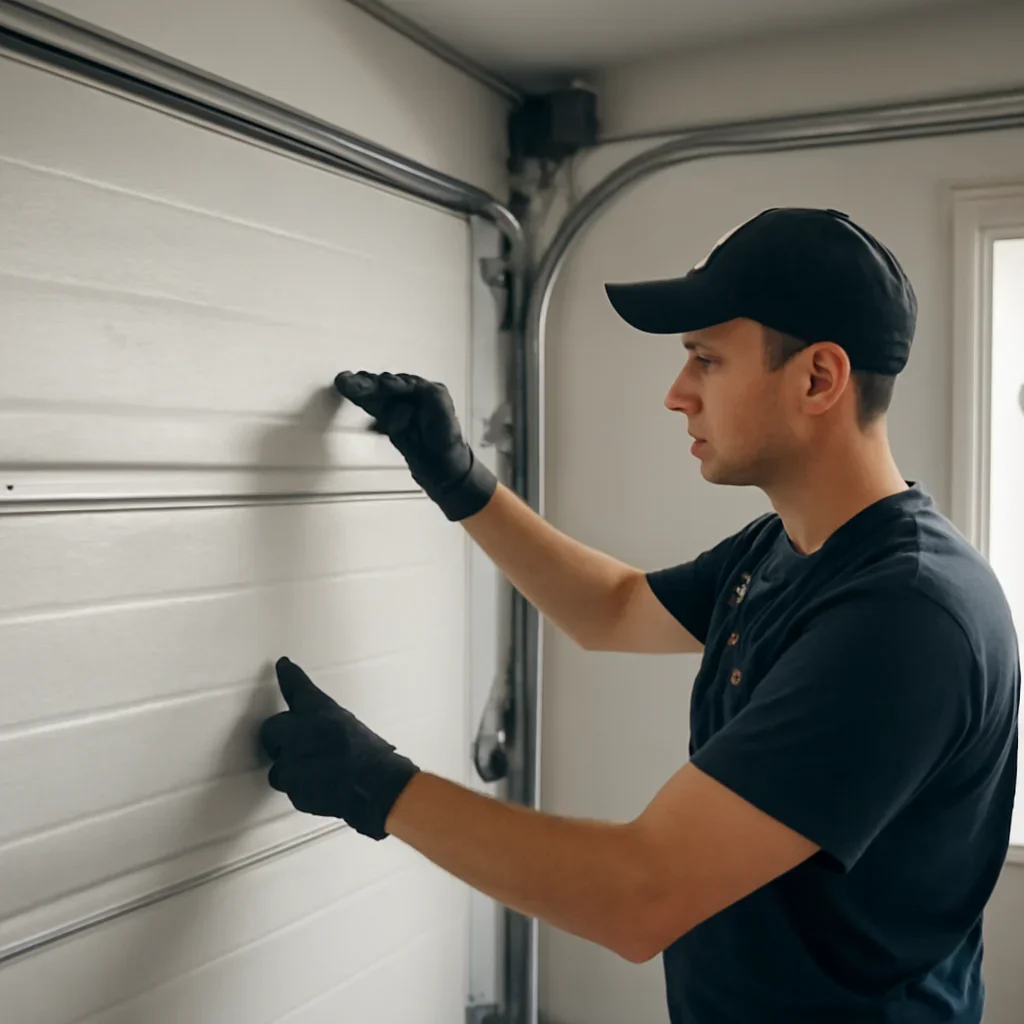
The assessment compares the reported sound with door movement, component condition and opener operation before a repair is recommended.
Door size, operating frequency and nearby occupied spaces affect how garage door noise should be assessed.
Noise and vibration may travel into bedrooms, living rooms or home offices. Inspection should separate structural vibration from worn door or opener components.
High-use doors may create repeated noise for residents near the garage. Frequent-cycle wear and shared access should be considered together.
Larger doors and frequent vehicle access can make roller, track, spring and opener wear more noticeable during daily operations.
Commercial Garage Door ServiceWe assess squeaking, grinding, rattling, popping, shaking and opener noise throughout the City and District of North Vancouver.
These answers cover squeaking, grinding, rattling, opener noise, vibration and situations where the door should no longer be operated.
A sudden sound may come from a damaged roller, loose fastener, bent track, spring problem, opener component or door section shifting under load. A new loud noise should be compared with the door’s movement.
Squeaking often follows rollers, hinges or moving joints. It may reflect normal wear, but the door should be inspected when the sound becomes louder or appears with rough movement.
Grinding may indicate a damaged or seized roller, bent track, metal contact, opener drive issue or a door moving under excessive resistance.
Popping may come from spring strain, a flexible door section, binding track movement or hardware shifting under load. Stop using the door if the sound appears with heavy, crooked or uncontrolled movement.
Yes. Opener mounting, rail movement, the trolley, motor or drive system may create vibration. A heavy or binding door can also make the opener sound louder.
Not always. Rollers should be inspected with the tracks, hinges, balance and opener. Replacing rollers alone will not correct bent tracks or a heavy door.
Stop using the door when noise appears with crooked movement, a loose cable, broken spring, roller outside the track, sudden dropping or severe binding.
Describe the sound, when it happens, where it appears to come from and whether the door shakes or moves unevenly. Mention any recent impact or sudden change in operation.
You can also review our garage door FAQs, explore garage door problem guides or contact customer support.
Tell us whether the door squeaks, grinds, rattles, pops, hums or shakes. Explain whether the noise happens during opening, closing, startup, stopping or at one specific height.
Service requests are handled according to our Privacy Policy and Terms of Service.