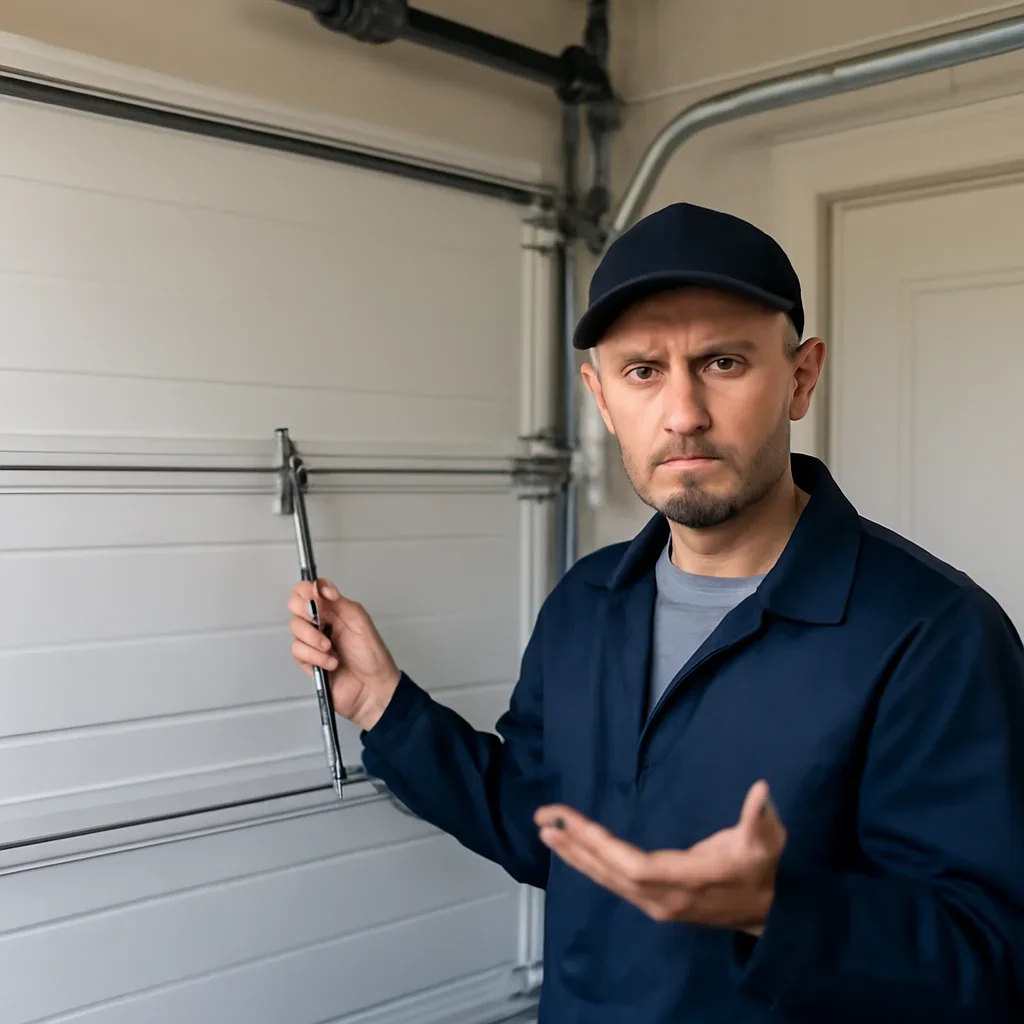
Nothing Happens From The Remote
A single failed remote may have a battery, programming or compatibility problem. Compare it with the wall control and any other remotes before assuming the opener has failed.
Review Remote And Keypad Programming
A garage door that will not open may have an opener, remote, power, spring, cable, track, lock or balance problem. The way the door responds helps narrow down the cause. Stop forcing the system if it feels heavy, moves unevenly, makes a harsh sound or lifts only a few inches.
Do not repeatedly run the opener against a door that will not lift. A broken spring, loose cable, jammed roller or locked door can place extra strain on the opener and may cause more damage. Keep clear of loose cables and unstable door sections.
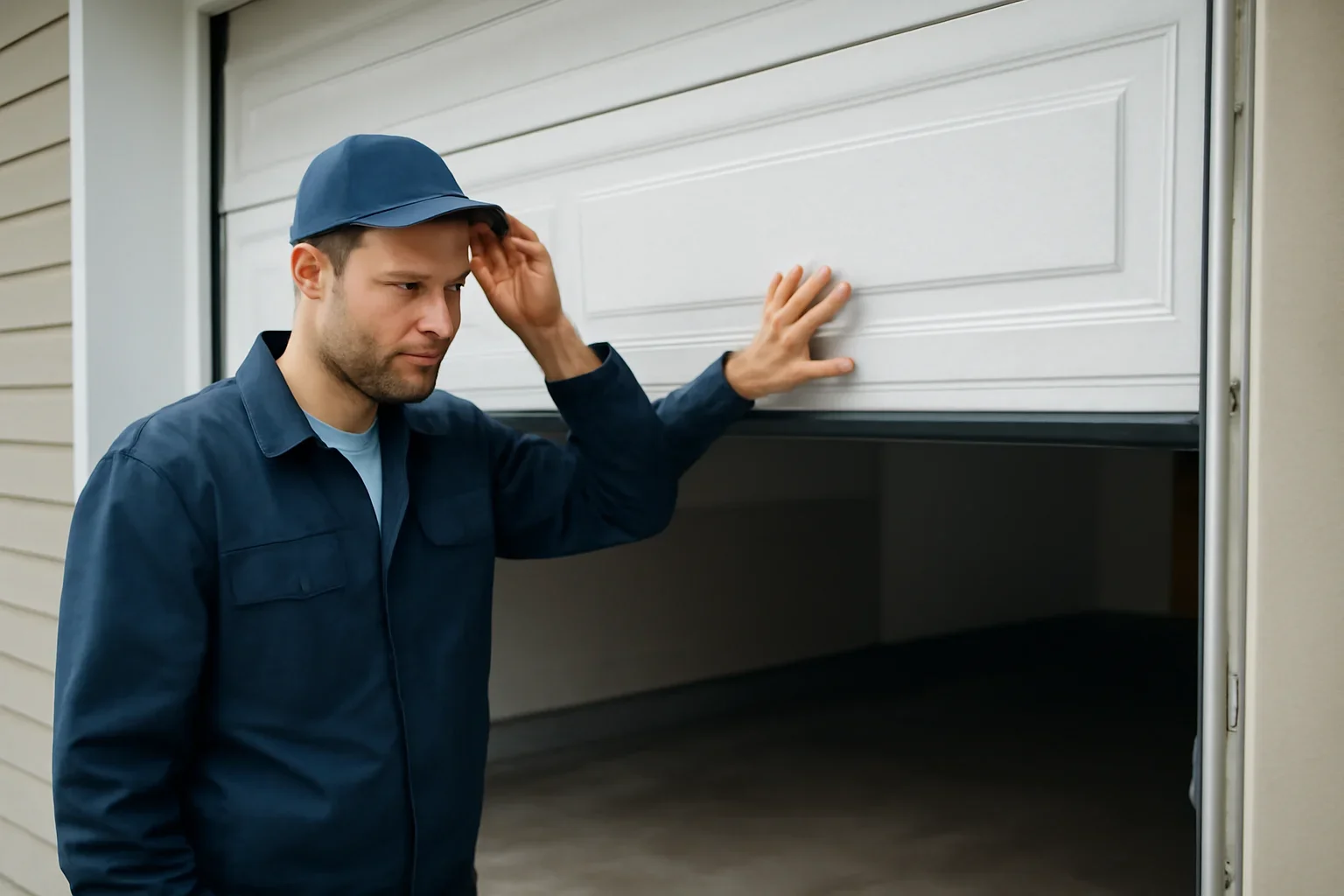
You do not need to diagnose or repair the system yourself. A few basic observations can help determine whether the issue is more likely connected to the controls, opener or mechanical door system.
Note whether the opener lights are on, whether the wall control responds and whether another remote works. Listen for a click, hum, grinding sound or normal motor operation. Watch whether the door moves evenly, lifts only slightly or remains completely still.
From a safe position, look for a visible gap in a spring, a loose cable, a roller outside the track or a door sitting lower on one side. Do not touch or adjust these parts.
A specific mechanical problem can be handled through garage door repair in North Vancouver. Learn more about North Vancouver Garage Doors and the properties we serve.
The response from the controls, opener and door provides useful clues. These patterns help identify the service most likely to solve the problem.
A single failed remote may have a battery, programming or compatibility problem. Compare it with the wall control and any other remotes before assuming the opener has failed.
Review Remote And Keypad ProgrammingWhen the remote, keypad and wall control all fail, the opener may have lost power or developed a control, receiver, wiring or internal electrical problem.
Review Opener Failure SymptomsThe trolley or door connection may be disengaged or damaged. The door may also be locked, jammed or too heavy for the opener to move safely.
Review Opener And Remote RepairThis commonly points to a heavy door, broken spring, binding track or lifting problem. Repeated opener attempts can strain the motor and other hardware.
Review Broken Spring RepairUneven lifting may involve a loose cable, cable drum, spring, track or roller problem. Stop operating the door if it becomes crooked or unstable.
Review Garage Door Cable RepairA roller may have left the track, a track may be bent or the lifting system may have pulled one side out of position. Do not force a visibly crooked door.
Review Off-Track RepairThe door may fail because the command never reaches the opener, the opener cannot transfer movement or the mechanical door system is too heavy, damaged or jammed.
The door may remain closed because the opener is not receiving the correct command.
The controls may work while the opener is unable to create or transfer movement to the garage door.
The opener may respond normally but cannot lift a door whose counterbalance system is no longer supporting its weight.
A physical obstruction or damaged guidance component may prevent the door from moving through its normal path.
Do not remove covers, adjust springs, loosen cable drums or force the door from the tracks. When the cause is unclear, request a garage door inspection so the opener and mechanical system can be assessed together.
North Vancouver properties include compact attached garages, detached buildings, steep driveways, underground strata parking and commercial service bays. A door that will not open may trap a vehicle, interrupt shared access or prevent a business from using an important entry.
Steeper driveways can make it harder to reposition vehicles when the garage is blocked. In strata buildings, one failed shared door may affect several residents, deliveries or visitor parking at the same time.
Wet conditions can contribute to corrosion around lower tracks, rollers, fasteners and cable hardware. Cold or damp weather may also make an existing mechanical problem more noticeable when the door is already binding or poorly balanced.
Urgency depends on the door position, system stability, blocked access and whether the property can still be secured safely.
Standard service may be suitable when the door remains fully closed, nobody is in danger and alternate access is available. Avoid further testing until the problem is assessed.
Explain whether a vehicle is trapped, a shared strata entrance is unavailable or business access is interrupted. These details help determine the appropriate response.
Request urgent help when the door is hanging, crooked, partly open, off track, supported by a loose cable or unable to secure the property.
Emergency Garage Door RepairKeep children, pets and vehicles away from any unstable door. Do not stand beneath a raised door or attempt to hold it in position while testing the controls.
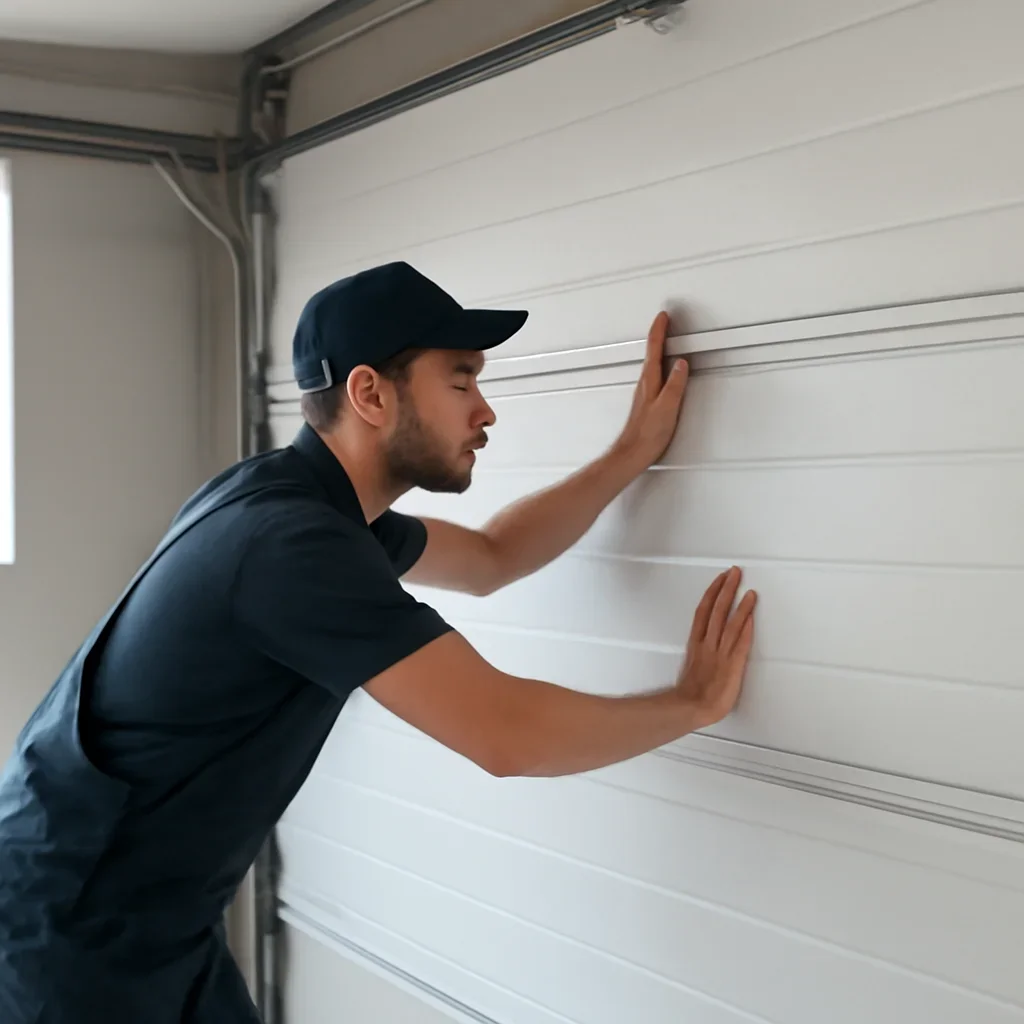
The service process separates control and opener problems from spring, cable, track, roller and door-balance failures before repairs are recommended.
The correct service response should reflect how the door is used, who depends on it and what access remains available.
A stuck residential door may trap the family vehicle, block stored equipment or interrupt entry through an attached garage. Mention whether another safe entrance is available.
Shared-door failures may affect several residents at once. Access coordination, parked vehicles and communication with the property contact may be required.
A commercial door that will not open can interrupt deliveries, vehicle movement and staff access. Door size, operating frequency and business downtime should be noted.
Commercial Garage Door ServiceWe assist with stuck-closed, heavy, jammed and unresponsive garage doors throughout the City and District of North Vancouver.
These answers cover opener response, broken springs, heavy doors, trapped vehicles and situations where the door should no longer be tested.
Common causes include remote or wall-control failure, loss of power, opener damage, a disengaged trolley, broken springs, loose cables, bent tracks, seized rollers or a locked or jammed door.
The door may be too heavy because of a broken spring, poor balance or mechanical resistance. The opener may stop because it cannot safely lift the load. Avoid repeated attempts.
The opener trolley or door connection may be disengaged or damaged. The door may also be manually locked, jammed or too heavy to move. The opener and mechanical door system should be checked together.
Yes. A broken spring can leave the door too heavy for the opener to lift. A visible separation in a torsion spring or a sudden loud sound before the failure may point to spring damage.
No. Repeated attempts can strain the opener, bend hardware or worsen a spring, cable, track or roller problem. Stop testing if the door is heavy, crooked, noisy or moves only slightly.
Do not disconnect a raised, crooked or unstable door. A door with a failed spring or cable may be extremely heavy and can move suddenly. Request service when the door’s weight or stability is uncertain.
It may require urgent service when a vehicle is trapped, shared access is blocked, the door is partly open, the property cannot be secured or the door is visibly unstable. A closed and secure door with alternate access may be handled as standard service.
Explain which controls work, what sound the opener makes, whether the door moves at all and whether it is level. Mention visible spring, cable, roller or track damage and whether a vehicle or shared entrance is blocked.
You can also review our garage door FAQs, explore garage door problem guides or contact customer support.
Explain whether the opener is silent, clicking, humming or running normally. Tell us whether the door moves at all, whether one side lifts first and whether a spring, cable, roller or track looks damaged.
Service requests are handled according to our Privacy Policy and Terms of Service.