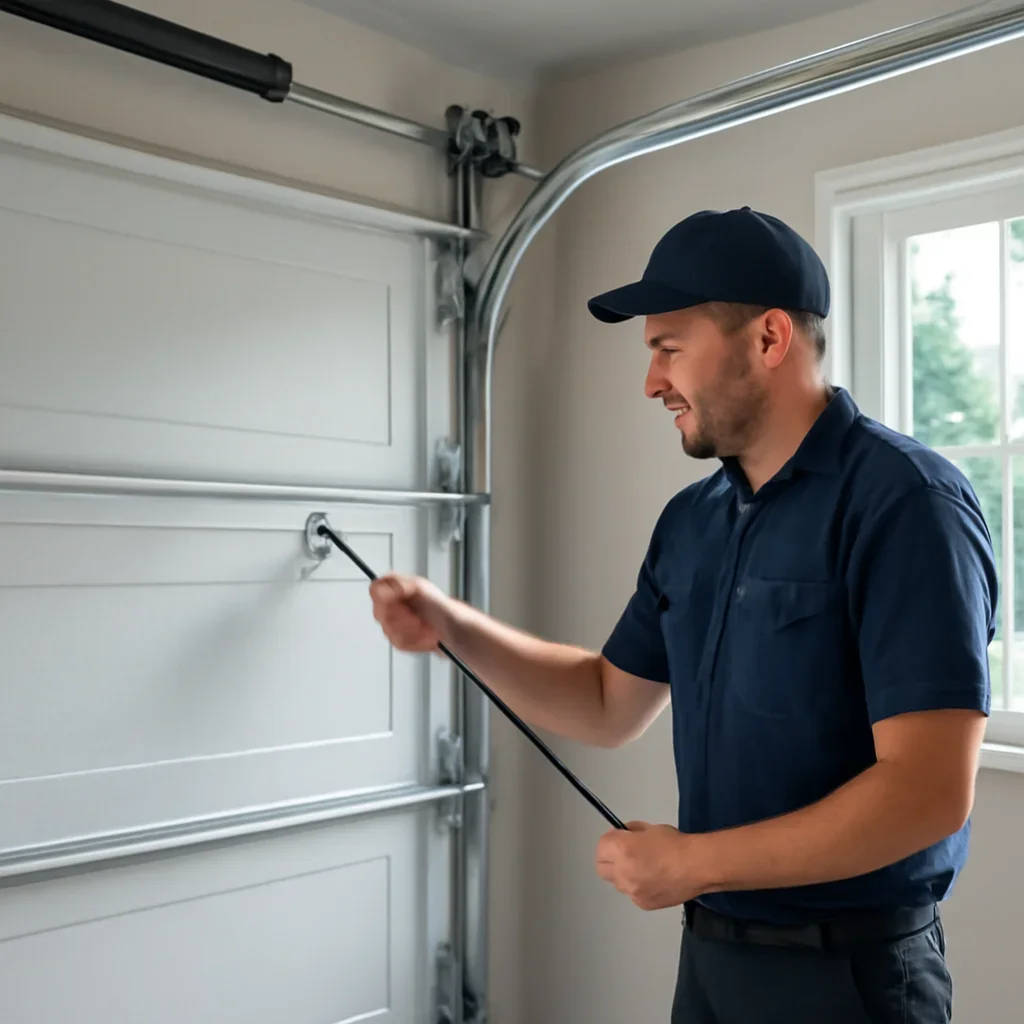
Worn Or Broken Springs
Springs counterbalance the door’s weight. When a spring breaks or loses strength, the door may feel heavy, drop, rise unevenly or become difficult for the opener to move.
Review Broken Spring Repair
Restore smooth and controlled movement when a garage door feels unusually heavy, rises unevenly, closes crooked, drifts after stopping or places extra strain on the opener. We assess springs, cables, rollers, tracks, panels and opener connections at North Vancouver homes, strata properties and commercial buildings.
A correctly balanced garage door should move in a controlled way and should not rely on the opener to carry its full weight. If the door drops, rises, becomes crooked or feels very heavy, the spring, cable, track or roller system may need attention.
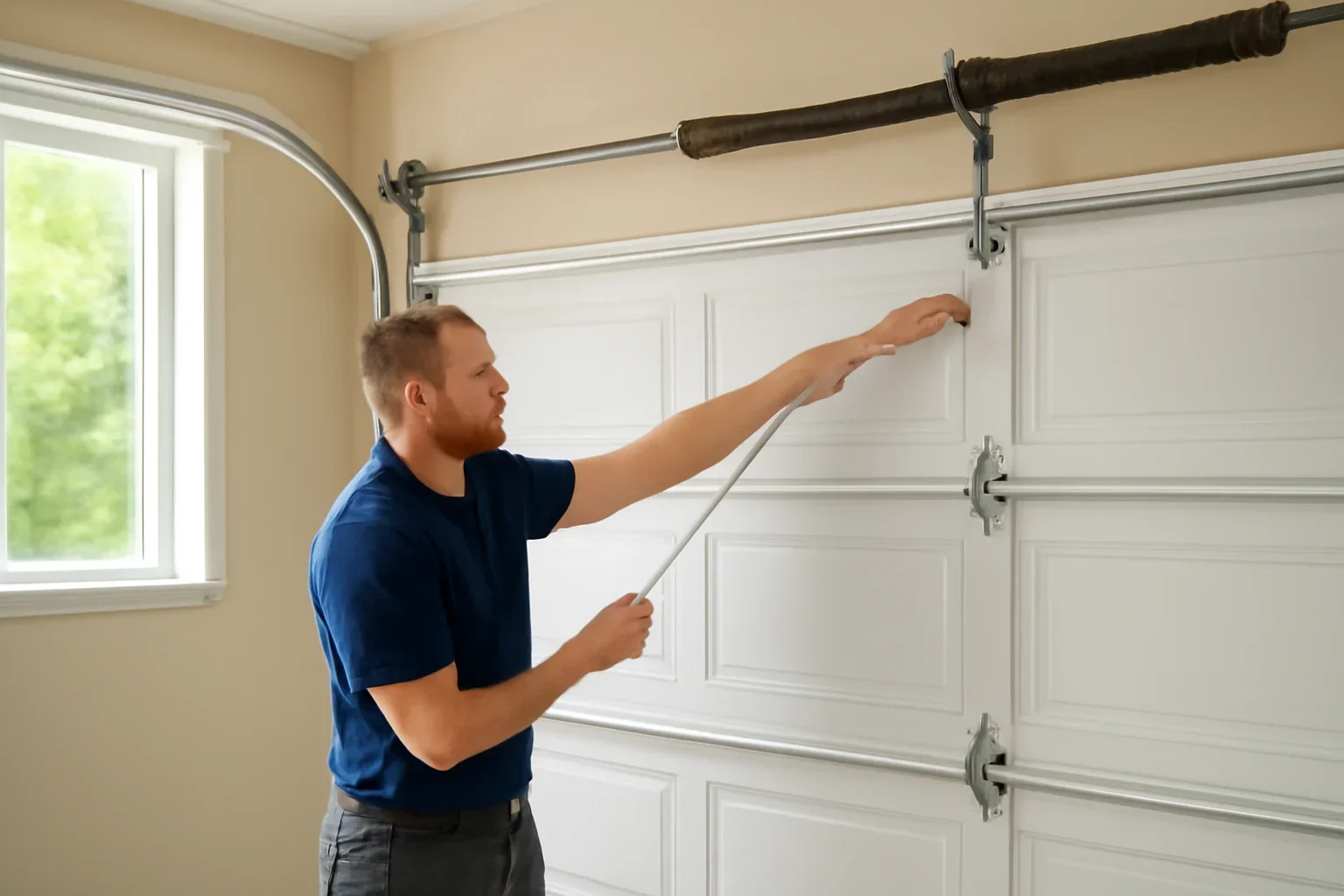
Garage door balance refers to how the spring system counteracts the weight of the door. When the system is working correctly, the door should move without the full weight being carried by the opener or the person lifting it.
Alignment describes how the door sections, rollers, tracks, cables and supporting hardware work together as the door travels. A door may be out of alignment if it rubs, shakes, closes unevenly or leaves a larger gap on one side.
Balance and alignment problems often overlap. A cable, spring or roller problem may pull one side out of position, while bent tracks or damaged panels may create resistance that makes the door appear poorly balanced.
Wider mechanical problems can be assessed through garage door repair in North Vancouver. Learn more about North Vancouver Garage Doors and the properties we serve.
A heavy or crooked door can have more than one cause. The complete lifting and guidance system should be checked before a single adjustment or part replacement is recommended.
Springs counterbalance the door’s weight. When a spring breaks or loses strength, the door may feel heavy, drop, rise unevenly or become difficult for the opener to move.
Review Broken Spring RepairLifting cables help raise both sides of the door together. A loose, damaged or displaced cable can make one side rise faster, sit lower or pull the door out of alignment.
Review Cable RepairTracks that are bent, loose or incorrectly spaced can create resistance and prevent the rollers from guiding the door smoothly through the opening.
Review Track RepairA worn wheel, bent stem or seized bearing can make the door shake, drag or shift as it moves through the tracks.
Review Roller ReplacementA bent section, loose hinge or impact-damaged panel can change the shape of the door and make the rollers travel unevenly.
Review Panel ReplacementAn opener may be incorrectly adjusted or may continue pulling against resistance. The opener should control a balanced door rather than compensate for mechanical faults.
Review Opener RepairThese problems may look similar from a distance, but they involve different components and levels of urgency.
Stop using the door if it is hanging crooked, has a loose cable or has rollers outside the tracks. A complete garage door inspection can identify the failed components before further operation causes more damage.
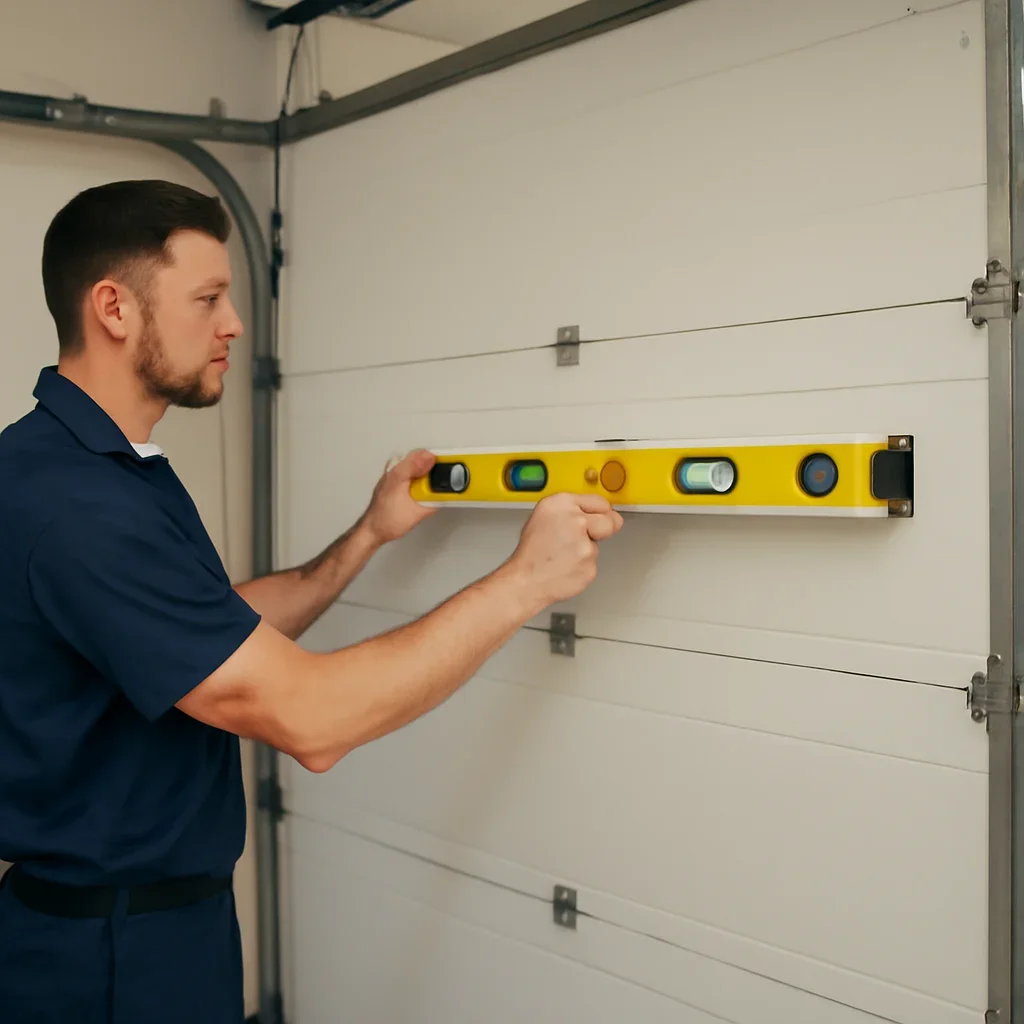
North Vancouver properties include compact attached garages, detached garages, sloped driveways, underground strata access and commercial service doors. Door size, traffic and available working space can all affect the assessment and repair plan.
Wet conditions may contribute to corrosion around lower tracks, brackets, rollers, fasteners and bottom hardware. Damp debris near the opening can also increase resistance if routine cleaning and maintenance have been delayed.
High-use strata and commercial doors may show balance, roller or track wear sooner because they complete more cycles. A developing issue may first appear as vibration, inconsistent closing or increased opener noise.
Alignment should not be treated as a simple adjustment when a spring, cable, track, roller or panel has already failed.
The recommended work should correct the reason for the uneven movement rather than only changing the opener settings. Review our garage door pricing guidance when planning a repair involving several components.
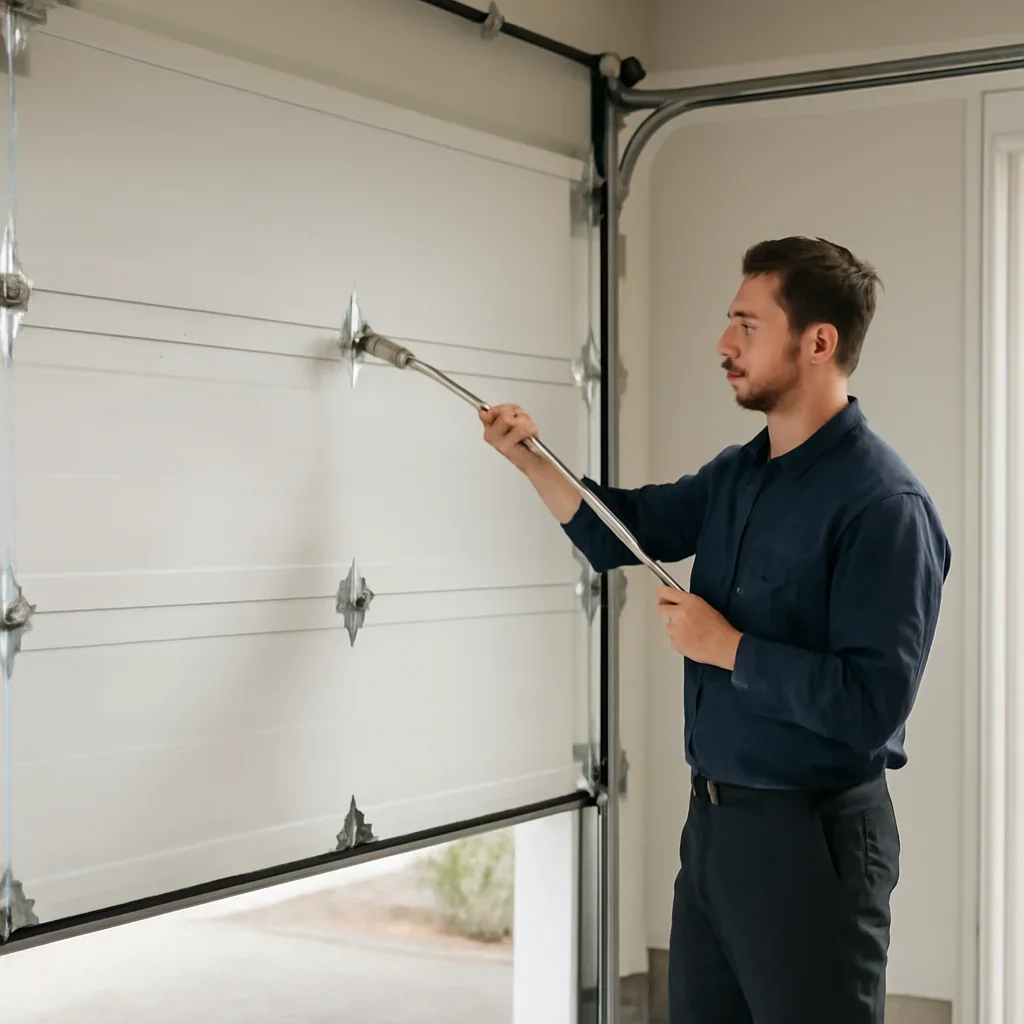
The process checks manual movement, spring balance, side-to-side alignment and the components that guide and lift the door.
Door size, operating frequency, access and property use affect how uneven movement should be assessed and corrected.
Restore dependable vehicle access when the door feels heavy, closes unevenly or creates excessive noise near bedrooms and living spaces.
High-use strata doors may need coordinated inspection, repair scheduling and testing around residents, vehicles and shared parking access.
Commercial doors may place greater demand on springs, cables and rollers. Uneven movement can interrupt vehicle access, deliveries and daily operations.
Commercial Garage Door ServiceWe assist with heavy, uneven, crooked and poorly aligned garage doors throughout the City and District of North Vancouver.
These answers cover heavy doors, uneven closing, spring and cable problems, opener strain and safe next steps.
Common signs include a door that feels unusually heavy, drops after being partly opened, rises on its own or makes the opener strain. A balance assessment should check the spring system and manual door movement.
One side may sit lower because of a loose or damaged cable, track misalignment, a worn roller, panel damage or uneven spring load. Stop using the door if it becomes sharply crooked or unstable.
No. The opener is designed to control a properly balanced door. It should not carry the full door weight or compensate for broken springs, damaged cables or binding tracks.
Uneven closing may be caused by cable differences, track position, worn rollers, damaged hinges or a bent section. The floor may also be uneven, but the door should still be checked for level movement.
No. Garage door springs, cables and drums may be under significant tension. Incorrect adjustment can cause sudden movement or equipment damage. These components should be handled with the correct tools and procedures.
Yes. Worn, seized or damaged rollers can create resistance, vibration and side-to-side movement. Track position and roller condition should be checked together.
Yes. A door may move correctly by hand while the opener has a motor, rail, trolley, travel-setting or control problem. Manual movement and opener operation should be tested separately.
Explain whether the door feels heavy, drops, rises, closes crooked or strains the opener. Mention any loose cable, visible track damage, unusual noise or recent impact, and include your North Vancouver neighbourhood.
You can also review our garage door FAQs, arrange garage door maintenance or contact customer support.
Describe whether the door feels heavy, drops, rises, shakes, closes crooked or leaves an uneven gap. Mention any visible cable, spring, roller or track issue so the right components can be assessed.
Service requests are handled according to our Privacy Policy and Terms of Service.