Visible bend or dent
A damaged section can narrow the roller path, create a catch point, or push the roller sideways during travel.

Damaged or misaligned tracks can make a garage door scrape, bind, shake, jam, move unevenly, or leave the rollers unsupported. Track repair should include the rollers, hinges, brackets, cables, springs, balance, and opener load so the cause is not missed.
A visible bend is only one type of track problem. Loose mounting points, incorrect spacing, impact damage, corrosion, rubbing, debris, worn rollers, and an uneven door can also prevent controlled travel.
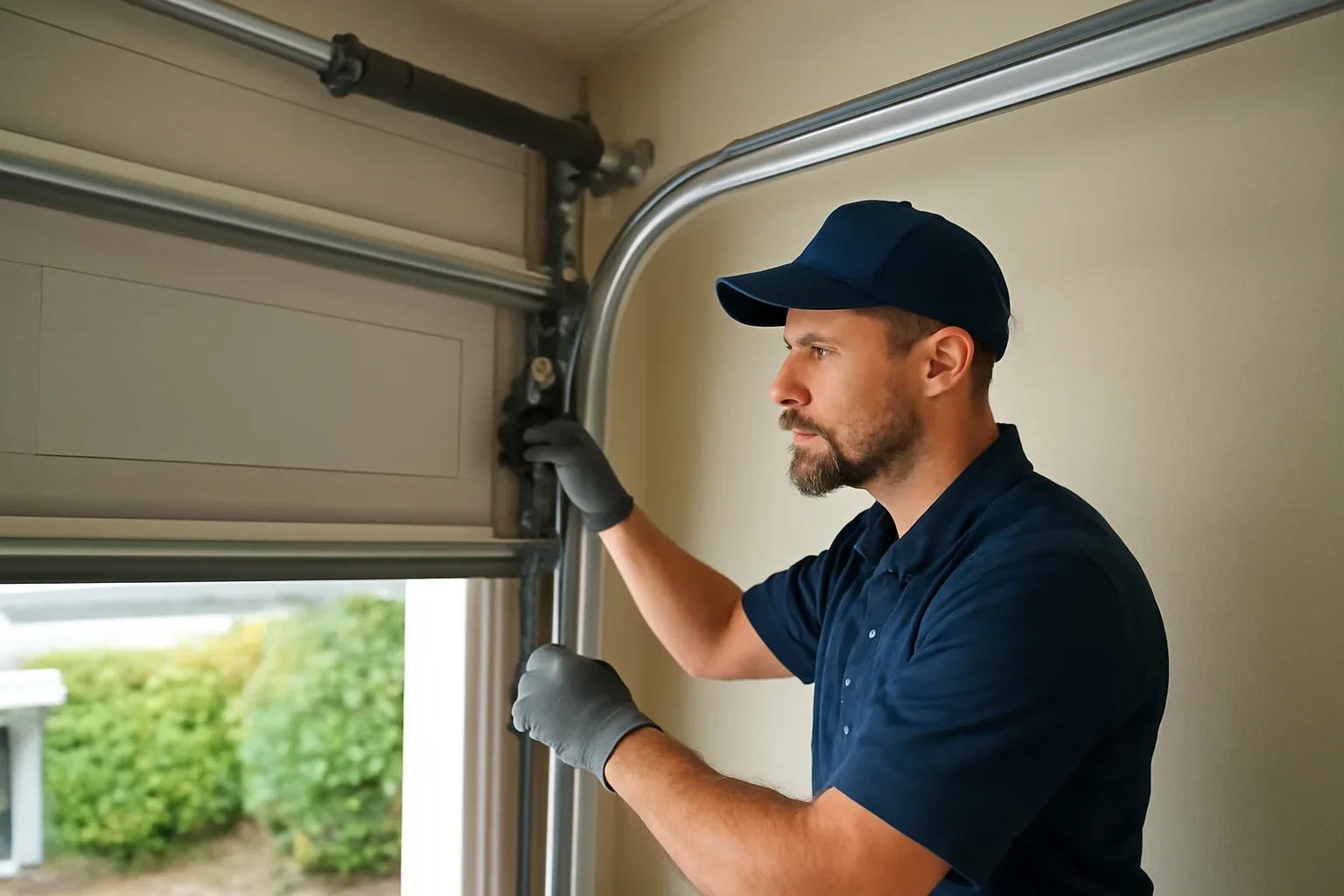
Track issues can develop after impact, hardware loosening, corrosion, roller wear, cable problems, poor balance, or repeated operation while the door is binding.
A damaged section can narrow the roller path, create a catch point, or push the roller sideways during travel.
Movement at the wall, ceiling, flag bracket, or fasteners can change alignment and allow the track to shift under load.
Shiny marks, metal noise, side pressure, or a roller rubbing the track edge can indicate spacing or alignment problems.
A roller may bind at one height because of track damage, debris, a worn wheel, hinge play, or door misalignment.
Uneven lifting, cable tension, spring balance, track spacing, or impact damage can leave one side higher than the other.
A roller outside the track can indicate a serious alignment, impact, cable, spring, hinge, or structural problem.
A track can move or deform because another part is adding uneven pressure. The repair plan should look beyond the visible metal and confirm why the door stopped travelling correctly.
Bends, dents, gaps, loose fasteners, bracket movement, incorrect spacing, and poor alignment can affect the roller path.
Seized wheels, cracked rollers, loose stems, hinge play, and bracket wear can create side pressure or rough travel.
Uneven lifting support can twist the door, pull rollers against the track, and change the load on each side.
Impact damage, bent panels, poor alignment, or repeated opener use against resistance can worsen track problems.
When roller wear is the clearest issue, review the garage door roller replacement page.

Local properties may combine coastal moisture, road grit, leaves, narrow lanes, steep driveways, parkades, attached garages, and doors used many times each day.
Damp air, rust, wet debris, and dirty roller paths can increase friction, hide fastener wear, or affect exposed brackets.
Vehicles, stored items, bicycles, tools, and tight garage layouts can strike or load the vertical track and nearby hardware.
Lane access, driveway slope, visitor parking, gate entry, parkade clearance, and strata rules can affect repair preparation.
A door that has left the track, become crooked, jammed, or unsupported can move unpredictably. Keep people, pets, vehicles, and stored items away from the travel path. Do not force the opener or attempt to push the door back into position.

You do not need to measure or adjust the track. Describe the visible damage, where the door catches, and how the movement changed.
Mention bends, dents, gaps, loose brackets, missing fasteners, rubbing marks, corrosion, or a roller outside the track.
Include scraping, grinding, shaking, binding, jerking, crooked lifting, stopping at one height, or opener strain.
Explain any recent contact, door position, garage type, driveway or parkade access, trapped vehicle, and urgency.
When the door has already left the track, review the off-track repair service.
A visible bend may be connected to loose mounting, a worn roller, cable imbalance, spring failure, damaged hinges, or a twisted door. Forcing the metal without correcting the cause can leave the door unstable or create new alignment problems.
The service process should confirm the source of resistance, inspect connected components, correct the track condition, and verify the full door afterward.
Review visible damage, where the door catches, roller position, sound, door angle, opener response, and access impact.
Check tracks, brackets, fasteners, rollers, hinges, cables, springs, balance, sections, and visible corrosion or impact.
The work should reflect the track damage, mounting condition, alignment, roller path, door weight, and related wear.
Travel, roller tracking, spacing, fasteners, balance, controls, opener load, closing position, noise, and safety should be confirmed.
These pages help separate track damage from off-track movement, balance issues, cable problems, and general garage door repair.
These answers cover warning signs, continued use, connected faults, and useful service-request details.
Common signs include visible bends, dents, gaps, loose brackets, rubbing marks, scraping, rollers catching, rough travel, a crooked door, or a roller leaving the track.
Stop using the door when it binds, hangs unevenly, leaves the track, moves unpredictably, or appears unstable. Continued operation can increase damage to rollers, hinges, cables, sections, and opener parts.
Yes. Impact, loose fasteners, worn rollers, cable problems, spring imbalance, door misalignment, damaged hinges, corrosion, or opener strain can contribute to track movement or damage.
Useful details include where the track is bent or loose, the door position, whether a roller is out, the type of noise, visible impact damage, opener behaviour, property access, and urgency.
Include visible bends or loose brackets, whether a roller is out, the door position, scraping or grinding, opener response, recent impact, property access, and whether a vehicle or security is affected.