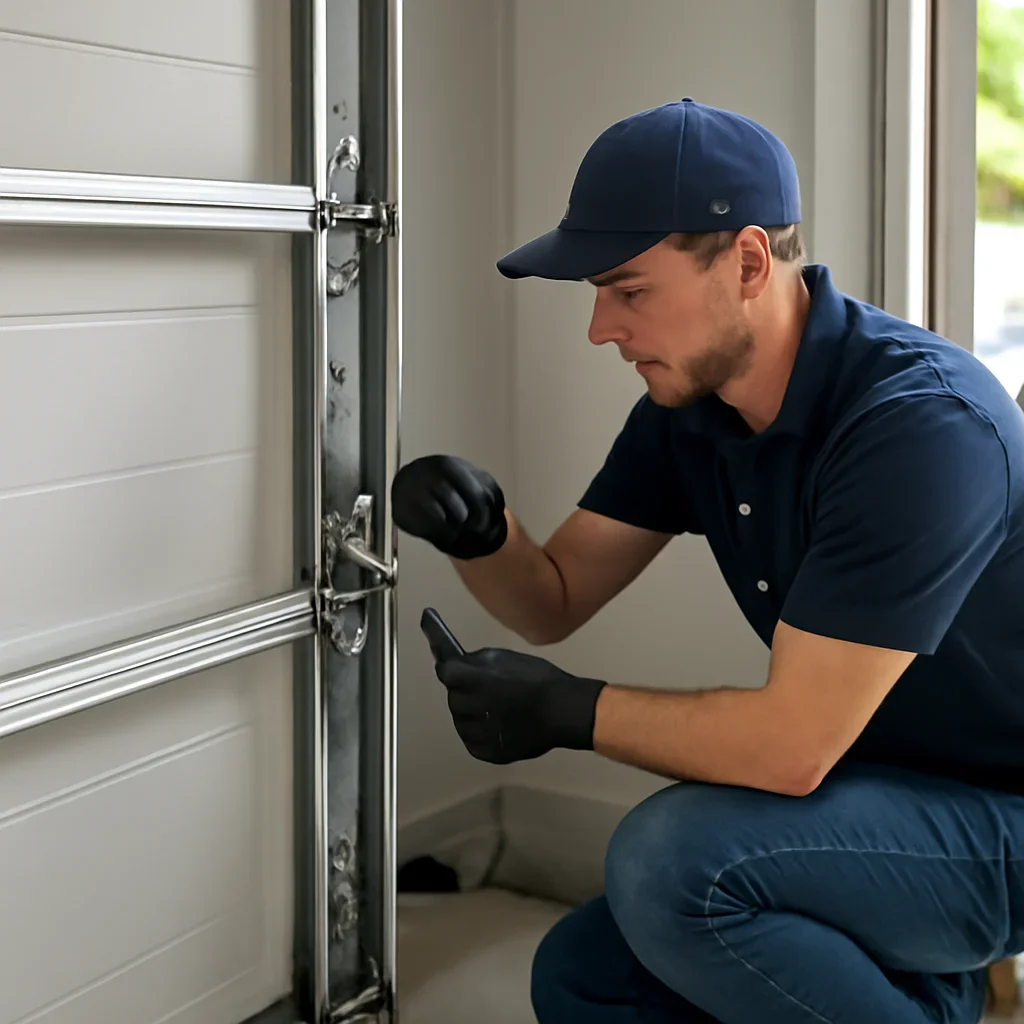
Loose cable hanging beside the track
A cable may lose tension, come off a drum, or hang near the side of the opening after a lifting-system fault.

A damaged garage door cable can leave the door crooked, uneven, stuck, or unstable. Stop using the opener when a cable is loose, frayed, tangled, off the drum, or no longer supporting one side of the door correctly.
Garage door cables work with the springs, drums, bottom brackets, bearings, tracks, and rollers. Cable repair should include the connected lifting system so the cause of the failure and the door's balance can be confirmed.
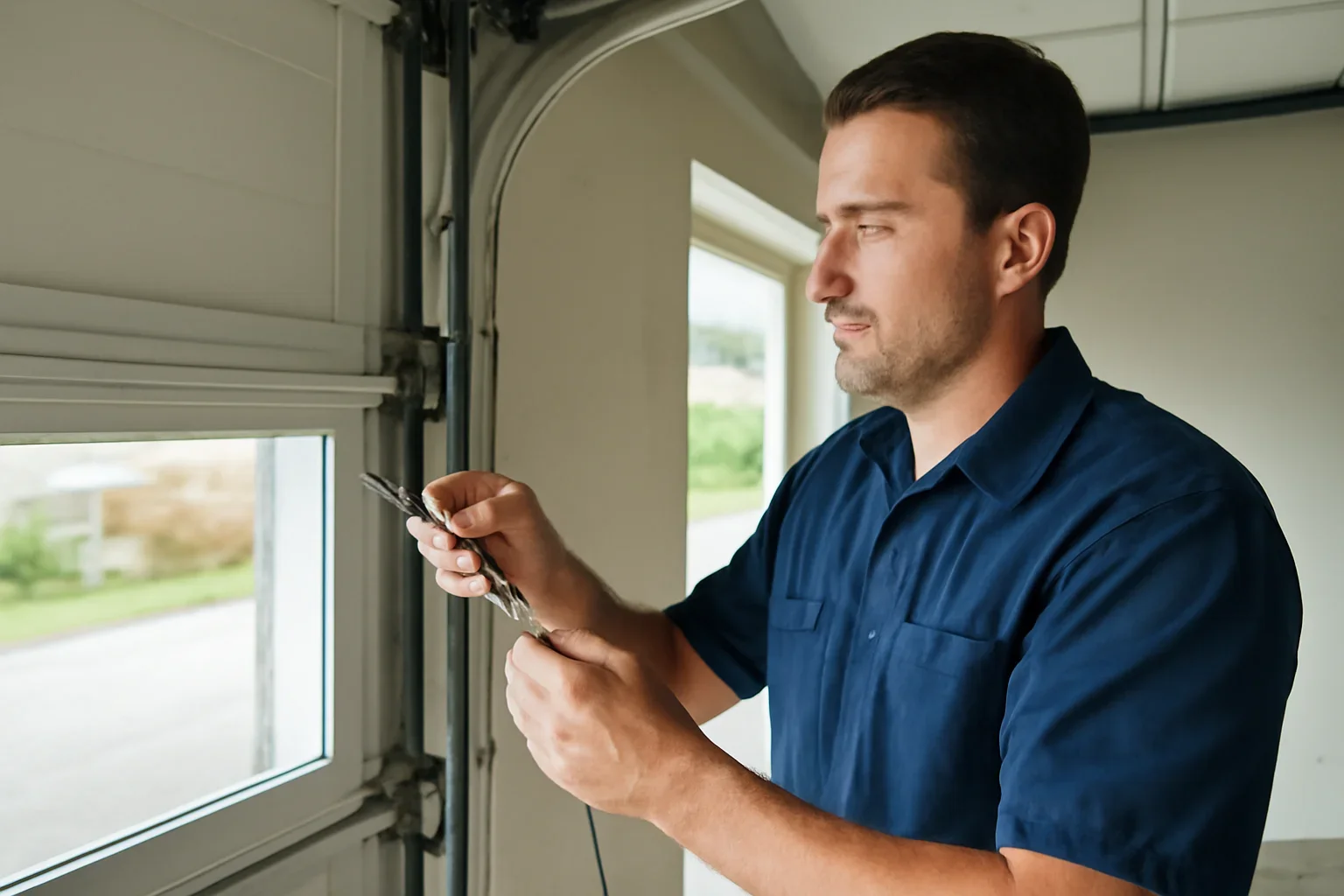
Cable problems can appear suddenly or develop as strands, drums, springs, brackets, bearings, or alignment wear over time.
A cable may lose tension, come off a drum, or hang near the side of the opening after a lifting-system fault.
Visible wire damage, rust, flattening, kinks, or broken strands can weaken the cable and increase failure risk.
Uneven cable tension can leave the door tilted, crooked, or partly supported on only one side.
Improper winding or lost tension can cause cable to overlap, jump grooves, bind, or collect unevenly near the shaft.
The door may rise on one side, scrape, stop, twist in the tracks, or become difficult to move.
A snap, release, impact sound, or sudden change in door position can indicate lost cable support or a connected spring failure.
Garage door cables connect with spring-loaded hardware and lower brackets that can remain under significant tension. Keep people, pets, vehicles, and stored items away from a crooked or unsupported door. Do not stand beneath it or keep cycling the opener.
A cable may fail because of corrosion, wear, poor winding, drum damage, spring failure, seized rollers, track resistance, impact, uneven balance, or problems at the bottom attachment point.
Fraying, rust, kinks, flattening, loose strands, unequal length, and improper drum position should be checked.
Grooves, set points, alignment, bearing wear, corrosion, and shaft movement can affect cable tracking.
A broken, weak, incorrect, or poorly balanced spring system can change cable tension and lifting support.
Binding, impact damage, worn rollers, loose hardware, bent tracks, and lower-bracket damage can add uneven load.
A broader overview of connected lifting-system work is available on the spring and cable repair page.
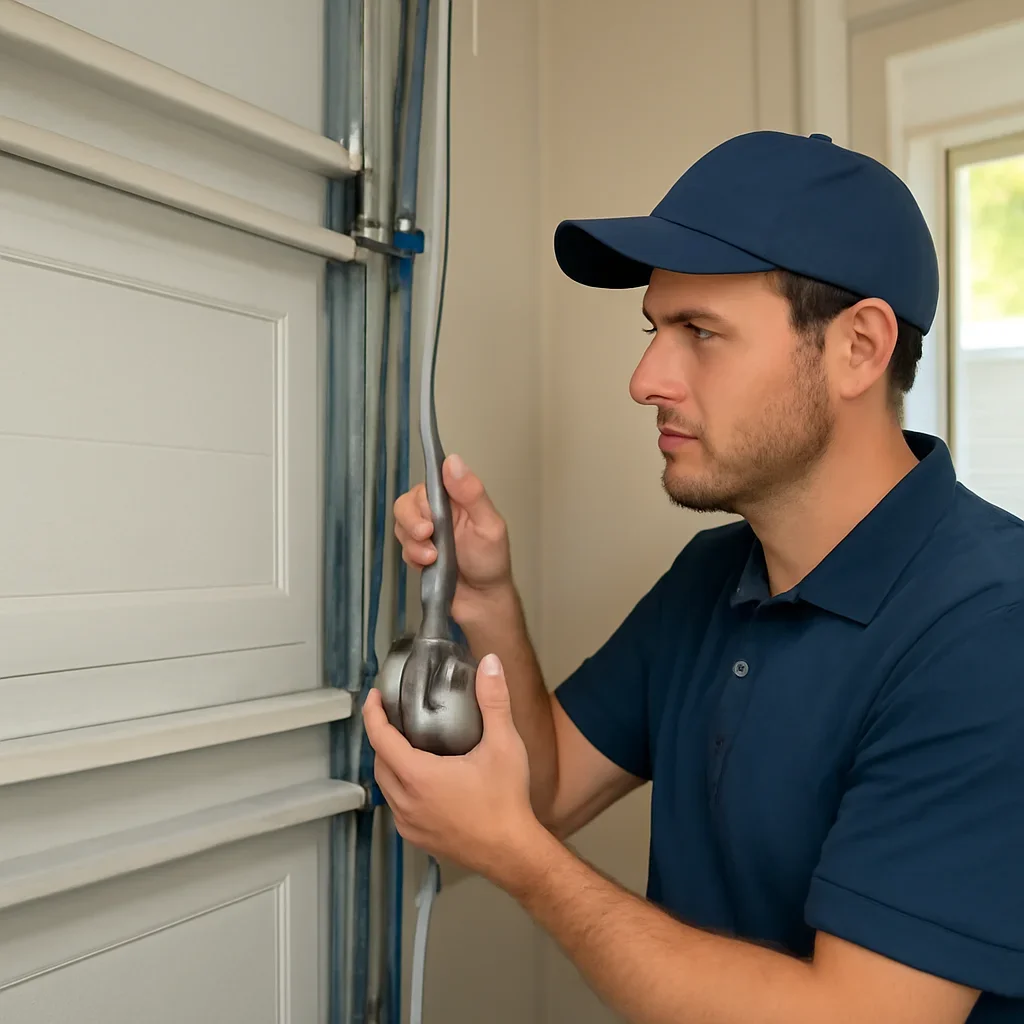
A snapped cable at a flat driveway is different from an uneven door in a narrow lane, underground parkade, steep approach, or attached garage with a vehicle trapped inside.
A closed or crooked door can trap a vehicle, block household access, or leave stored property difficult to reach.
Narrow lanes, steep driveways, visitor parking, gates, low clearance, and strata rules can affect service preparation.
Coastal moisture, damp garages, wet debris, and rust can affect cables, drums, bearings, brackets, fasteners, and spring hardware.
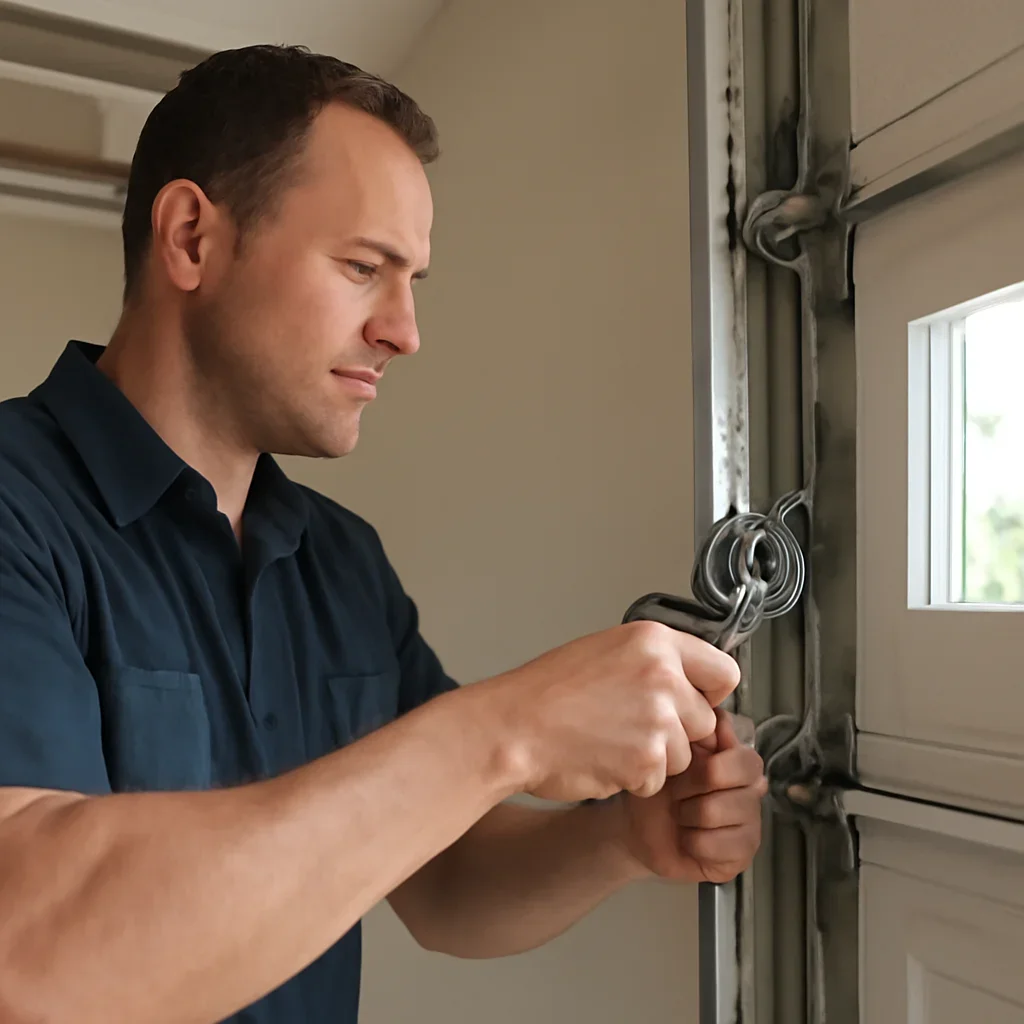
You do not need to touch or identify the cable type. Safe observations from a distance can help explain the condition and urgency.
Mention loose wire, frayed strands, cable off the drum, tangling, rust, or one side without visible tension.
Explain whether the door is open, closed, halfway, tilted, hanging, jammed, or trapping a vehicle.
Include any snap or scrape, opener response, uneven lifting, door width if known, property type, and access restrictions.
A visible cable failure may be connected to a spring problem. Review the broken spring repair guidance when the door also feels extremely heavy or a spring gap is visible.
Continued movement can twist the door, pull rollers from the tracks, damage sections, strain the opener, disturb the drums, or create a sudden drop. Keep the opening clear until the lifting system is assessed.
The repair process should identify why tension was lost, inspect both sides, address connected wear, and confirm controlled operation afterward.
Review the door position, visible cable condition, uneven movement, sound, opener response, and access impact.
Check both cables, drums, bearings, springs, tracks, rollers, brackets, balance, and visible corrosion or damage.
The work should reflect cable condition, compatibility, spring support, attachment points, door weight, and related wear.
Balance, cable tracking, drum winding, travel, rollers, controls, opener load, closing position, and noise should be confirmed.
These pages help separate cable failure from track, roller, balance, and general garage door problems.
These answers cover warning signs, safe use, spring connections, and useful service-request details.
Common signs include loose or hanging cable, frayed strands, cable off the drum, uneven lifting, a crooked door, one side dropping, tangled wire, or a door that becomes heavy or stuck.
No. A damaged cable can leave the door uneven or unstable. Stop using the opener, keep people and vehicles clear of the travel path, and arrange an assessment.
Not always, but the spring system, drums, bearings, tracks, rollers, balance, corrosion, and cable attachment points should be inspected because these parts work together.
Useful details include the door position, whether one side is lower, visible loose or frayed cable, unusual sound, opener response, door width if known, property access, and whether a vehicle is trapped.
Include whether the cable is hanging, frayed, tangled, or off the drum; whether one side of the door is lower; the door position; opener response; property access; and whether a vehicle or security is affected.