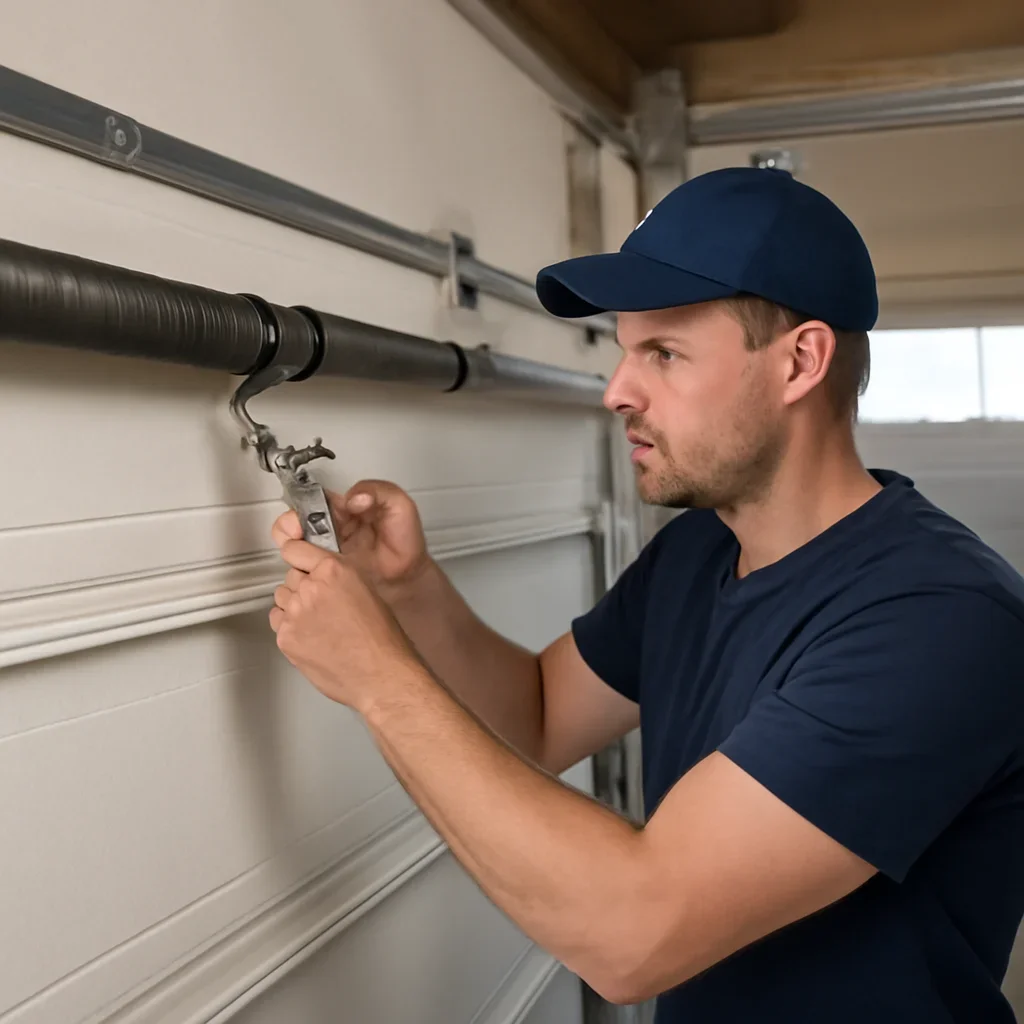
A loud snap from the garage
A sudden bang can happen when a tensioned spring breaks, even when nobody is operating the door at that moment.

A broken spring can leave the garage door extremely heavy, uneven, stuck, or unable to open. Stop cycling the opener when you hear a loud snap, see a spring gap, notice loose cable, or find that the door lifts only a few inches.
Garage door springs carry high tension and support much of the door's lifting load. A suspected spring failure should be assessed with the cables, drums, bearings, tracks, rollers, balance, and opener strain rather than treated as an isolated visible break.
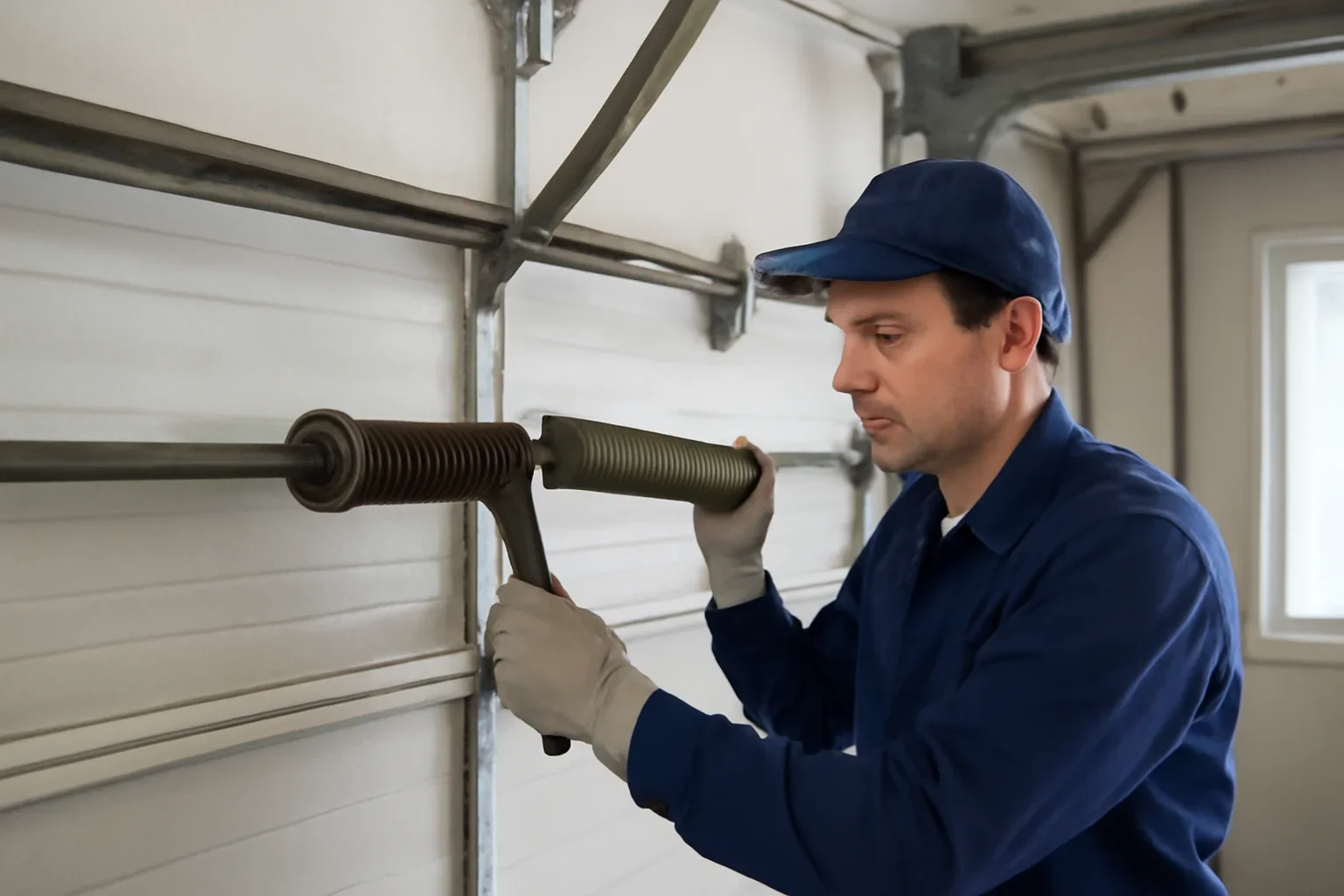
More than one warning sign can appear at the same time. The complete lifting system should be checked before the door returns to normal use.
A sudden bang can happen when a tensioned spring breaks, even when nobody is operating the door at that moment.
A separated section in a torsion spring above the opening is a strong sign that the spring is no longer intact.
The door may resist movement or become difficult to lift because the spring system is no longer carrying its normal share of the load.
The opener may start, strain, stop, or reverse when it cannot overcome the unsupported weight of the door.
Cable tension can change after spring failure, leaving the door uneven, tilted, or unstable during attempted movement.
A motor that hums, pulls hard, or moves the trolley without lifting normally may be reacting to a spring or balance problem.
Garage door springs, cables, drums, and related hardware can hold significant tension. Keep people, pets, vehicles, and stored items away from an unstable door. Do not continue using the opener to force movement, and do not stand beneath a door that is crooked, hanging, or unsupported.
The spring supports the lifting system, but it works with cables, drums, bearings, tracks, rollers, hinges, brackets, and the opener. Related wear or damage can affect the final repair scope and safe operation.
The spring setup must suit the size, weight, construction, and operating demands of the door.
Loose cable, fraying, drum movement, bearing wear, corrosion, and uneven tension can affect lifting and balance.
Binding, impact damage, seized rollers, loose hardware, or misalignment can add resistance and strain.
The opener should not be expected to carry the unsupported door weight, and strain may reveal a connected motor or trolley issue.
A broader overview of spring and cable work is available on the spring and cable repair page.
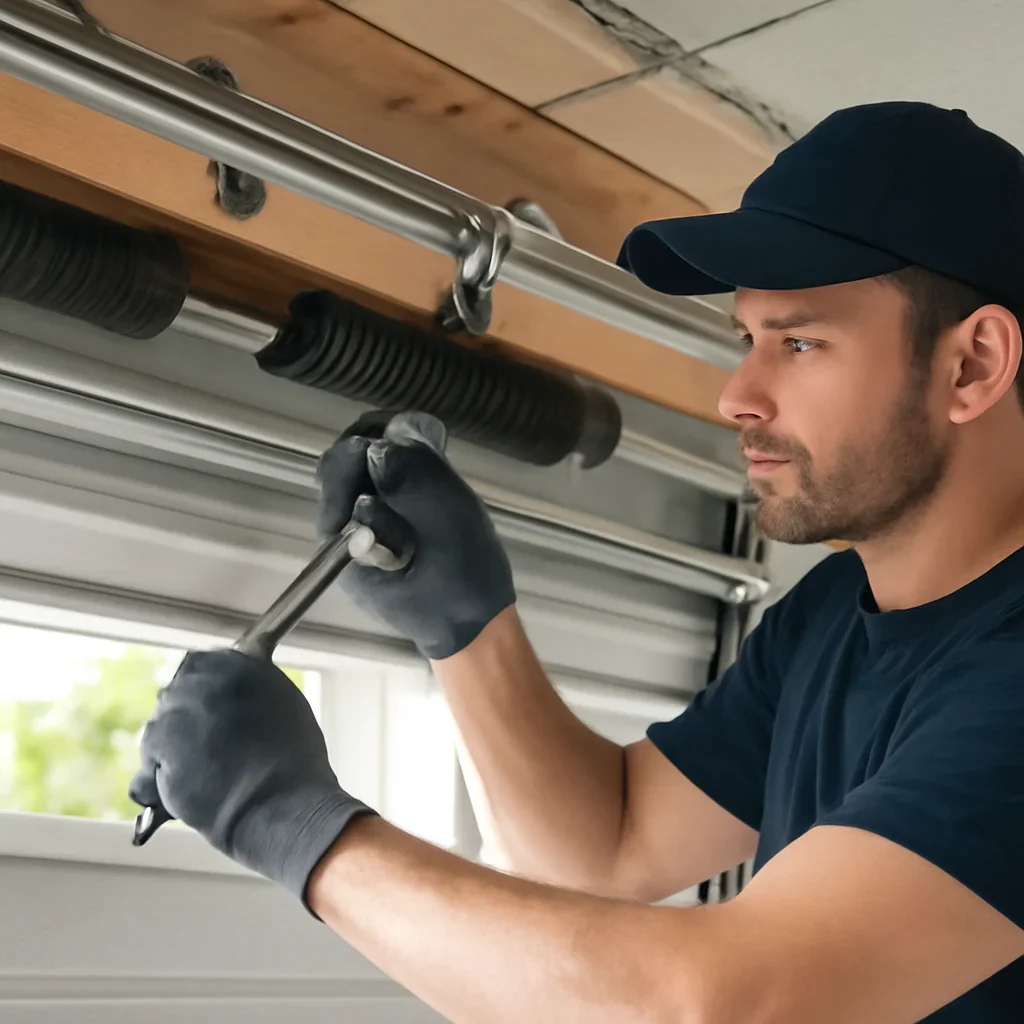
Spring repair may be straightforward at one property and more involved at another because of garage access, door size, corrosion, opening configuration, and the door's current position.
A closed, heavy door can block vehicle access and increase urgency, especially when the garage is the household's main parking space.
Narrow lanes, steep driveways, gate access, shared parking, low clearance, and strata rules can affect service preparation.
Coastal moisture, damp air, wet debris, and corrosion can affect springs, cables, fasteners, bearings, brackets, and other exposed hardware.
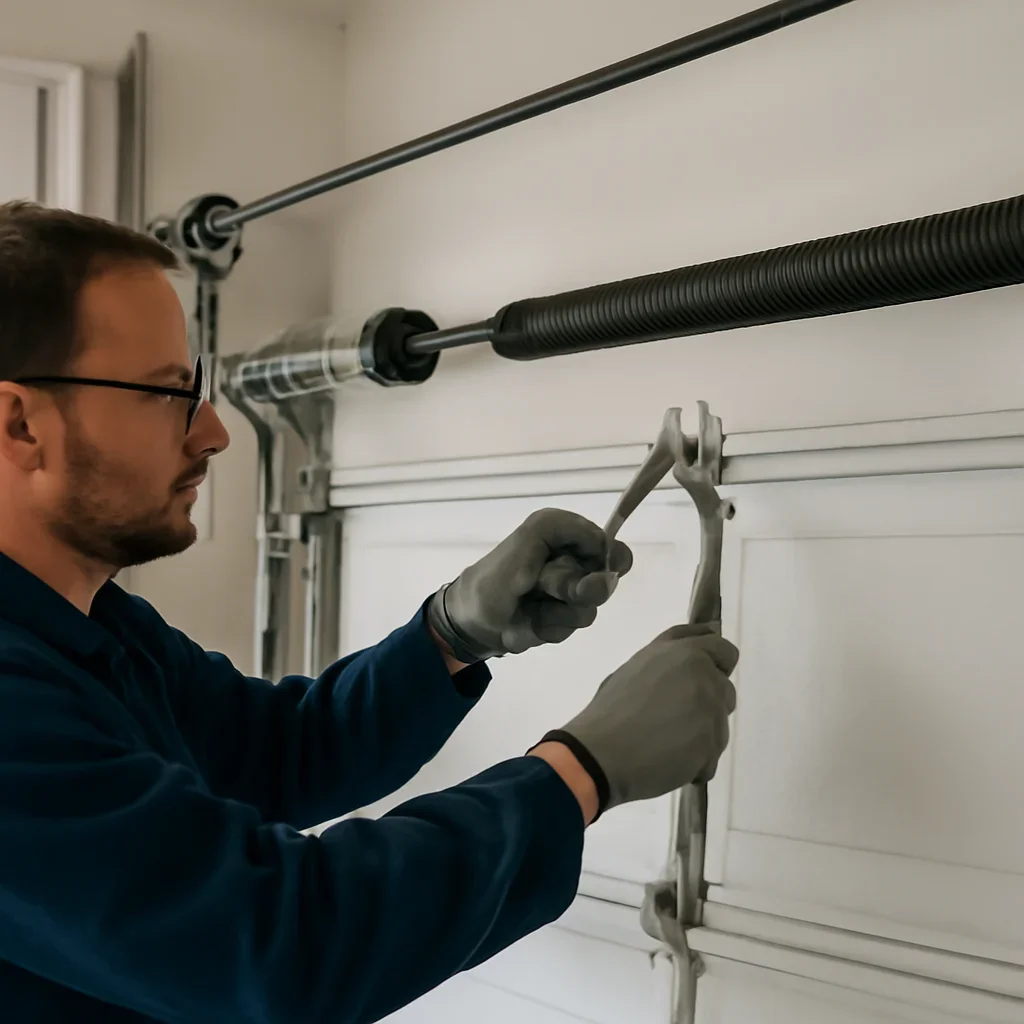
You do not need to identify the exact spring or hardware. A few practical observations help explain the condition without handling the high-tension parts.
Include a loud snap, sudden stop, heavy door, short lift, uneven movement, loose cable, or opener strain.
Mention whether the door is open, closed, halfway, crooked, hanging, or trapping a vehicle.
Provide the approximate width if known, property type, garage access, parking limits, gate details, and any visible corrosion.
If a loose or snapped cable is the clearest symptom, review the garage door cable repair guidance.
The opener is designed to move a properly balanced door, not replace the lifting support of a broken spring. Repeated attempts may add strain to the motor, trolley, rail, door sections, cables, and other connected parts.
The repair process should confirm the cause, inspect connected lifting parts, match the spring system to the door, and verify safe movement afterward.
Review the door position, spring condition, cable tension, movement, noise, opener response, and access impact.
Check cables, drums, bearings, tracks, rollers, hinges, brackets, balance, and visible corrosion or damage.
The work should reflect the door weight, spring system, hardware condition, compatibility, and any related wear.
Balance, travel, cables, controls, opener load, closing position, noise, and safety operation should be confirmed.
These pages help distinguish spring failure from balance, opener, general repair, and symptom-based problems.
These answers cover warning signs, opener use, repair versus replacement, and useful service-request details.
Common warning signs include a loud snap, a visible gap in a torsion spring, a heavy door, a door that lifts only slightly, uneven movement, loose cable, or an opener that strains without lifting normally.
No. Repeated opener use can add strain when the spring system is no longer supporting the door correctly. Keep people and vehicles clear of the travel path and arrange an assessment.
Not necessarily. The spring system, cables, bearings, drums, tracks, rollers, door condition, balance, and opener load should be reviewed before deciding whether spring repair or broader work is required.
Useful details include the door position, door width if known, visible spring gap, loose cable, unusual sound, opener response, property access, whether a vehicle is trapped, and whether the opening is secure.
Include whether the door is open or closed, whether a vehicle is trapped, any loose cable or crooked movement, the opener response, visible corrosion, property access, and how urgently security or entry is affected.