Identify the main symptom
Choose the closest problem page or describe what changed without guessing the failed component.

Start with what the garage door is doing. You do not need to know whether the problem is the opener, spring, cable, track, roller, sensor, panel, seal, or another connected part before requesting guidance.
Share the current door position, movement, sound, visible damage, opener response, access impact, and urgency. Those details are more useful than purchasing or requesting a part before the cause is confirmed.
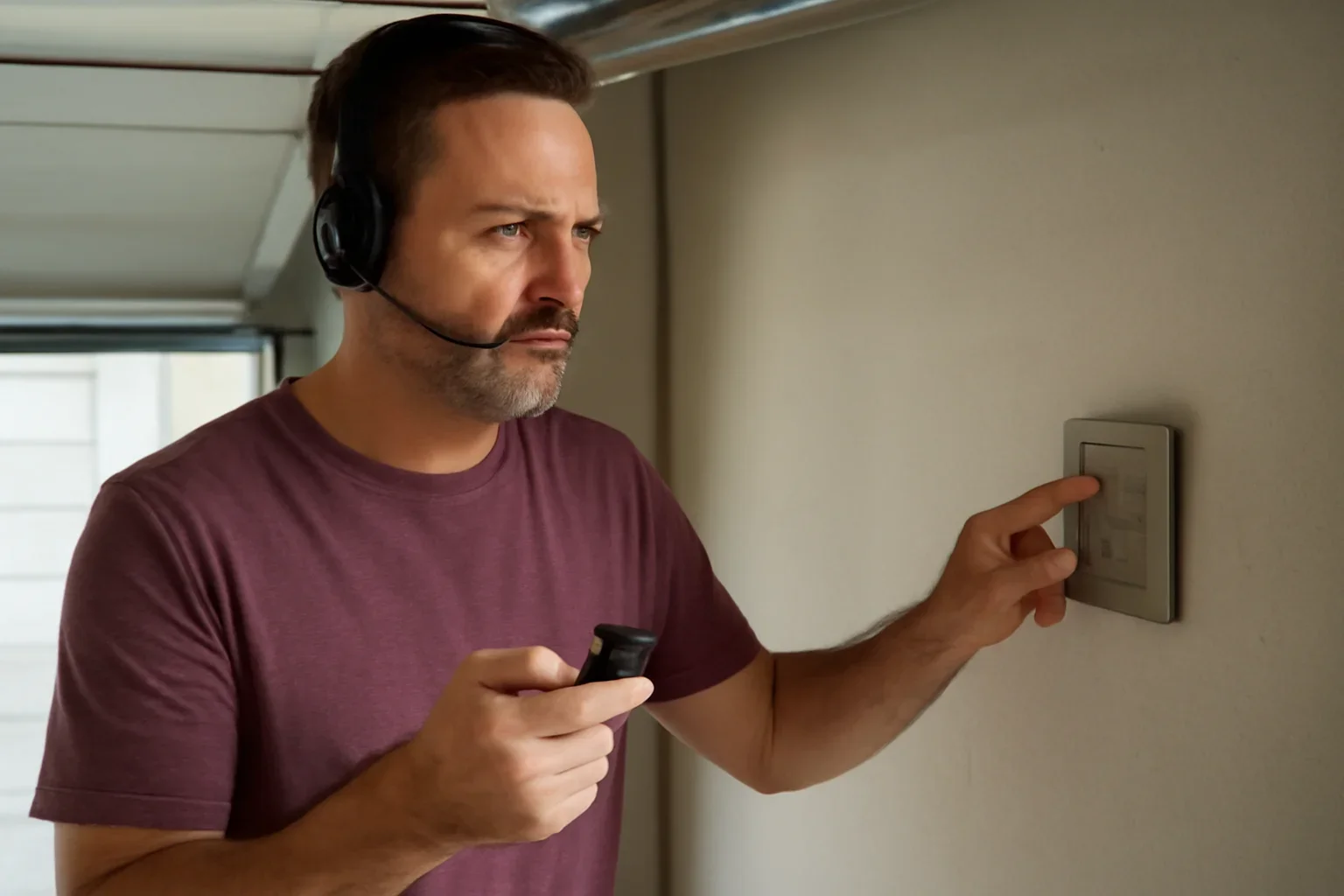
Each problem page explains common causes, immediate safety concerns, helpful observations, and the service path most likely to apply.
The door stays closed, lifts only slightly, feels heavy, or the opener runs without moving it normally.
Review opening problems →The door reverses, stops above the floor, refuses to move down, or closes only while a control is held.
Review closing problems →The motor, rail, trolley, wall control, remote, keypad, power, or travel settings may be involved.
Review opener problems →Sensor lights, dirty lenses, shifted brackets, damaged wires, obstructions, or alignment may affect closing.
Review sensor problems →Grinding, scraping, rattling, popping, squealing, or vibration can point to wear, alignment, balance, or opener strain.
Review unusual noise →The door may be crooked, jammed, hanging, rubbing, or partly separated from the tracks and rollers.
Review off-track guidance →A visible gap, loud snap, heavy door, short lift, or opener strain can indicate a failed lifting spring.
Review broken spring guidance →Loose cable, uneven lifting, a tilted door, tangled wire, or lost support can create an unstable condition.
Review cable problems →Batteries, programming, signal range, lock mode, receiver faults, control damage, or opener power may be involved.
Review remote problems →Dents, cracks, bends, impact damage, separation, and weather damage may affect movement, sealing, and appearance.
Review panel damage →Worn bottom rubber, perimeter gaps, uneven floor contact, drafts, water, debris, or pests may require seal work.
Review seal problems →Cold weather, ice, moisture, seal adhesion, track resistance, or another mechanical fault may stop movement.
Review frozen door guidance →Keep people, pets, vehicles, and stored items away from the travel path when the door is hanging, off track, crooked, supported by a failed spring or cable, moving unpredictably, or creating an unsecured opening. Do not keep cycling the opener to force movement.
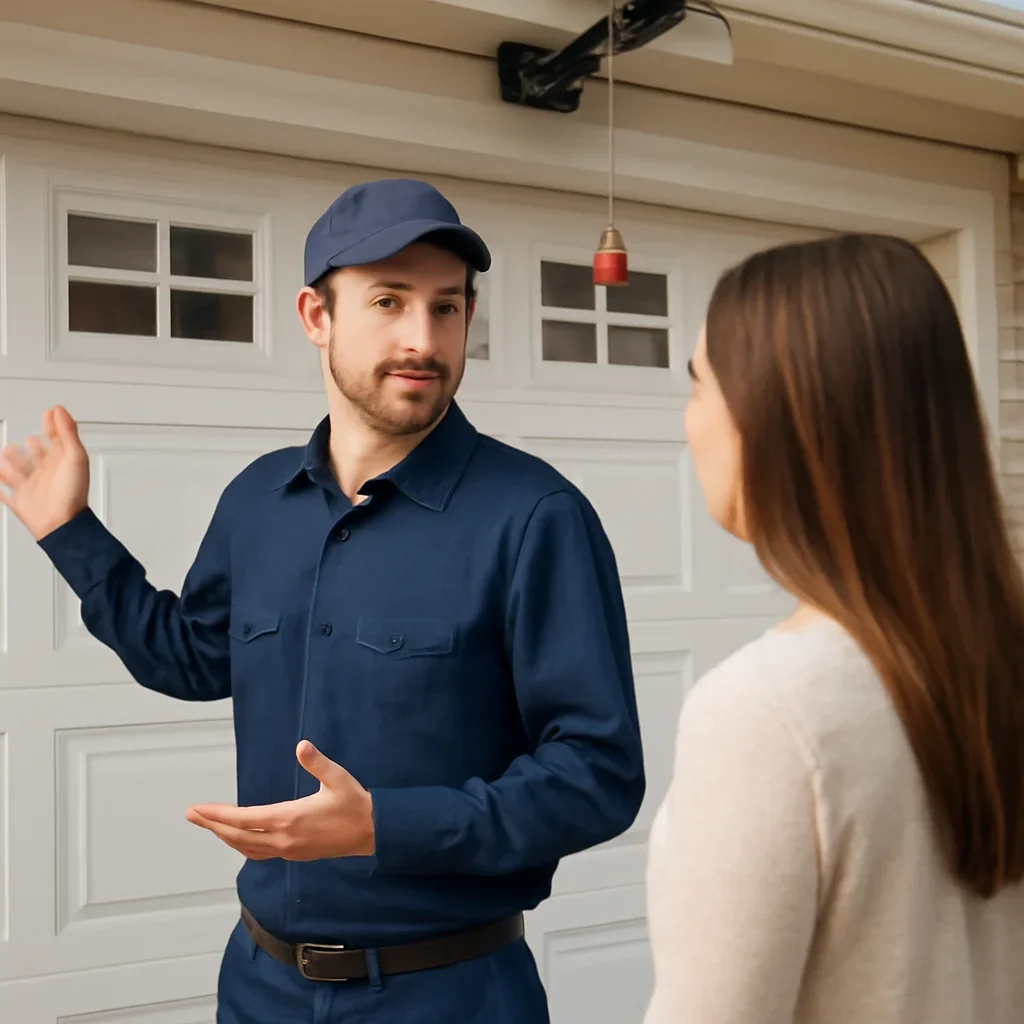
A clear description can help distinguish an opener issue from a lifting, track, sensor, control, seal, or structural problem before the full system is assessed.
State whether the door is fully open, fully closed, halfway, crooked, hanging, or unable to move.
Describe grinding, scraping, popping, shaking, slow travel, uneven lifting, reversal, or opener movement without the door.
Mention broken parts, loose cables, gaps, bent tracks, sensor lights, opener lights, remote response, water entry, or impact damage.
Include the neighbourhood, garage type, driveway or parkade access, gate or strata limits, and whether a vehicle is trapped.
When several symptoms appear together, a garage door inspection can help identify connected wear and the correct service scope.
Repeated opener use can add strain when the door has a broken spring, cable problem, track issue, seized roller, obstruction, or poor balance. Avoid standing beneath an unstable door or attempting to adjust high-tension spring and cable hardware.
The next step should reflect the safety risk, property access, connected components, and whether the problem needs repair, inspection, maintenance, or replacement.
Choose the closest problem page or describe what changed without guessing the failed component.
Note whether the door is unstable, trapping a vehicle, leaving the property open, or creating a hazard.
Provide the door position, movement, sound, visible damage, controls, property type, access, and urgency.
The need may fit repair, opener work, spring service, inspection, maintenance, replacement, or emergency support.
Use these pages after identifying the symptom to understand available work, quote factors, local coverage, and general service answers.
These answers cover unknown faults, unsafe operation, closing failures, and North Vancouver weather conditions.
Yes. Describe the current door position, movement, sound, visible damage, opener response, property type, access conditions, and urgency.
Stop using the door when it is hanging unevenly, off track, supported by a failed spring or cable, moving unpredictably, making severe grinding sounds, or creating a risk to people, vehicles, or property.
Possible causes include blocked or misaligned sensors, damaged sensor wiring, track resistance, travel settings, control faults, or an obstruction near the opening.
Rain, moisture, grit, leaves, corrosion, damaged seals, dirty sensors, and temperature changes can affect tracks, rollers, hardware, controls, and closing performance.
Include the current door position, movement, sound, visible damage, opener response, property type, neighbourhood, driveway or parkade access, and whether a vehicle, security, or safe movement is affected.