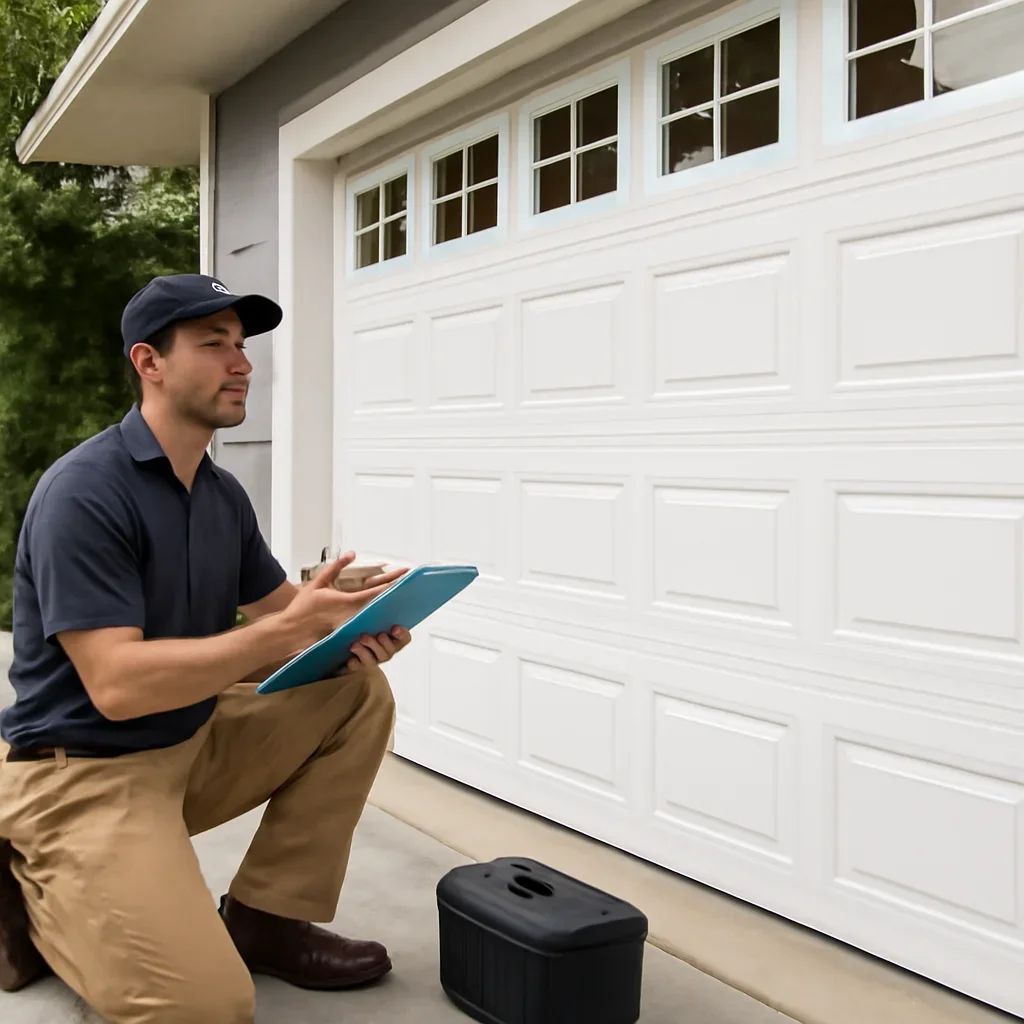
Service category
A minor adjustment, component repair, opener fault, spring failure, panel issue, full replacement, and new installation require different labour and materials.

Garage door pricing depends on what failed, the condition of the connected system, the parts required, the property access, and whether the right solution is a repair, opener service, replacement, or complete installation. A clear quote starts with the correct scope.
The most useful estimate is based on the door's symptoms, size, current position, visible damage, opener behaviour, urgency, and access conditions. A low price for the wrong repair is not a useful outcome.

Two doors with a similar symptom may need different work. The quote should reflect the inspected condition and the full path to safe, reliable operation.
A minor adjustment, component repair, opener fault, spring failure, panel issue, full replacement, and new installation require different labour and materials.
Door weight, size, track type, spring setup, cable system, opener model, control compatibility, and available parts affect the repair path.
Worn rollers, damaged tracks, poor balance, corrosion, loose hardware, weak seals, or opener strain may need attention with the main fault.
Single or double width, material, insulation, glazing, panel design, weight, hardware, and opening dimensions influence parts and installation scope.
Steep driveways, narrow lanes, parkades, gates, shared parking, low clearance, limited staging space, and building rules can affect labour planning.
A trapped vehicle, unsecured opening, hanging door, off-track condition, or work needed outside normal planning may change the service scope.
North Vancouver garage doors are found on sloped driveways, laneway garages, attached homes, older openings, strata parkades, commercial properties, and coastal-exposure sites. Access and local conditions should be included before the scope is confirmed.
Moisture, wet debris, rust, seal wear, and exposed hardware may reveal related maintenance or replacement needs.
Previous renovations, limited clearance, uneven floors, aging tracks, framing changes, and older openers can affect fit and labour.
Strata rules, loading zones, visitor parking, gate codes, lane congestion, parkade height, and quiet hours can shape scheduling.
When the condition is unclear or several parts may be involved, a garage door inspection can help define the repair scope before larger decisions are made.
These pages explain the scope behind common quote types. Use the symptom or project goal rather than guessing which part needs to be purchased.
For noisy, uneven, stuck, damaged, binding, or unreliable doors where the failed part has not been confirmed.
Review repair scope →For motors, rails, trolleys, remotes, keypads, sensors, controls, programming, travel settings, and opener strain.
Review opener scope →For broken springs, loose or snapped cables, heavy doors, uneven lifting, balance problems, and high-tension hardware.
Review spring and cable scope →For aging, damaged, poorly insulated, unreliable, or outdated doors where repair may no longer support the desired outcome.
Review replacement factors →For new construction, renovations, altered openings, complete door systems, opener coordination, and finish planning.
Review installation factors →For inspections, adjustments, balance, rollers, tracks, seals, sensors, opener checks, and developing wear.
Review maintenance scope →
You do not need a technical diagnosis. A symptom-based description, a few property details, and clear photos can help narrow the likely scope before the system is assessed.
Explain whether the door is noisy, uneven, heavy, stuck, reversing, off track, damaged, or not responding to the opener.
Include the approximate door size, material, opener brand if known, visible spring or cable damage, and previous repairs.
Mention lane access, driveway slope, parkade clearance, gates, parking limits, strata rules, and whether a vehicle is trapped.
For a door stuck open, hanging, off track, or creating an immediate security concern, review the emergency repair guidance before normal quote planning.
A door that will not open could have an opener fault, broken spring, snapped cable, track problem, seized roller, poor balance, power issue, or more than one condition at the same time. Pricing should follow the confirmed scope, compatible parts, and safety needs rather than a generic symptom label.
The process should make it easier to understand what is included, what may change after inspection, and why a repair or replacement path is recommended.
Provide the door position, movement, noise, visible damage, opener response, urgency, and property access details.
The need may fit an adjustment, repair, opener service, spring work, inspection, replacement, installation, or urgent visit.
Door size, hardware, tracks, rollers, lifting parts, opener, controls, seals, compatibility, and related wear are reviewed.
The scope, parts, labour, access needs, repair limits, alternatives, and expected operating outcome should be clear.
These pages help compare residential and commercial work, symptom guidance, project examples, and North Vancouver coverage.
These answers cover price variation, symptom-based requests, replacement factors, and urgent or restricted-access service.
Pricing varies because the same symptom can involve different parts, labour, door sizes, system conditions, access needs, compatibility issues, and repair or replacement decisions.
Yes. Describe what the door is doing, its current position, visible damage, unusual sounds, opener behaviour, property access, door size, and urgency. A symptom-based description helps narrow the likely scope.
Door size, construction, insulation, windows, design, hardware, opener needs, framing changes, removal, disposal, electrical work, site access, and finish details can affect the project scope.
Urgency, a trapped vehicle, an unsecured opening, steep or narrow access, parkade restrictions, gate access, parking limits, and special scheduling can affect service planning and labour.
Include the door size if known, current position, movement, noise, visible damage, opener behaviour, property type, access restrictions, urgency, and whether the goal is repair, maintenance, replacement, or a new installation.